When Everything Came Into Focus — Hiking Patagonia’s Torres del Paine O Circuit Alumni Trip

I first learned about the O Circuit in 2025, a year before I actually did it.
My wife and I were in Patagonia on a Road Scholar trip. It started with a cruise through the Strait of Magellan and the Darwin Passage, followed by a few days in Torres del Paine National Park doing short hikes. The first day in the park included a visit to the ranger station where a raised topographic model of the park showed the W Trek and O Circuit looping around the massif. A ranger was explaining the routes, and I remember looking at it and thinking, I really ought to come back and do that.
My first reaction, though, was not enthusiasm, but rather, skepticism. On the first day we were there, the wind was relentless, and I remember thinking, why would anyone want to hike in this for nine days? Then the weather changed. The next two days were clear, calm, and stunning. The views of the mountains opened up, the light shifted, and suddenly the answer was obvious. That is why people come here.
Somewhere between those two impressions, wind and beauty, the idea took hold. When I got home, I discovered that NOLS offered an Alumni Trip around the O Circuit. I signed up immediately.
I had been part of NOLS long before that. From 1978 to 1985, I worked as a NOLS wilderness and mountaineering instructor in Wyoming. Then came a long stretch in public education: 27 years as a teacher and administrator, before retiring about a decade ago and returning to the outdoors more intentionally. By the time I arrived in Patagonia, this was my eighth NOLS Alumni Trip.
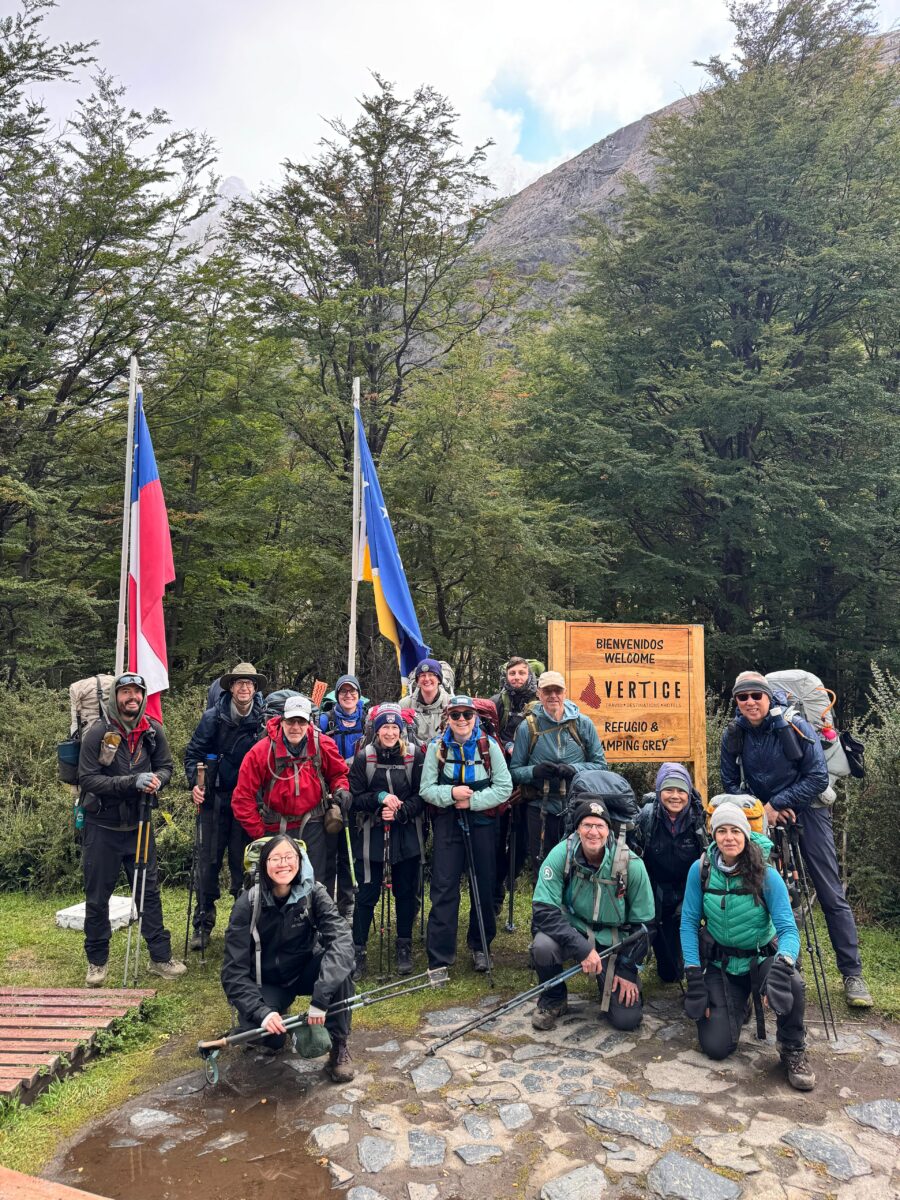
At 75, I was the oldest participant on the trip. It felt less like a milestone and more like a continuation. Our group ranged from 21 to 75, with the usual NOLS mix of backgrounds and perspectives: doctors, educators, a nurse, a finance professional, a researcher, a photographer, parents traveling with their daughter, and a few longtime friends who had signed up together. One woman completed the entire circuit despite plantar fasciitis and, this being her first backpacking trip, using a porter to lighten her load. The quiet support she received from the group as she moved steadily through the days became one of the defining elements of the trip.
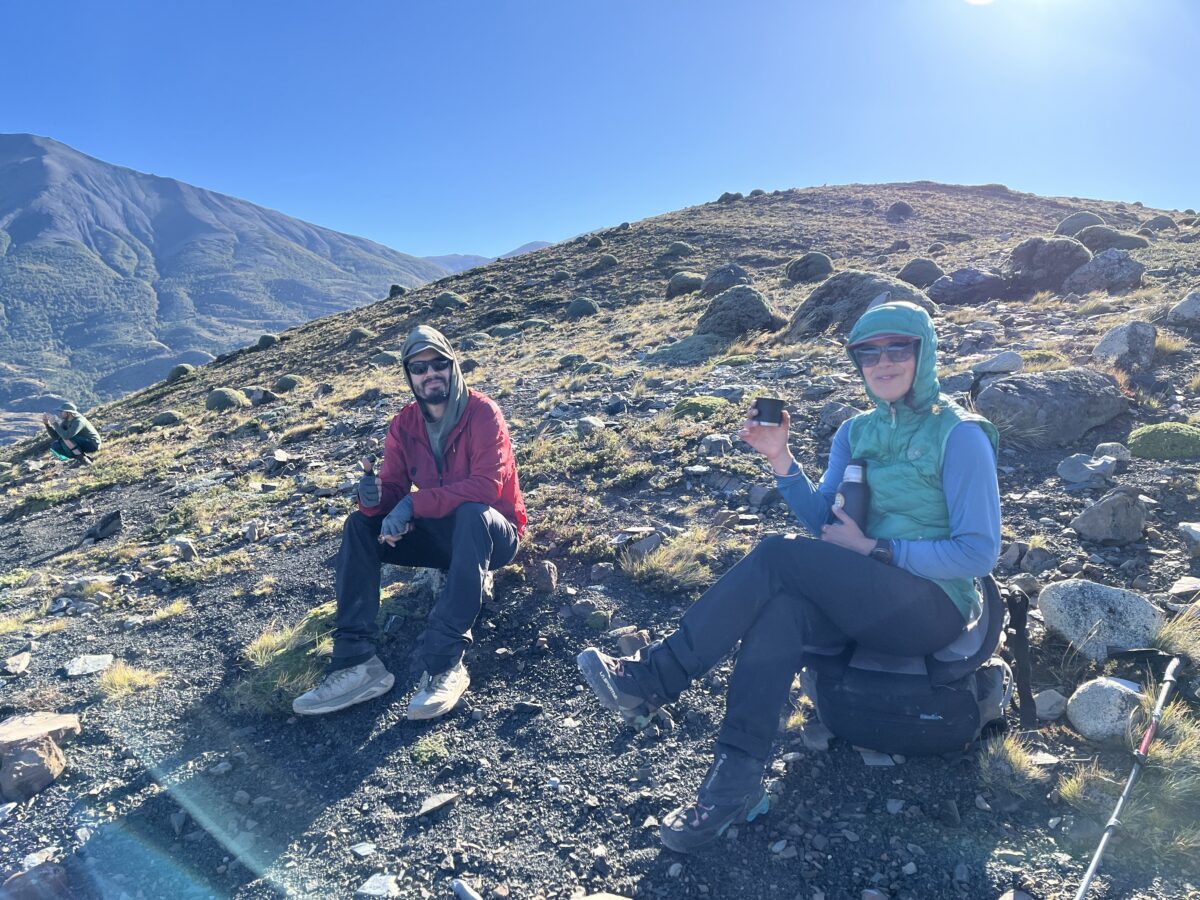
From the beginning, the leadership set the tone. Felipe, the course leader, had done the route many times. Each evening, he would walk us through the next day: distance, terrain, weather, risks, and expectations. The briefings were clear, calm, and consistent. Over time, they built a shared understanding of what we were doing and why.
Kati complemented that in a different way. She constantly checked in, quietly taking the pulse of the group, noticing who was doing well and who might need a little more support. On more than one day, I found myself toward the back, working through a lingering cold, and she was there, never pushing, always present, keeping things moving at a sustainable pace. She also brought something lighter to the rhythm of the days. Somewhere along the trail, often during a break, she would pull out a bar of chocolate and share it with the group. It became a small daily ritual, lifting spirits and sparking conversation in the middle of long miles and shifting weather. Together, Felipe and Kati created something that did not need to be explained, it was simply felt.
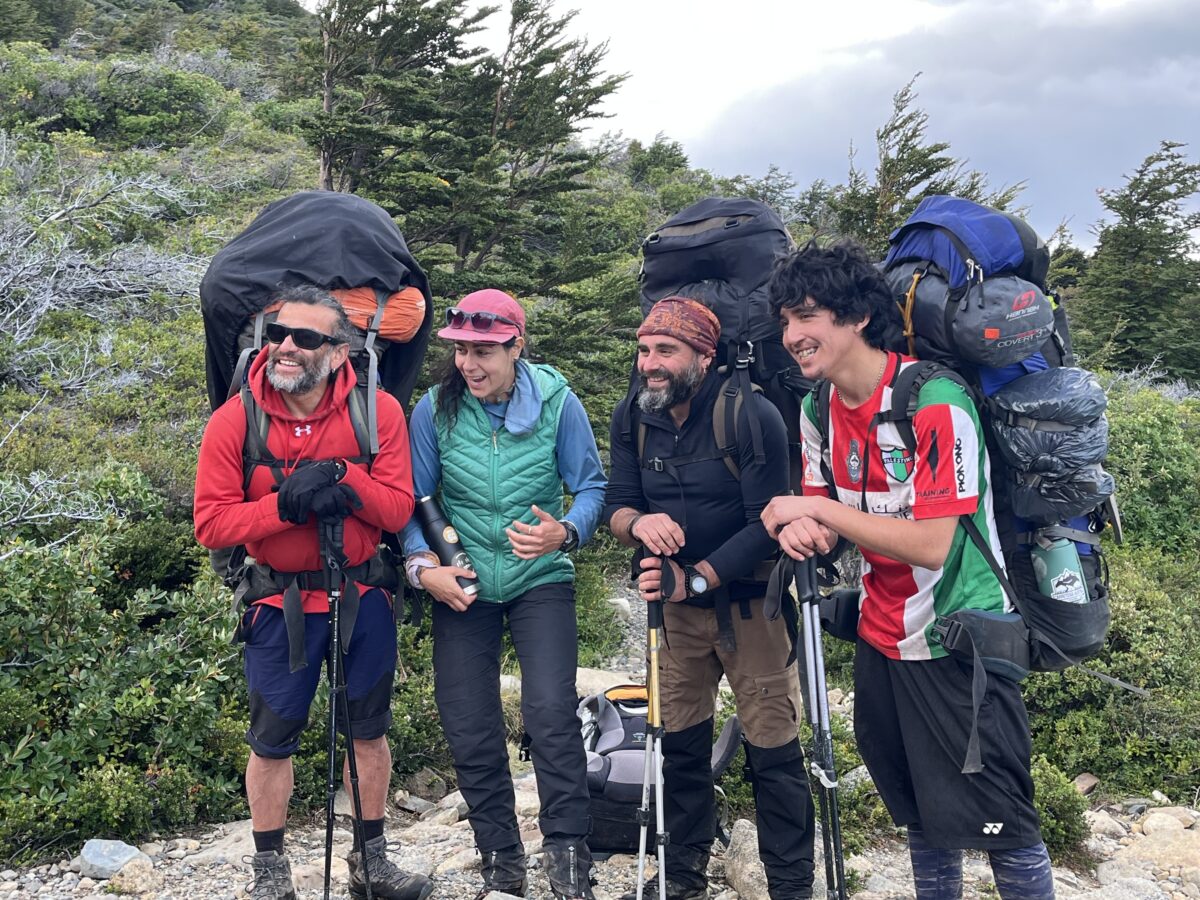
Supporting the effort were three porters, whose work quickly became impossible to overlook. Each morning, after we set off, they packed up our tents, often wet from rain or frost, and then, one by one, they would pass us on the trail. They did not travel as a group. Each moved at his own pace, carrying an enormous load with what looked like effortless efficiency. Their footwear was lighter than ours. Their packs were not. They would pass with a quick word of encouragement, a smile, and then continue on, disappearing ahead. By the time we reached camp, everything was already set. One of them was on his first trip around the circuit, another working as a personal porter for the woman with plantar fasciitis, the third had done the route dozens of times, something like eighty, and this would be his final trip on the O Circuit before moving on to other work in the outdoors. At the end, there was a small celebration for him. It felt well deserved.
The trek began with a moment none of us expected. On the drive into the park, we passed a lamb carcass by the side of the road, where a pair of condors were feeding. As the van slowed, they lifted into the air, huge, deliberate wings spreading wide, and for a few seconds, we had a close, unobstructed view of just how large they really were. It was a striking introduction to Patagonia. By the time we reached the trailhead, the wind had already arrived, whitecaps on the lake, a steady force across the landscape. We started walking.
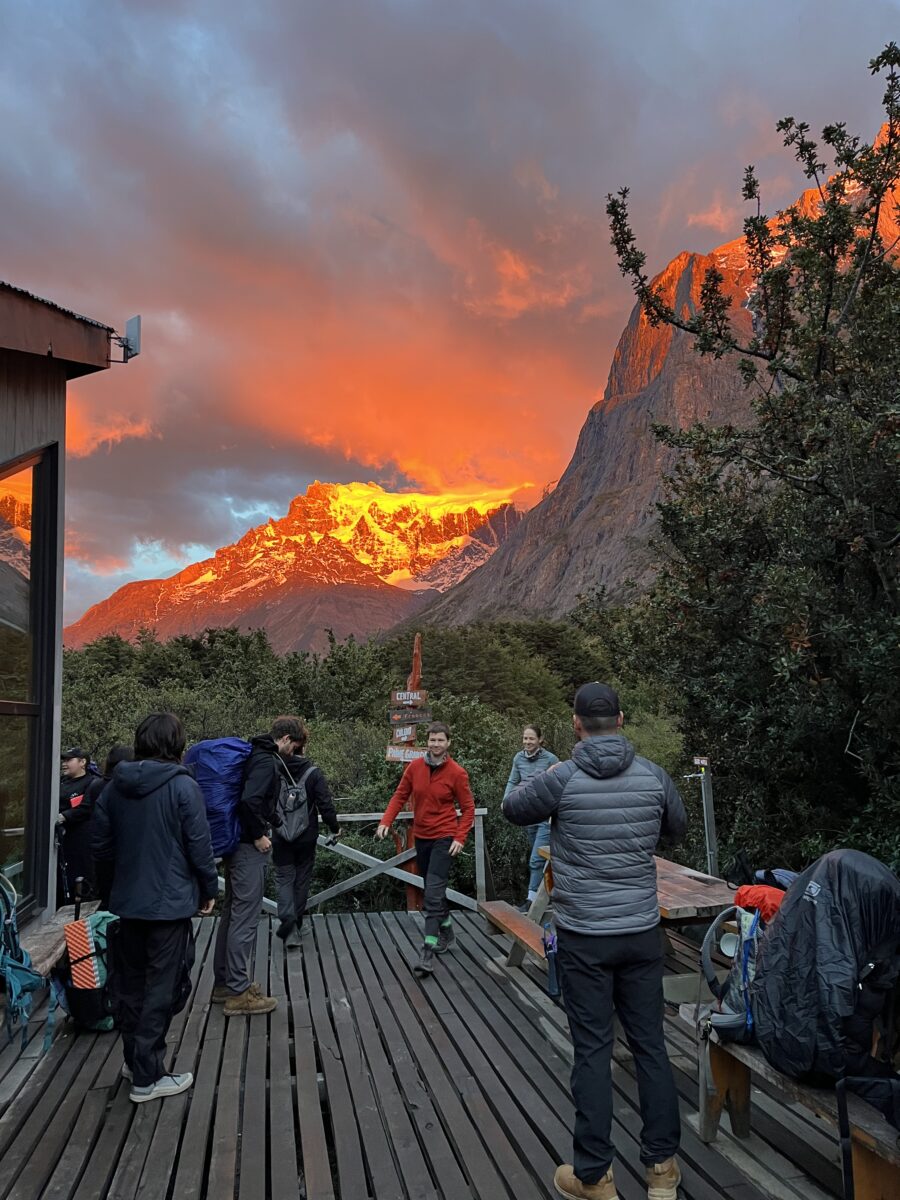
The first days on the backside of the circuit settled into rhythm: long miles, changing terrain, and a couple thousand feet of climbing and descent each day. This was not a casual, flat hike. There was also a growing sense of distance from everything else. The weather shifted constantly. Cold mornings gave way to milder afternoons, clouds built and dissolved, and the landscape revealed itself in pieces. There was space out there. A woodpecker calling unseen. Glacial lakes in shifting shades of turquoise. The first distant view of the Towers from behind, less iconic but somehow more earned.

By the third day, the rain came. It did not stop for hours. The trail turned muddy and slick, and progress required attention at every step. Small details stood out, a waterfall cutting through rock, wooden bridges marked “one person at a time,” the steady rhythm of hiking in wet conditions. One piece of gear made a surprising difference. I had brought an umbrella, something I had never really used hiking before. Once I figured out how to rig it to my pack so I didn’t have to hold it, it became one of the most useful items I carried. In steady, non-driving rain, it kept me drier, warmer, and far more comfortable than I would have been otherwise.
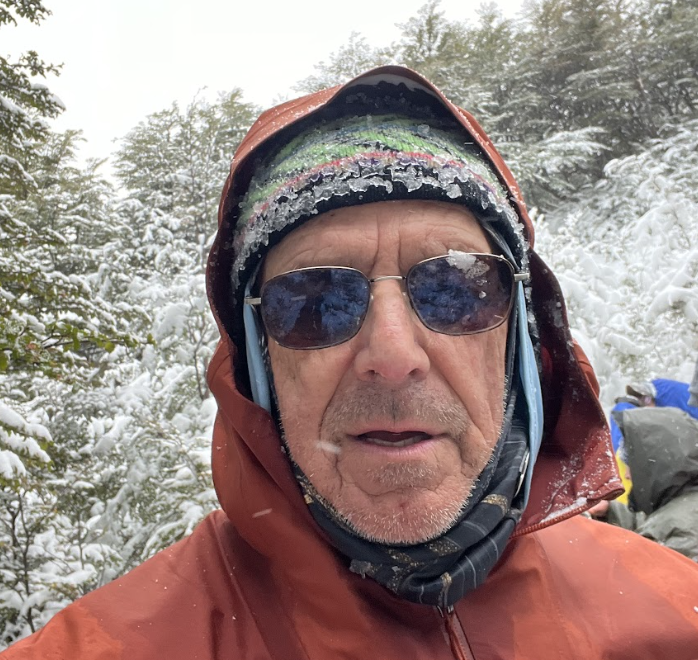
By the time we reached Los Perros, the tone had shifted. Ahead was the pass. The wind began overnight. By morning, fresh snow covered the ground. We packed in the dark and started early. Above treeline, the wind hit hard. This was where the leadership mattered most. The decision to cross had been considered carefully. Conditions were difficult but manageable, and once we committed, we moved as a group. Felipe set the pace deliberately, steady, continuous. At one point, when stopping might have felt natural, he kept us moving. This was not a place to rest. The only real shelter was still ahead, down in the trees, and the way to reach it was to keep going. There was no need for explanation. We understood.
The world narrowed to a few feet of trail, carefully placing our feet, and keeping an eye on the person in front of us to keep the group together. Visibility in the driving snow was minimal. Gusts of wind came through with enough force to knock people down. Three of us went over completely—the youngest, the oldest, and one in between—blown off balance and onto the snow. No one was hurt, but it was a clear reminder of the strength of the wind and how exposed we were.
About half an hour below the top, we stopped briefly to put on micro-spikes. That is when I realized my pack cover was gone, blown off without me even noticing. Later, someone told me they had seen it lift and disappear into the air, carried off by the wind. The conditions made small things matter. Even something as simple as warm gloves became essential. Most days, lighter gloves were fine, but up there, in the wind and cold, having proper hand protection made a real difference in staying functional and focused.
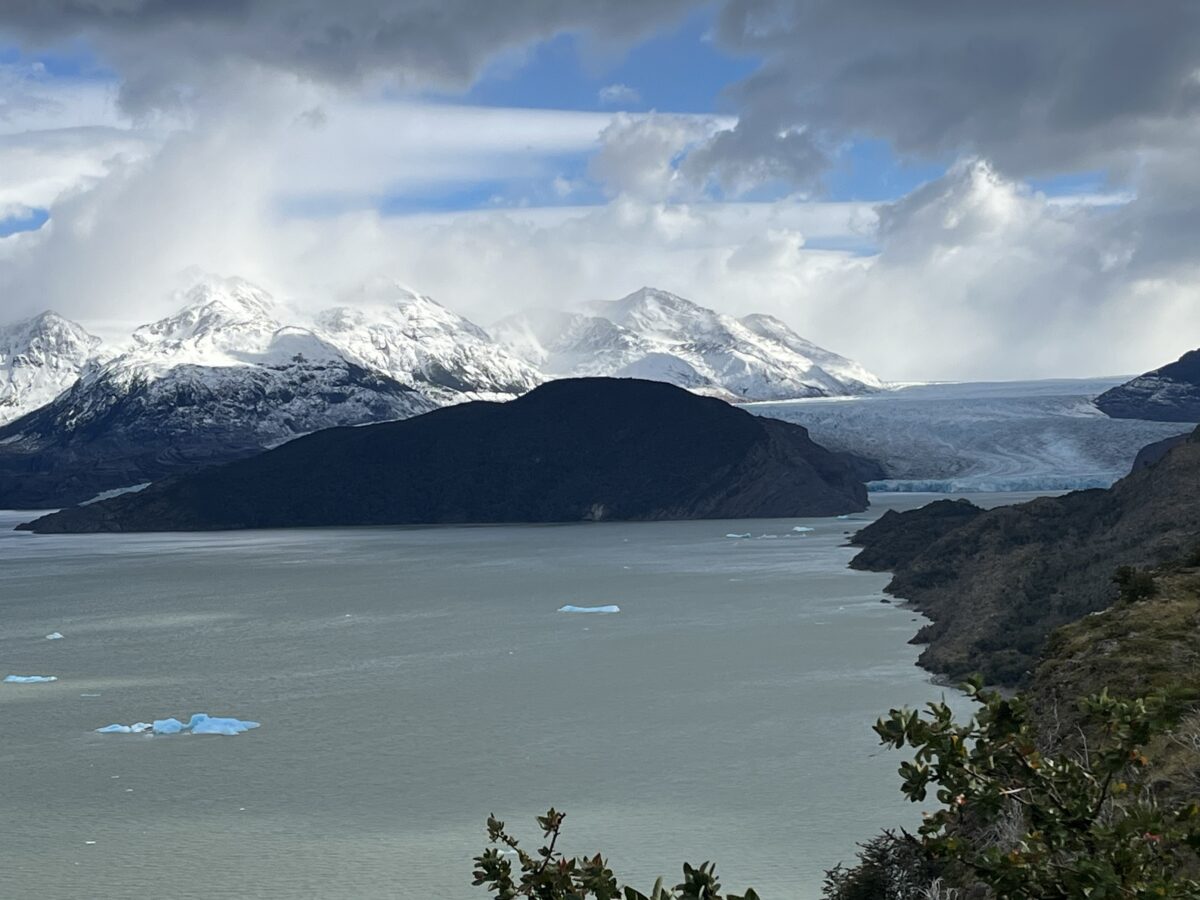
And then, not long after, something unexpected. For maybe ten seconds, no more, the clouds broke. The sun came through, and there, clearly in front of me, was my shadow on the snow. After hours of gray, wind, and focusing on each step, it felt almost out of place – like something that did not belong to the moment. Then it was gone. I remember mentioning it later, just to confirm that it had actually happened. The descent brought relief, and eventually, the trees. Then our first view of the enormous Grey Glacier. And then Camp Grey, and the transition into the W Circuit. More people. More noise. A different energy. No one we met had any sense of what we had been through to get there. We all celebrated with a beer that night.
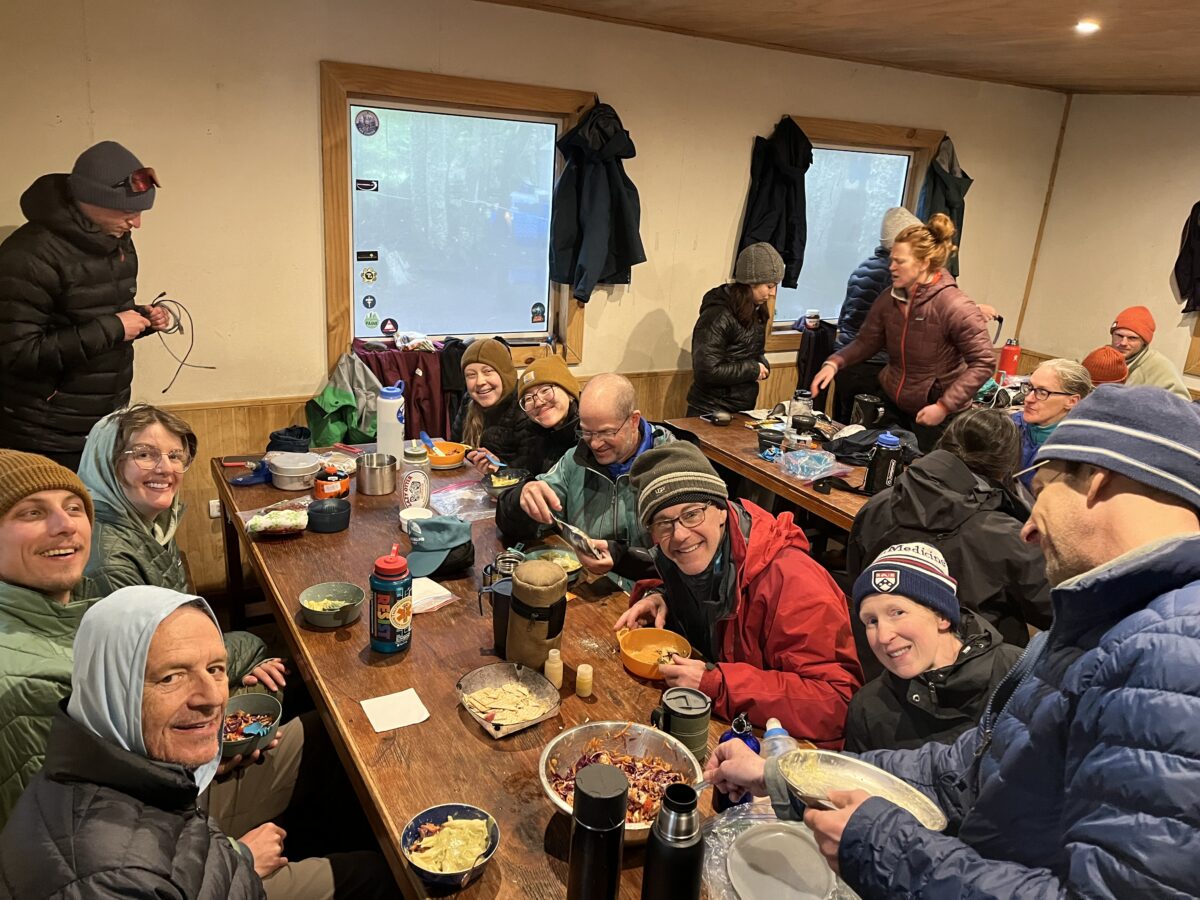
From there, the trip opened up. A canceled ice hike. A quiet walk viewing icebergs. Avalanches in the distance. And one afternoon, during a break, someone in our group spotted a small owl perched not far from the trail – no more than twenty or thirty feet away. It turned and looked directly at us, calm and unbothered, and for a few minutes the entire group gathered quietly around that single, unexpected moment. It was one of those simple encounters that stays with you.
The contrast between the O and the W was unmistakable. Both had their place. With a few days of milder weather and lighter wind, the views on the “W” were spectacular. The final days brought everything together. Leaving Camp Chileno, the flow of hikers was constant; people were arriving for a single day’s hike to the base of the Towers, moving through a landscape we had spent days circling.
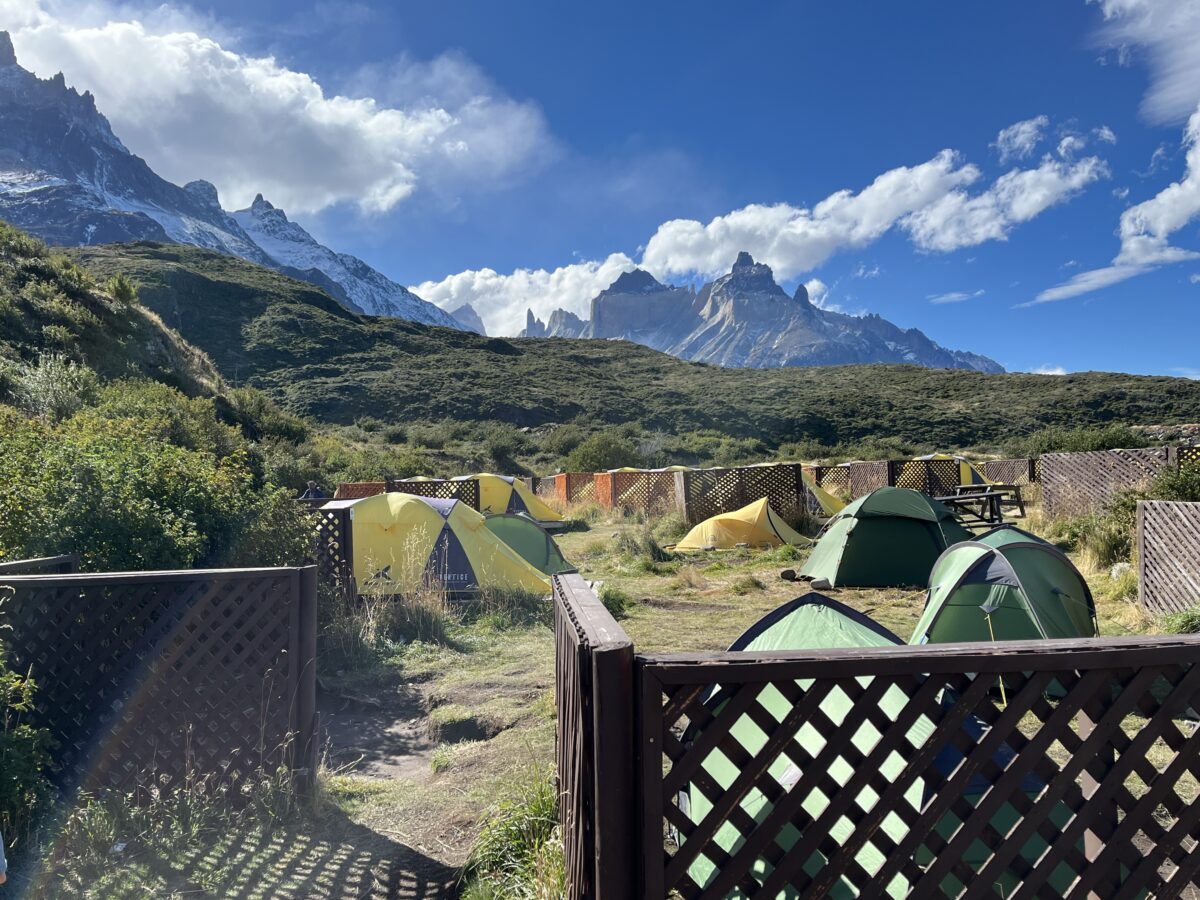
The last morning offered a chance to hike to the base of the Towers. I chose not to go. The cold I had been carrying had not let go, and the decision felt right. The weather closed in soon after, and the group returned after hiking two hours in the rain without seeing them. We packed up and hiked out in steady rain. Back at the trailhead, it ended quickly. A van ride. A hot meal of lamb. Puerto Natales. Showers. Dry clothes. I called my wife, Sara.
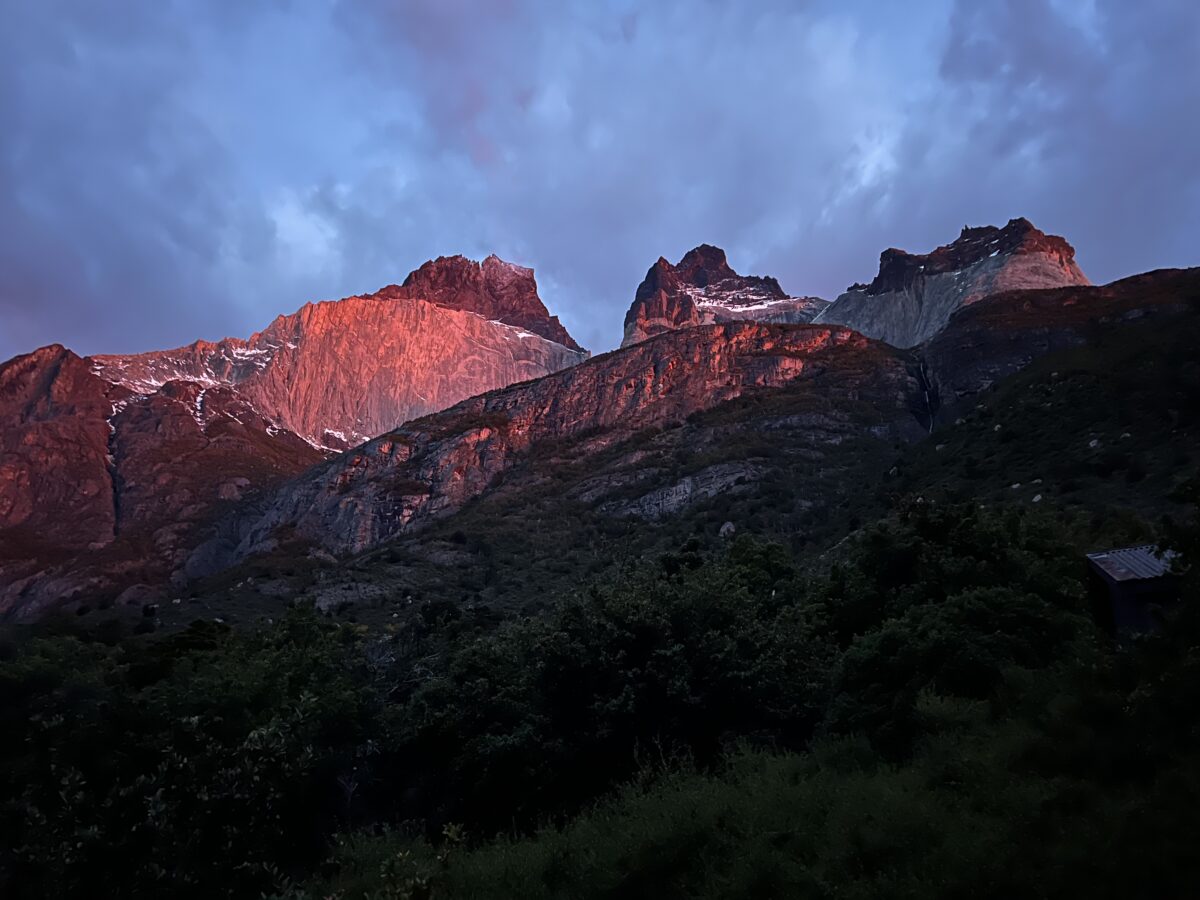
In the end, the O Circuit is exactly what it appears to be. It is not a casual trek. The distances are real, the conditions variable, and the terrain demands attention. The first half offers solitude and a sense of remoteness. The second, the “W” brings people, energy, and iconic views. And somewhere in between, on a windy, snow-covered pass, you find out what kind of day it is, and whether you are ready for it.
For me, it was not any single moment that defined the trip. It was all of it, the wind, the rain, the snow, the long days, the friendships along the way, the brief opening in the clouds when the light broke through and, for a moment, everything came into focus. I am really glad I did it. And as always, finishing one adventure only makes me wonder what the next one might be.
Looking to experience remote trails, variable conditions, and spectacular scenery with fellow NOLS alumni, family, and friends? Join us in Patagonia this November to hike the W Trek or next March to hike the O Circuit.
Topics: Alumni Trips, NOLS, NOLS Alumni Trips