Case Study: Fishhooks
The Setting
You’re on the first day of a twelve-day whitewater canoeing expedition down the Green River. Your group consists of fifteen students and four instructors. Everyone is paddling close together down a stretch of flat water practicing strokes, building skills, and getting to know one another. Spirits are high. People are laughing, chatting, and excited for the adventure ahead.
The river is shared with other boaters, including several people fishing along the banks and in fishing boats. Suddenly, one of your students raises their paddle horizontally overhead, the universal signal to stop. You quickly paddle over, sensing urgency.
It’s Bob, one of your students. Wide-eyed he says, “There is something sharp in my neck!”
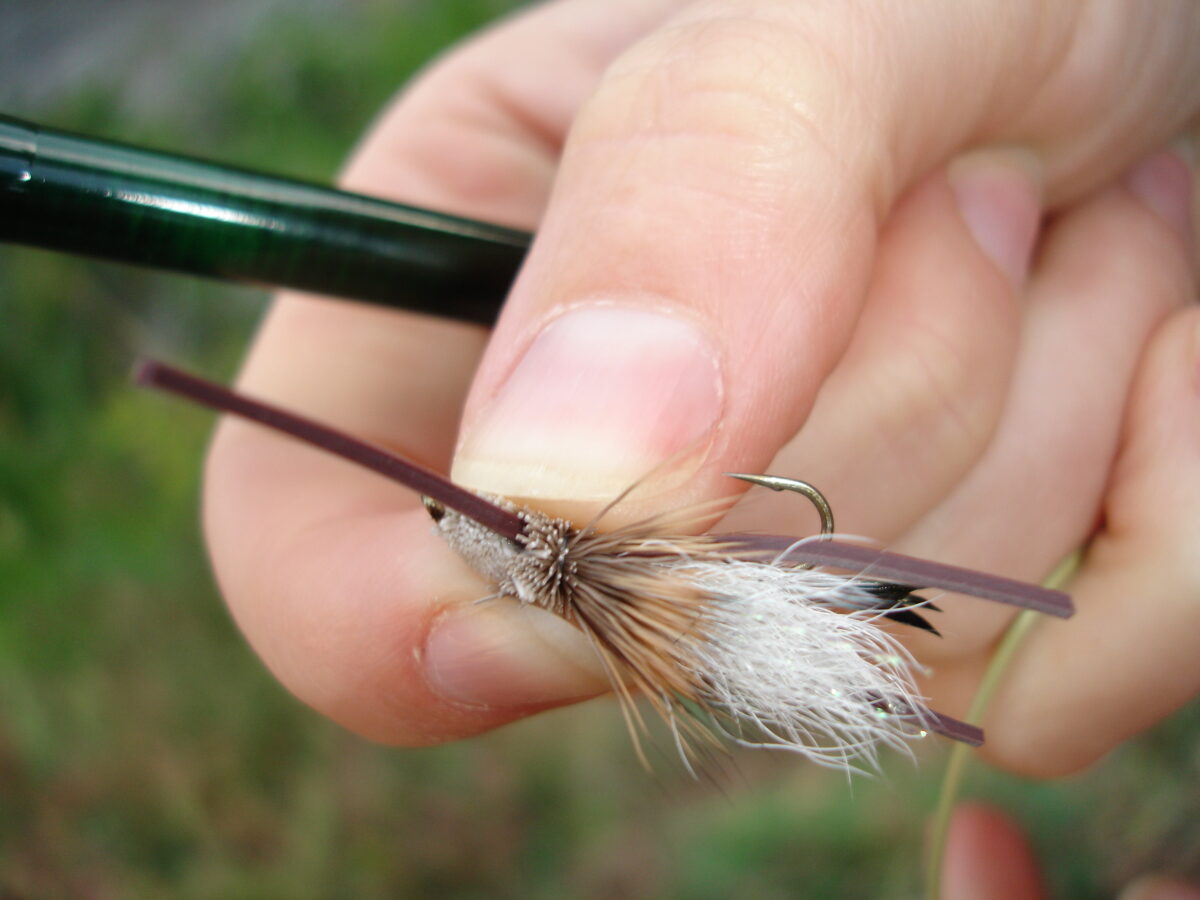
You take a closer look and confirm that there is an embedded fishhook in the right side of his neck. About 50 yards (46 meters) away, a startled fisherman is just realizing he’s hooked something, or rather someone. The group quickly moves to shore to assess the situation. You begin by doing a patient assessment.
SOAP Report
Subjective: The patient is an 18-year-old male whose chief complaint is, “There is a fishhook in my neck!” He was accidentally hooked by a fisherman while paddling. He is currently A+Ox4.
Objective
Patient Exam: The patient is seated in his canoe along the riverbank. The physical exam reveals no injuries aside from the embedded fishhook. Circulation, sensation, and motion (CSM) are intact in all extremities.
Vital Signs
| TIME | 1030 |
| LOR | A+Ox4 |
| HR | 76, strong, regular |
| RR | 14, regular, easy |
| SCTM | pink, warm, dry |
| B.P. | radial pulse present |
| Pupils | PERRL |
| T° | Not taken |
History
| Symptoms: | Localized pain at the site of the fishhook. |
| Allergies: | Tree nuts (none consumed today). |
| Medications: | Epinephrine for tree nut allergy (not used in 5 years), daily multivitamin. |
| Pertinent Hx: | None. |
| Last in/out: | The patient had a good breakfast and has had snacks throughout the morning. His urination and defecation are unremarkable. |
| Events: | The patient was accidentally hooked by a nearby fisherman. |
What is your Assessment and Plan? Think about this before moving to the next page.
Assessment
- Embedded fishhook in the neck
- Puncture wound.
Plan
- Cut the fishing line to free the patient from the pole.
- Determine whether the hook is barbed.
- Attempt removal using appropriate techniques.
- If removal is unsuccessful, return to the put-in and evacuate to a hospital.
Anticipated Problems:
- Risk of infection due to non-sterile hook.
Comments
Fishhook injuries are a known risk when sharing waterways with anglers or when out fishing yourself. There are two primary removal techniques:
- Attach a 12-inch (30cm) piece of string around the curve of the hook. Simultaneously push down on the eye of the hook and pull the string along the axis of the hook. This should disengage the barb and remove the hook cleanly.
- If the first method is unsuccessful, numb the skin (you can use ice from a cooler) and push the point of the barb through the skin. Snip off the barb and back the hook out.
After removal:
- Control bleeding with direct pressure (and elevation if possible)
- Clean the wound thoroughly with drinking quality water
- Apply a sterile dressing
- Monitor closely for infection (redness, swelling, warmth, pus, increasing pain)
To prevent fishhooks from getting embedded, it is recommended to:
- Wear eye protection and a wide-brimmed hat when fishing.
- Stay aware of others’ casting zones
- Consider using a barbless hook to reduce injury severity.
What Happened?
Using the string and push/pull method, you successfully remove the fishhook from Bob’s neck. The wound is irrigated with clean drinking water and dressed appropriately.
Over the next several days, you monitor the site closely. Fortunately, there are no signs of infection.
Bob keeps the fishhook tucked into his hat. It’s a souvenir and a story he won’t soon forget. As the trip leader, you’re relieved and quietly proud. Thanks to your preparation and quick thinking, Bob was able to continue the journey safely.
Topics: Case Study, Fishing, NOLS, Wilderness Medicine