The Setting
You’re the leader of a backpacking group that has been in the Bob Marshall Wilderness for the past 12 days. Two days ago, you picked up a new ration from a horse packer. You’re only three miles from the trailhead, looking forward to moving farther into the wilderness. One of your participants was not feeling well yesterday afternoon, so you sent them to bed early with advice to stay hydrated and rest. This morning you go check on how he is feeling.
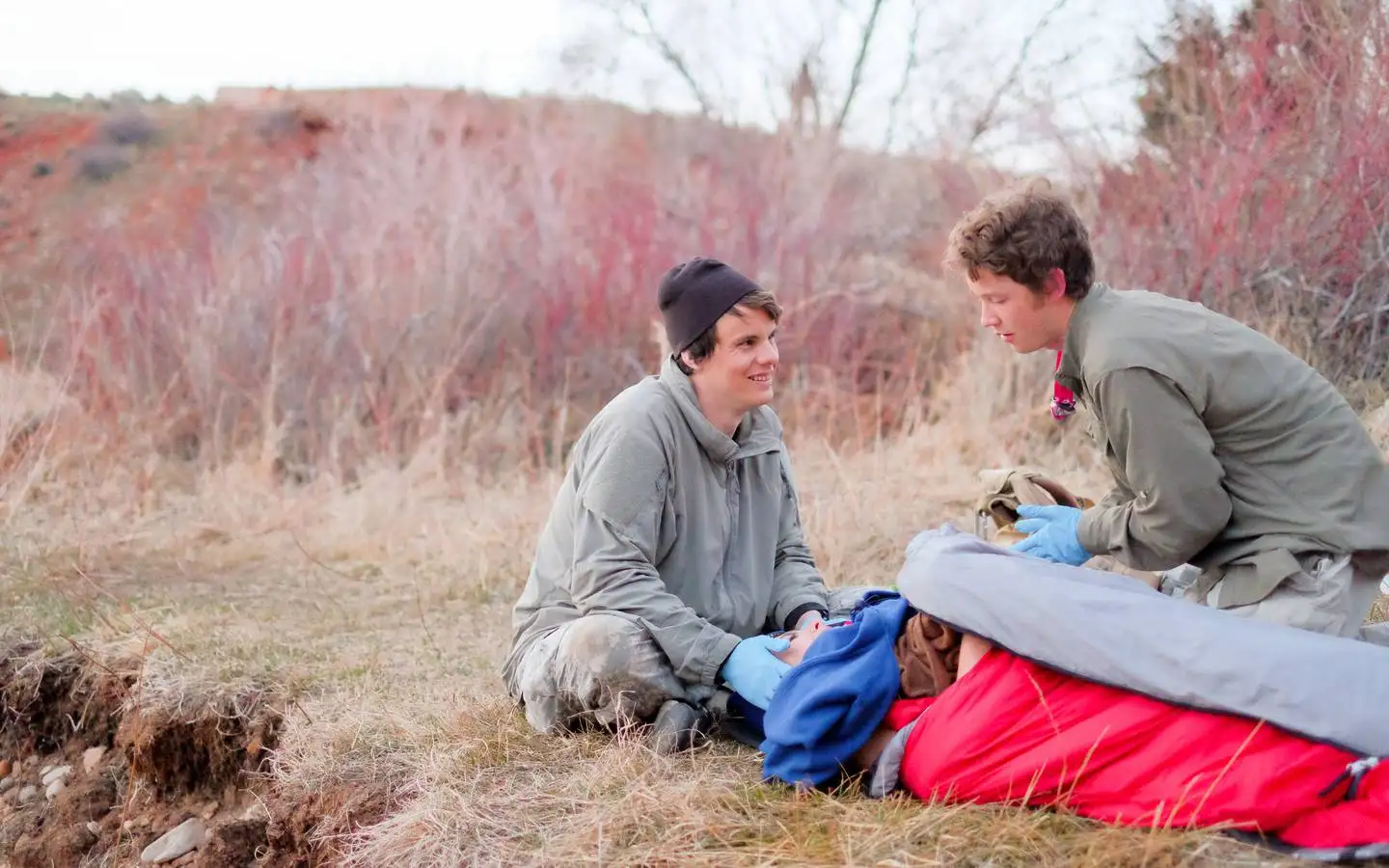
SOAP Report
Subjective/Story/Summary
The patient is a 21-year-old male complaining of a headache, nausea, muscle aches, fever, and chills. These symptoms began yesterday and have persisted through the night.
Objective
Patient Exam:
The patient is in his sleeping bag in his tent. He denies recent injury. Patient exam is unremarkable: no rashes, insect bites, or wounds.
Vital Signs
| TIME | 0800hrs |
| LOR | A+Ox4 |
| HR | 72, strong, regular |
| RR | 14, regular, easy |
| SCTM | pale, warm, dry |
| BP | radial pulses present |
| Pupils | PERRL |
| T° | 100.1°F (37.8°C) oral |
History
| Symptoms: | Dull headache, nausea, muscle aches, loss of energy and appetite. These symptoms began yesterday and have persisted through the night. No other group members are experiencing these symptoms. |
| Allergies: | Patient thinks he may be allergic to “cillin” antibiotics, but does not remember a specific event causing this concern. |
| Medications: | Patient is not on any regular medications. For this illness he has been taking ibuprofen 200 mg every 4 hours since noon yesterday. |
| Pertinent Hx: | None |
| Last in/out: | Patient ate breakfast yesterday and a small meal last night. He has not had breakfast today. Patient states he has been trying to stay hydrated and drank 3 liters yesterday. His urine was clear this morning. Patient has not had a bowel movement today. No diarrhea or vomiting. |
| Events: | Patient has been backpacking for 10 days. This illness began suddenly 24 hours ago. |
Stop...
What is your Assessment and Plan?
Take a few minutes to figure out your own assessment and make a plan.
Don’t cheat—no reading on without answering this first!
Assessment
- Patient appears to have a flu-like illness. He does not yet warrant an evacuation, as he does not have a severe headache, respiratory s/s, a high fever, or a persistent fever. He is able to rest and drink.
The Plan
- We will remain in camp today and allow the patient to rest and hydrate. We’ll monitor his condition and make an appropriate decision if his condition changes.
- The group will wash and boil all cooking utensils and everyone will wash their hands on a regular basis. We want to keep this illness from spreading in the group.
Anticipated Problems
- This illness persists or worsens and warrants an evacuation.
- The weather, which is currently fine, changes for the worse and complicates the evacuation picture.
Comments
The data NOLS has been keeping for over 27 years on field medical incidents tells us that flu-like illness (colds, upper respiratory infections, sore throat, fever, headaches) are among the most common medical complaints. Together with gastrointestinal problems (nausea, vomiting, diarrhea, constipation), flu-like illnesses account for 4 of every 10 reported illness incidents. This theme is seen in other publications on incidents on wilderness trips.
Often these illnesses are a viral infection of the nasal passages and throat that causes a runny nose, sore throat, cough, sneezing, headache, mild fever, muscle aches, and malaise. We believe they are most often transmitted by contaminated hands, and less commonly, although possible, as an aerosol. Wash your hands! Cough into your sleeve, not your hand.
These symptoms are common to many different medical presentations and can occasionally be the initial symptoms of more serious clinical conditions. Gastrointestinal symptoms (nausea, vomiting, and diarrhea) are usually caused by a “stomach bug” or “stomach flu.” Respiratory symptoms (cough, congestion, runny nose, sore throat) are usually upper respiratory viral infections. All viral illnesses can also cause a headache, malaise, fatigue, low-grade fever, muscle aches, body aches, etc.–what we refer to as a cold or flu. (Technically the flu is a specific diagnosis and cold is non-specific and colloquial; thus we use the term “flu-like.”)
The challenge to the wilderness leader is knowing how to manage these, and deciding when someone is sick enough to warrant an evacuation. You may have months of experience traveling to the ends of the earth and back, but very little experience looking at someone who is obviously sick and lacking any of the dramatic medical problems you studied in your WFR: things like pulmonary embolus, pneumonia, or heart attack.
Whether someone stays in the field or goes home depends in part on how much discomfort they are willing to tolerate. We’re often miserable when we have a flu-like illness, and the misery seems compounded when we’re camping. Also, while many of these illnesses are self-limiting, they can linger for days or weeks, despite all of our remedies. Our wilderness trips often have timetables. Patience and rest are not on the schedule.
In the midst of the influence of these human factors, we can try to base our decision on some guidelines. These are based on expert opinion, and have served NOLS field instructors well.
Evacuation is recommended for flu-like illness if:
- Fever persists >48 hours or is ( >102°F (39°C).
- Stiff neck, severe headache, difficult breathing, or wheezing develops.
- Signs or symptoms of pneumonia develop. This is usually associated with increasing shortness of breath, decreasing exercise tolerance, increasing fever, worsening malaise, and weakness with a predominance of coughing.
- Gastroenteritis with persistent or worsening abdominal pain over 12 hours, spiking fever, bloody diarrhea, or dehydration develops.
- There is an inability to tolerate any oral fluids for more than 48 hours, especially if accompanied by diarrhea volume losses, fever or vomiting.
- A sore throat in conjunction with inability to swallow water/maintain adequate hydration develops.
- An isolated sore throat with fever; red throat with white patches develops.
- There is a headache that does not respond to treatment, is sudden and severe, or is associated with altered mental status.
Treatment Principles for Flu-Like Illness
The management for flu-like illness is based on treating symptoms to help the patient feel better while these illnesses run their course.
- Hydration is important, as always, as is hygiene, especially handwashing. These illnesses are communicable, and we want to avoid spreading this through the group.
- Rest and patience are cornerstones of treatment. Some of these illnesses may respond to antibiotics, but most are self-limiting – they can take a week or more to resolve.
- Pain medications (Acetaminophen or NSAIDs) for headache and muscle aches are fine. Decongestants (e.g., pseudoephedrine), and anti-cough medications can treat upper respiratory symptoms. Bland diets are best for gastrointestinal distress.
End of the Tale
Unfortunately the patient did not get better. Over the next 24 hours he developed a cough, and began to hack up a pale yellow phlegm. His headache persisted despite hydration and ibuprofen, as did his muscle aches and general malaise. The fever stayed at 100°F (37.4°C). His appetite did not improve and the nausea persisted.
You understand that none of his s/s yet triggered your program’s evacuation guidelines, and you would like to wait another day to see if he feels any better. It would be unfortunate to leave the field and this great trip and then feel better in another day. But, at the same time you are worried about the route ahead, which crosses a high pass and moves much further from the trailhead. Also, the patient has been asking to go home. He thinks it is going to take a long time to feel better, and he doesn’t want to be in the field feeling this miserable.
Your decision is to walk him to the trailhead tomorrow. You’re hoping that without a pack he can manage the three miles. Your support group of five will be able to react if he is unable to walk.