Summer Programs for High Schoolers: Choosing an Adventure That Lasts
Every parent of a high schooler feels it: these summers matter. The window is short, and how your teen spends it shapes more than you’d think.
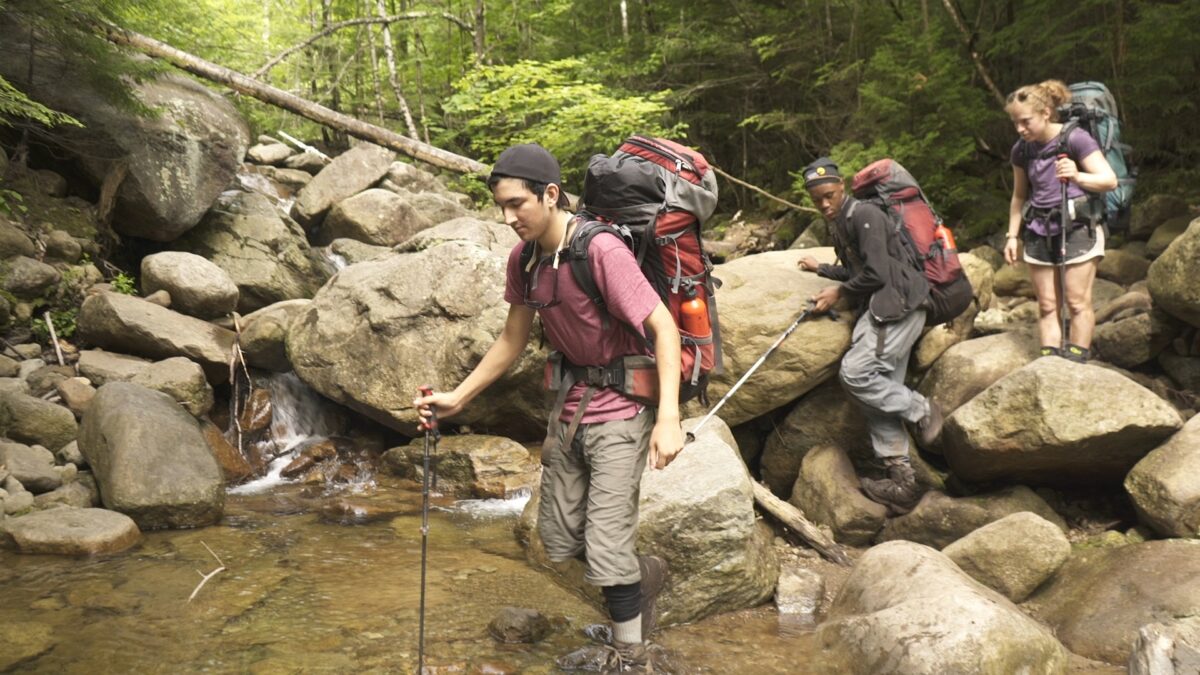
The science backs that up. Adolescence, roughly ages 12 to 18, is one of the most significant growth windows a person will ever experience. It’s when teens actively figure out who they are, what they’re capable of, and where they belong. The ones who get real opportunities to explore and test themselves during this stage develop a grounded sense of identity and confidence.
The question is: what kind of summer experience actually rises to the moment?
Why High School Is the Right Time for a Good Challenge
The summers between high school years are not just convenient windows to do something fun. In fact, developmental science tells us this time is critical for identity development and growth.
Psychologist Erik Erikson identified adolescence as the stage where young people navigate what he called “identity vs. role confusion” — the period between ages 12 and 18 when teens actively construct their sense of who they are and where they belong. Research on this concept shows that adolescents who successfully work through this stage develop a stable personal identity, while those who are not given opportunities to explore and test themselves are more likely to experience role confusion, anxiety, and difficulty committing to goals.
Neuroscience reinforces this. Laurence Steinberg, one of the leading researchers on adolescent brain development, describes the teen years as an “age of opportunity” — a period of extraordinary neuroplasticity where the brain can be shaped by experience at a level that rivals the first three years of life. The high school brain is not just developing. It is specifically primed to learn from novel, challenging, emotionally engaging experiences. What teens do during their high school years has a lasting impact on the adults they become.
So the question for parents becomes practical: how do you choose a summer program that actually harnesses this developmental window — one that helps your teen build identity, resilience, and lasting capability rather than just filling time?
What to Look for in a Summer Program
Not every program engages the mechanisms that developmental science says matter most during adolescence. Here is what the research tells us to look for, and how wilderness adventure programs like NOLS are specifically designed to deliver it.
Look for: Real consequences, not simulated ones.
Identity forms through genuine exploration and testing, not through low-stakes simulations.
A teen who navigates a wrong route with a fifty-pound pack and walks extra miles learns something about their own judgment that a classroom role-play cannot produce. A teen who miscalculates meal rations and the group eats less that night understands cause and effect at a level no worksheet delivers.
Look for programs where the feedback loop is real and immediate, because that is what builds the stable self-concept the developmental science describes.
Look for: Challenge calibrated to stretch, not overwhelm.
The challenge model of resilience is specific: the difficulty has to be hard enough to demand real coping, but not so extreme that it shuts a student down.
This is exactly how NOLS designs its courses. Teens start as learners with full instructor support, then progressively take on more responsibility (with navigation, meal planning, and group leadership) as their competence grows. By the final days of the adventure experience, students are leading independently with instructors in an oversight role. That progression is the challenge model in practice. Each day is slightly more challenging than the last, and each success builds the self-efficacy to take on the next one.
Look for: Extended time in unfamiliar social environments.
Neuroplasticity research tells us the adolescent brain learns most powerfully from novel, emotionally engaging experiences. Living and traveling with eight to twelve peers in the backcountry for two to five weeks is exactly that kind of environment.
There is no retreating to a phone or a private room. Teens have to navigate real interpersonal complexity — giving honest feedback, managing conflict, supporting someone of a different background — and the social skills they develop under those conditions are durable because they were forged under real pressure and within a shared experience, not practiced in a workshop.
Look for: Skill development through effort, reflection, and group dynamics.
Many summer programs for high schoolers offer certificates, grades, or letters of completion. These have their place. But self-efficacy, the engine behind lasting resilience, develops through actual skill-building experiences that look like doing something genuinely hard and succeeding through your own effort, and then integrating these experiences through personal and group reflection.
A study of nearly 900 young people who participated in NOLS courses found that students develop stronger leadership skills when programs include time for reflection, a sense of empowerment and belonging, strong relationships with instructors, and a safe, well-functioning group dynamic.
When a teen finishes a three-week expedition knowing they helped lead a group through weather, terrain, and interpersonal difficulty they did not think they could handle, that is not a line on a resume. It is a permanent shift in what they believe they are capable of.
That kind of growth carries forward into the classroom, the college essay, the first week of college year, and the first job where no one is giving instructions.
The High School Timeline: What Matters Most Each Summer
Freshman and Sophomore Summers
The first real taste of independence. Shorter programs (one to two weeks) that build confidence without overwhelming a teen who may be experiencing their first extended time away from home. The primary goal is not transformation. It is a positive experience that opens the door. If the program is right, they come home asking about what comes next, not relieved to be done.
NOLS Summer Adventure Courses for Ages 12-13:
NOLS Summer Adventure Courses for Ages 14-15:
- Wyoming Backpacking Adventure for Teens 14-15 – 30 Days
- Wyoming Backpacking Adventure for Teens 14-15 – 3 Weeks
- Wyoming Backpacking Adventure for Teens 14-15 – 2 Weeks
- Adirondack Backpacking and Canoeing Adventure – 3 Weeks
- Utah Whitewater River Adventure – 16 Days
- Salmon River Backpacking and Rafting Adventure for Teens 14-15 – 4 Weeks
- Salmon River Whitewater Rafting Adventure for Teens 14-15 – 2 Weeks
- Salmon River Rafting Adventure for Teens 14-15 – 2 Weeks
- Idaho Backpacking Adventure for Teens 14-15 – 2 Weeks
- Idaho Backpacking Adventure for Girls 14-15 – 2 Weeks
- Wyoming Backpacking Adventure for Girls 14-15 – 3 Weeks
- Wyoming Backpacking Adventure for Teens 14-15 – 3 Weeks
Junior Summer
This is the summer most families invest in something substantial, and for good reason. Rising juniors are developmentally ready for more challenge and independence. Extended programs — three to six weeks — allow for the kind of progressive leadership development that produces lasting growth, not just a memorable two weeks.
Programs with real leadership roles and documented skill development carry weight at this stage. Not because admissions officers are checking boxes, but because teens who pursue genuine challenge demonstrate initiative that is hard to fake — and develop capabilities that show up in how they write, speak, and carry themselves through senior year.
NOLS Summer Adventure Courses for Ages 16-17 Only:
- Alaska Backpacking and Sea Kayaking – 16 and 17 only
- Wind River Wilderness – 16 and 17 Only
- Tanzania Cultural and Service Expedition – 16 and 17 only
- Alaska Backpacking – 16 and 17 Only
- Wind River Mountaineering – 16 and 17 only
- Rocky Mountain Rock Climbing – 16 and 17 only
- Prince William Sound Sea Kayaking – 16 and 17 only
- Yellowstone Wilderness – 16 and 17 only
Senior Summer (Pre-College)
The final summer before college is an opportunity for a transition experience. Extended expeditions build the kind of self-reliance that translates directly into college readiness: managing your own schedule, living with people you did not choose, solving problems without parental intervention. Research from the Journal of Outdoor Recreation, Education, and Leadership found that students who completed outdoor orientation and expedition programs before college showed significant gains in resilience and well-being compared to peers who did not — and that these gains predicted stronger adjustment to university life.
Some teens use this summer to preview a gap year. For those considering an extended break before college, our guide to the power of a gap year after high school covers what the research says about outcomes.
NOLS Summer Adventure Courses for Ages 16+:
- Alaska Mountaineering
- Alaska Backpacking and Sea Kayaking
- Whitewater River Expedition
- Wilderness Horsepacking
- Backcountry Rock Climbing – 30 Day
- Backcountry Rock Climbing – 21 Day
- Rocky Mountain Service Expedition
- Whitewater Canoeing Expedition
Thinking Ahead: What Admissions Officers Actually Notice
Summer programs for high schoolers can be pivotal for college applications, but not the way most families assume. Admissions officers read thousands of applications from students who attended selective programs, but the prestige of the program name matters far less than what the student did there, what they took from it, and how they talk about their experiences.
What stands out in applications:
- Students who held real responsibility. Programs where teens led, decided, and were held accountable for outcomes give applicants something concrete and specific to write about. Not “I learned teamwork” but “I led a group of ten through a route decision that affected everyone’s day.”
- Experiences that reveal character. A wilderness expedition where a student pushed through exhaustion to support a struggling teammate says something about who they are. A university lecture series, however prestigious, does not produce that kind of evidence.
- Growth through genuine difficulty. The most compelling application essays come from real struggle and what emerged from it. Experiences within one’s comfort-zone generally do not generate those stories.
The leadership skills that teens develop in these conditions (decision-making, composure, interpersonal awareness, resilience) transfer directly into every setting a student will enter after the expedition ends.
And the group reflections that NOLS students engage with during their expeditions help them prepare to write the strongest college essays. They are the ones who can articulate what changed in their judgment, their confidence, and their understanding of how they function under pressure.
What a NOLS Teen Expedition Develops
Wilderness-based leadership programs take a fundamentally different approach to other academic, arts, and science summer programs. Rather than adding knowledge in a controlled classroom setting, they build judgment under real conditions. If your navigation is wrong, you walk extra miles. If your group dynamics break down, everyone feels it. If you don’t take the time to set up your tarp correctly, you get wet.
NOLS runs multi-week wilderness expeditions for students ages 14 to 17 in locations across the American West, Alaska, and internationally. Courses run two to five weeks. No prior wilderness experience is required.
Here is what students actually build, and where it shows up afterward:
- Navigation and backcountry travel. Students learn to read terrain, use a map and compass, and make sound travel decisions in the field. The cognitive discipline this requires — attention to detail, pattern recognition, contingency planning — transfers directly into academic work and problem-solving under pressure.
- Risk assessment and decision-making. Real wilderness conditions require students to evaluate hazards, communicate clearly, and make decisions with incomplete information. This is not a workshop exercise. When a creek crossing is higher than expected from recent rain, today’s student leader calls a halt, consults the map, asks for group input, and makes the call. The instructor may ask a probing question, but the decision belongs to the student. That experience rewires how teens approach decisions in every context that follows.
- Leadership and Expedition Behavior. NOLS instructors teach leadership not as a personality trait but as a learnable set of skills. Students practice giving and receiving direct feedback, managing group dynamics, and leading from different positions within a group. They learn that leadership is not about being in charge — it is about making the people around you more effective. A peer-reviewed study of over 800 NOLS youth participants across 105 multi-week courses found that every measured program quality indicator — including sense of empowerment, group functioning, and instructor-student relationships — predicted significant gains in leadership learning. That understanding shows up in group projects, team sports, dorm life, and eventually in workplaces and relationships.
- Interpersonal skills under real pressure. Living and traveling with eight to twelve peers for weeks creates social complexity that no classroom can simulate. There is no avoiding the person who frustrates you. There is no retreating to your room. Students learn to manage conflict constructively, contribute to group function even when they would rather not, and communicate honestly without damaging relationships. Research on adolescent identity development confirms that peer relationships during this stage are critical to forming a stable sense of self — and that the quality of those interactions, not just the quantity, shapes long-term social competence. These are the skills that matter in every dorm room, team, and workplace they will enter for the rest of their lives.
- Resilience and self-knowledge. When you spend three weeks responsible for your own shelter, food, and navigation — and you finish — your confidence in your own competence shifts in a way that is difficult to replicate elsewhere. Psychologists call this self-efficacy, and research consistently shows it develops most durably through actual mastery experiences — not encouragement, not visualization, but doing something hard and succeeding. Students return home with evidence that they can do hard things. That evidence carries them through difficult semesters, challenging relationships, and the inevitable moments in adult life where no one is coming to solve the problem for them. Separate research on NOLS participants specifically found gains in self-efficacy, interpersonal leadership, and situational coping that persisted after the course ended.
- Environmental stewardship. Leave No Trace principles are not a curriculum module at NOLS — they are how students actually travel through the wilderness. When your drinking water comes from a stream you are responsible for protecting, stewardship becomes personal. Students leave with a genuine ethic of care for wild places.
NOLS instructors are not guides, they are educators. Students do the work. That distinction is the source of the program’s impact.
Is Your High Schooler Ready?
Not every student is ready for a multi-week wilderness expedition, and that is fine. Here are the honest questions to ask.
- Is your student open to being challenged? Wilderness programs work best for students who are willing to be uncomfortable. Students who resist challenge tend to have difficult experiences and limited growth.
- Can your student function in a group without constant reassurance? Wilderness travel is collaborative. Students who need frequent external validation can struggle in group settings far from home.
- Does your student want this, or do you? Student motivation matters enormously. The teens who grow the most on NOLS expeditions are the ones who chose to be there.
- Is your student physically prepared? NOLS teen expeditions involve significant physical activity — four to eight miles per day carrying a loaded pack. Students should arrive with baseline fitness. Start building two to three months before the course with day hikes, cardiovascular exercise, and core work. No prior wilderness experience is required.
If the answers point toward yes, a NOLS teen expedition is one of the most substantive summer programs for high schoolers available — not because it looks impressive on a resume, but because it builds the kind of person who is ready for what comes next.
Take the Next Step
NOLS teen expeditions run each summer with courses available across multiple locations and lengths. If you are ready to explore what a wilderness expedition could look like for your student, browse teen summer courses by location, length, and dates.
For a broader view of summer options, see our ultimate guide to summer programs for teens.
For route-specific options, explore our guide to the best backpacking trips for teens.
The right summer program does not just fill a summer. It gives a teenager evidence that they can do hard things — and that evidence lasts.
Frequently Asked Questions
Do summer programs really help with college admissions?
Summer programs can strengthen a college application, but only when students can speak specifically about what they learned and how they grew. Admissions officers are not moved by program names alone. They respond to evidence of real challenge, genuine growth, and character under pressure. A wilderness expedition that pushed a student beyond their comfort zone and required them to lead others gives applicants far more to write about than a passive academic program.
How much do high school summer programs cost?
Costs vary widely by program type. University pre-college programs typically range from $3,000 to $8,000 for two- to six-week sessions. NOLS teen wilderness expeditions range from $3,000 to $6,000 depending on course length and location. Selective STEM research programs are often free or low-cost. When evaluating summer programs for high schoolers, factor in what students actually develop — not just program duration or prestige.
What if my teen has never been camping or backpacking?
That is completely normal. Most students on NOLS expeditions arrive with no backcountry experience. Instructors teach every skill from the ground up — tent setup, camp stove use, map reading, efficient packing. What matters is not prior experience but willingness to learn and openness to challenge.
What age can students attend NOLS teen expeditions?
NOLS teen expeditions are designed for students ages 14 to 17. Courses run two to five weeks in wilderness locations across the American West, Alaska, and internationally. No prior wilderness experience is required. Students should arrive with baseline physical fitness and a willingness to be challenged.
Are wilderness expeditions safe?
NOLS maintains rigorous safety standards — instructors hold wilderness medicine certifications, risk management protocols are field-tested over six decades, satellite communication is standard, and evacuation procedures are established for every course area. NOLS is accredited by the Association for Experiential Education (AEE) and has a safety record built across hundreds of thousands of student-days in the field.
Topics: