More Than Just Memories
4 MIN READ
Two New Studies Quantify How Participants Make Meaning in the Field
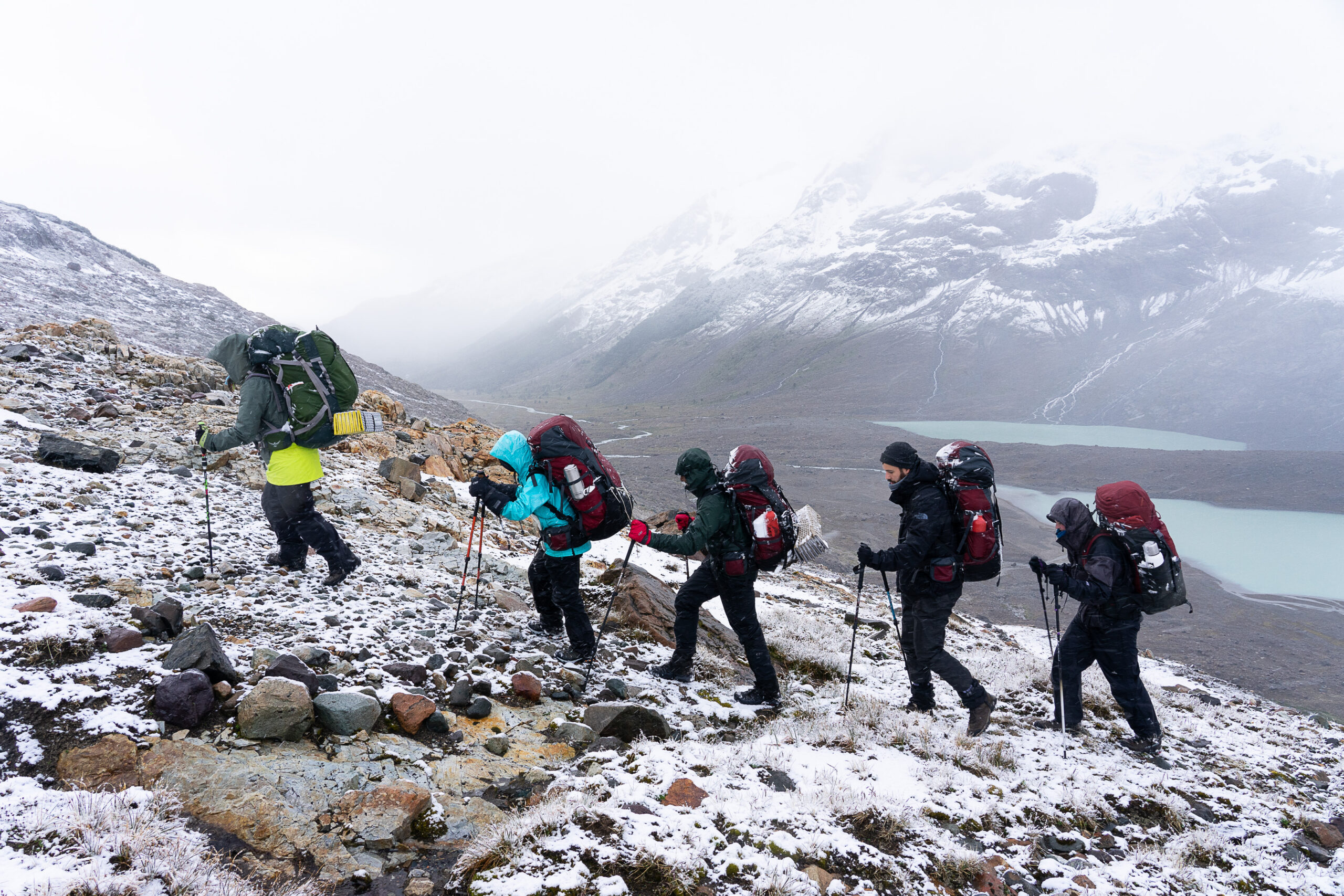
Students on a course in Patagonia hike through a snow squall. Photo by Oscar Manguy
SHARE:
SHARE:
February 26, 2026
What actually shapes us more in the backcountry: the summit—or the struggle?
That question sits at the heart of new research examining how specific moments on NOLS courses contribute to a person’s identity development.
Outdoor adventure programs are often filled with both high points and hard days. But until recently, little was known about how participants make meaning from those experiences—or which moments matter most over time.
Two recent scholarly studies have added valuable contributions to this line of inquiry. The papers, published in the Journal of Adventure Education and Outdoor Learning and the Journal of Experiential Education, shed important light on the specific benefits of a NOLS course. Drawing on a narrative identity framework (the idea that we build our sense of self by weaving events into a sustained personal narrative), researchers analyzed written reflections from over 200 respondents, who ranged in age from 14 to 69.
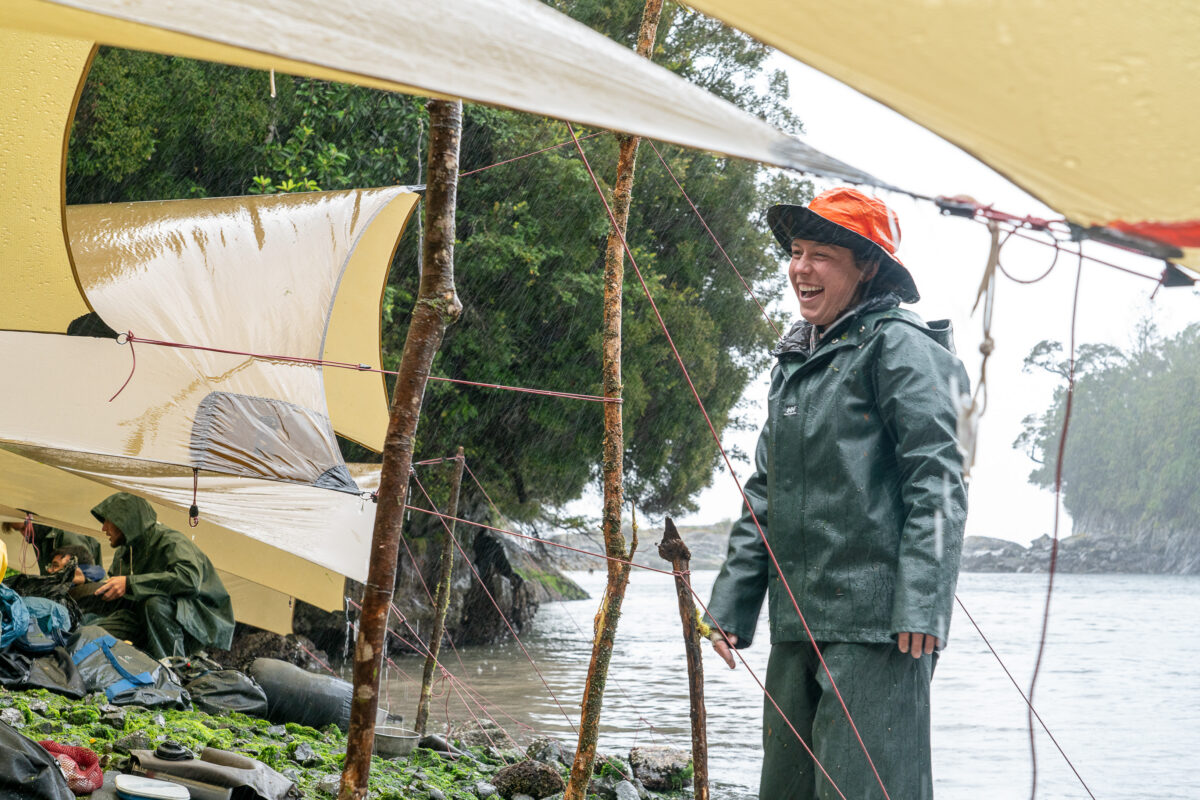
What they found is that a student’s most powerful meaning-making moments often occur in relationship, whether that’s support and encouragement from an instructor or working as a team to overcome challenging weather and terrain. Perhaps most surprisingly, participants reported that moments perceived as “low points’’—conflict in a group, a particularly unpleasant stretch of weather—often created the deepest and most lasting meaning.
Michael Froehly, a NOLS instructor and the lead author of both articles, says it’s important to recognize that meaning-making moments can come from a variety of situations. Often, these indelible experiences arise from something far more subtle than a dramatic summit attempt or the successful navigation of difficult whitewater.
“NOLS experiences are so developmentally rich and potent,” Froehly says. “They contain a lot of powerful moments all at once, crammed together in a matter of days or weeks.”
From these concentrated experiences, participants regularly gain multiple insights about themselves, others, and the world around them—knowledge that can shape who they believe they are and who they want to become.
Among younger alumni, high points often centered on achievement and awe: mastering a technical skill or pushing through tough conditions. These moments reinforced confidence and competence. But low points—conflict in the group, self-doubt, relentless bad weather—often prompted deeper reflection. Participants were especially likely to connect these challenging moments to lasting shifts in how they saw themselves.
Froehly says that some of the most meaningful moments for participants were those experiences that lacked a tidy resolution or completion.
“It can be those experiences of ‘not overcoming’ that are equally, if not more, powerful,” he says.
Froehly’s research also challenges the idea that identity development is primarily a teenage task. While adolescence is a key developmental period, Froehly notes that our life story continues to evolve well into adulthood. A 16-year-old and a 65-year-old may draw different lessons from the same expedition, but both can experience meaningful shifts in how they understand themselves.
For Froehly, this insight is both professional and deeply personal.
In addition to serving as a NOLS instructor and a research associate for the Maine Math & Science Alliance, he is also a longtime NOLS alum. His first course was a semester for outdoor educators, which he completed in 2011.
“It was a turning point in my life,” says Froehly. “Not only did it significantly impact my identity, my relationship with others, and my connection to nature, but it also galvanized my path towards becoming an outdoor educator.”
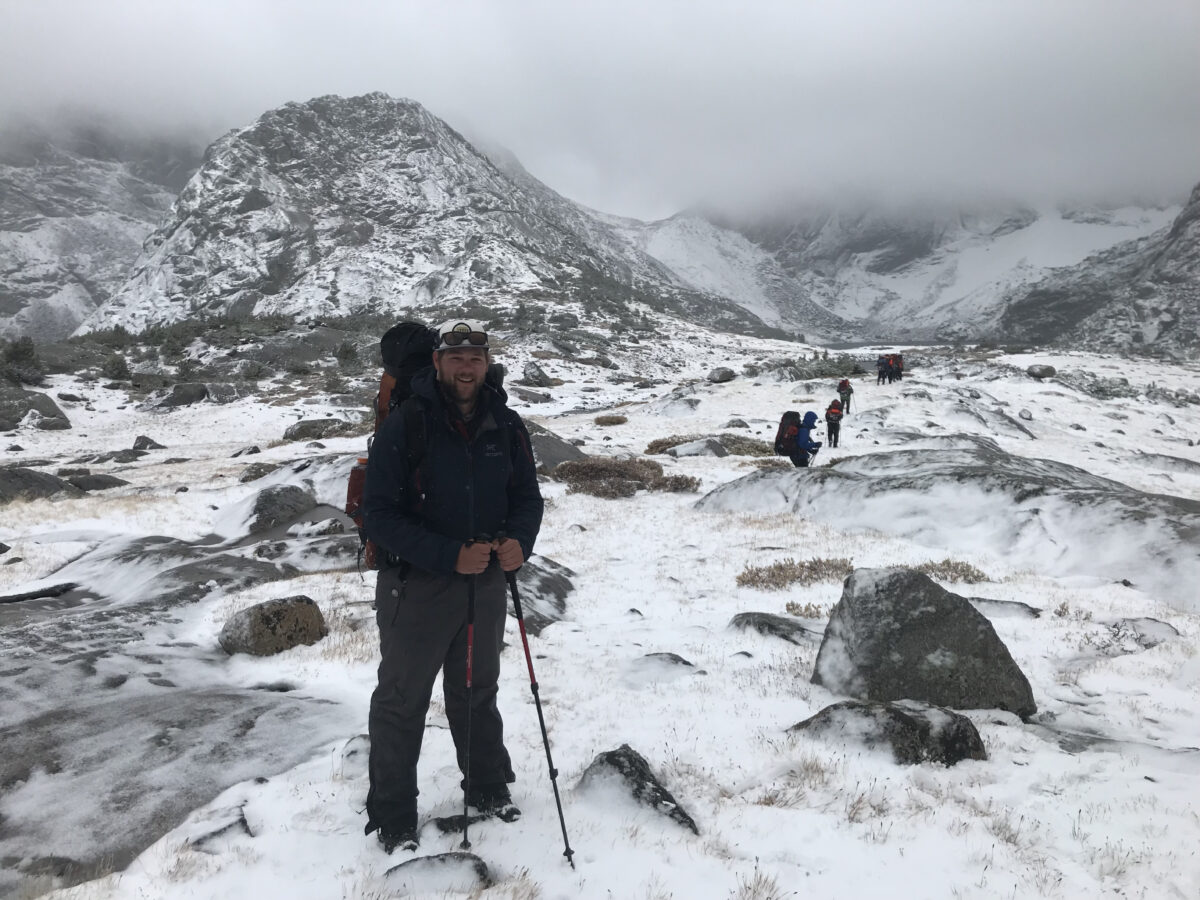
After completing his NOLS instructor training in 2014, Froehly saw firsthand the effect expedition courses had on students of all ages. The magnitude of that impact led him to pursue graduate work at the University of Utah, where he earned a PhD in Outdoor Education and Youth Development.
That academic work, coupled with years as a field instructor, instilled a belief in Froehly what the data now supports: NOLS courses can leave a powerful imprint, regardless of a student’s age or specific experience.
“From these experiences, we gain lessons and insights about ourselves, others and the world around us,” says Froehly. “A NOLS course can lead to important understandings of who you are, who you may have been, and who you can become. That is an incredibly important part of human experience, and it impacts a person’s wellbeing and development long after a course has ended.”
Sign up to read the latest each week
Subscribe to the NOLS Newsletter
Related
Keeping Public Lands Public

Big Air, Backcountry Roots
NOLS Appoints Molly Barnes as Interim Vice President for Wilderness Medicine

Built for Steep