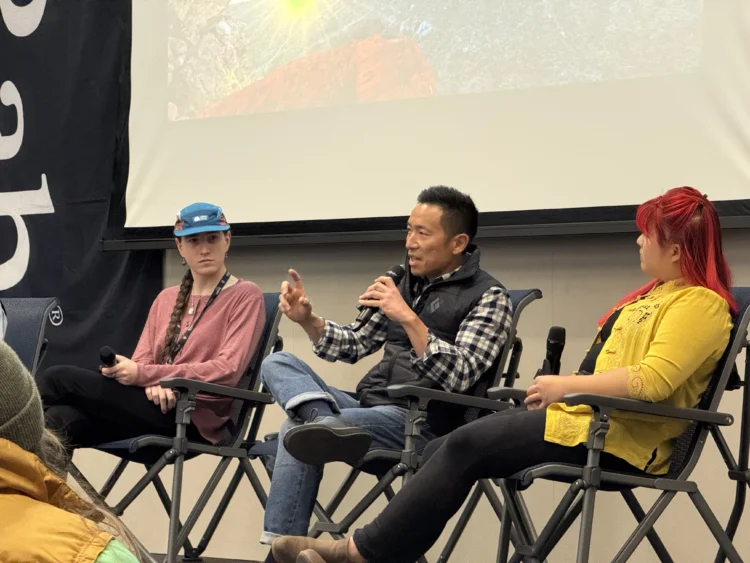
Big Air, Backcountry Roots
5 MIN READ
How NOLS alum Rochelle “Rocke” Weinberg is rising through the ranks of American snowboarding
SHARE:
SHARE:
March 3, 2026
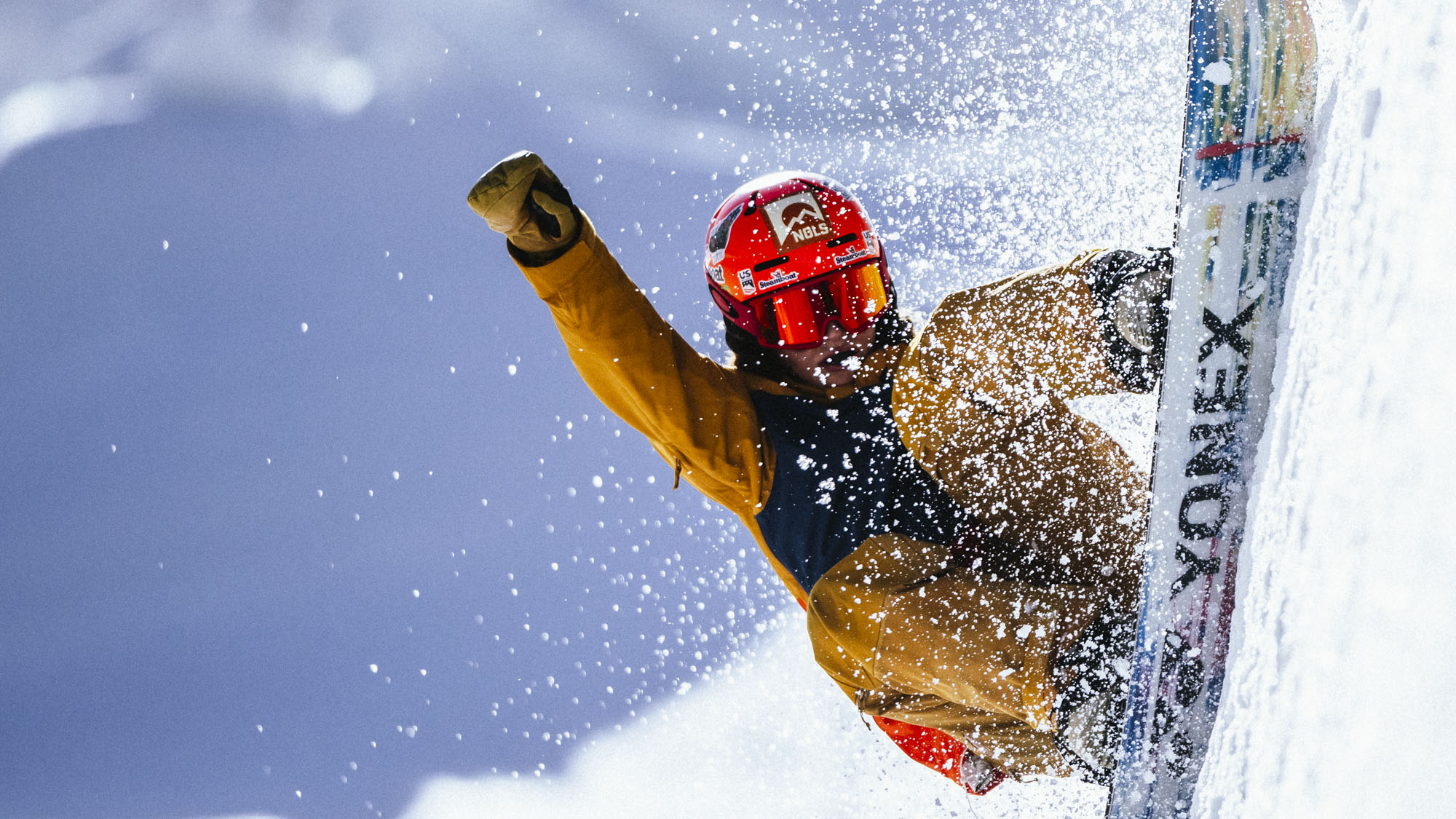
CALGARY, ALBERTA–When Rochelle “Rocke” Weinberg drops into the 22-foot SuperPipe at the Junior World Championships this week, she won’t be thinking about judges or podiums. Sometimes, she’s thinking about falafel. Or wool socks. Or the long, brush-busting miles of an Alaska backpacking course.
At 16, Rocke is already one of the most promising young halfpipe riders in the United States. Raised in Steamboat Springs, Colorado, she started skiing at age three. After two years of watching snowboarders spin and flip through the terrain park, she switched sports for good.
“I saw them doing tricks and thought, ‘This is way cooler,’” she says.
By the time she was seven years old, Weinberg had entered her first competition. Soon came national titles in halfpipe, slopestyle, rail jam, and boardercross. But it was the halfpipe—riding a massive U-shaped channel of snow, launching above 22-foot walls to perform spins and inverted tricks—that continued to capture her imagination.
“I really loved going big,” says Weinberg. “When I got my first five [a 540° degree rotation], I was like, ‘This is awesome.’”
At 13, Rocke became one of the youngest athletes named to the U.S. Snowboard Rookie Halfpipe Team. She has since competed at the Youth Olympic Games and on the World Cup circuit. In 2026, she made her X Games debut, finishing eighth in the Women’s SuperPipe.
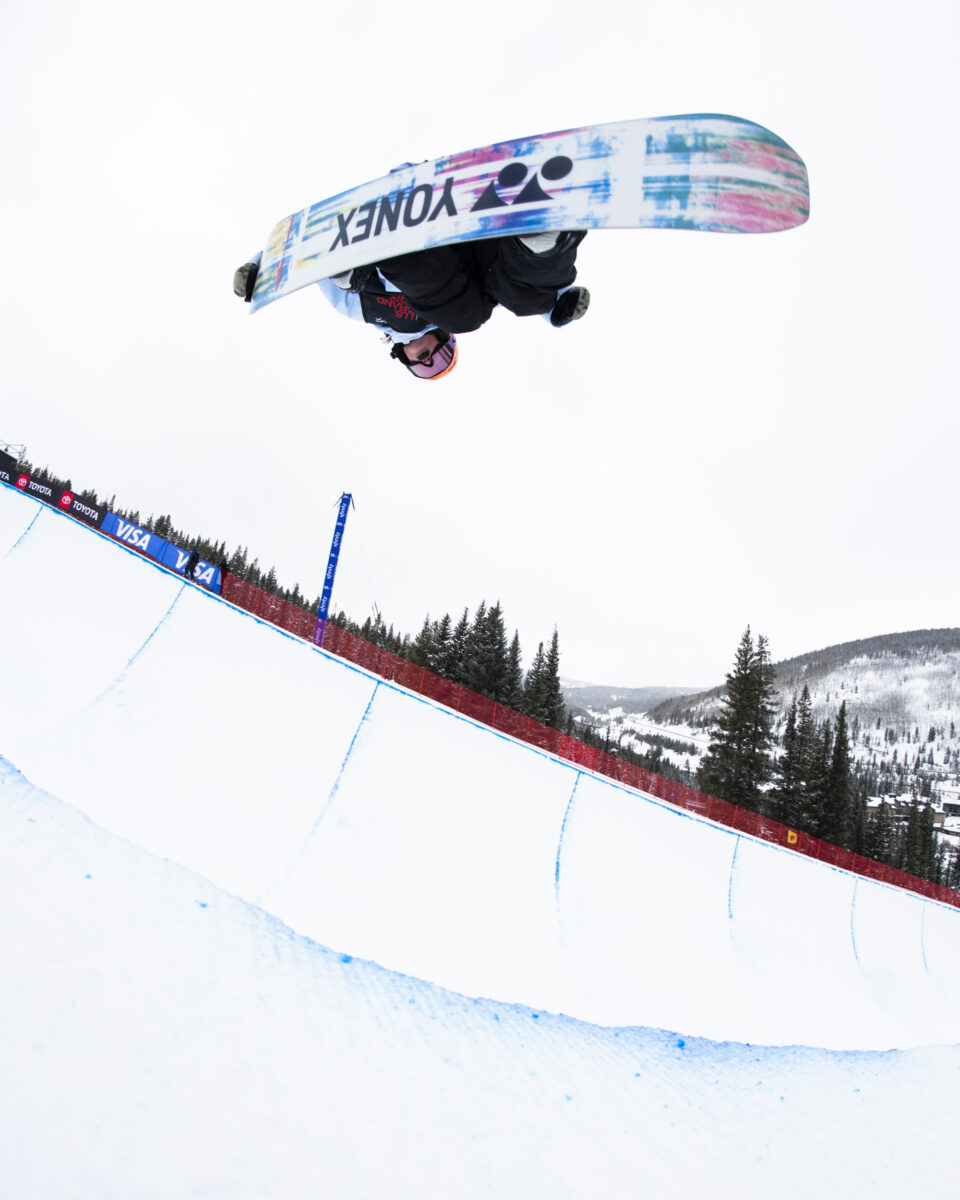
For a lay audience, elite halfpipe riding can look impossibly nerve-wracking: athletes soaring 15 to 20 feet above the lip, throwing double corks before dropping back into the transition. However, inside the pipe Rocke says it feels surprisingly calm.
“You’re so steady in the air,” she explains. “Almost like you’re being supported or held. It feels incredible.”
That composure in high-consequence terrain is something she traces directly to NOLS.
Rocke first encountered NOLS through her dad, a course alum. At 14, she enrolled in a Big Horn Mountains backpacking course. Though she grew up outdoors, she quickly realized this was different.
“You go off trail. You take bearings. You use UTMs. You really read the land,” she says. “You build the fundamentals.”
Standing just over five feet tall, she likes to joke that she and her backpack were approximately the same size on that trip, which made the miles feel even more arduous. But Weinberg says she’s always been someone who embraces Type II fun.
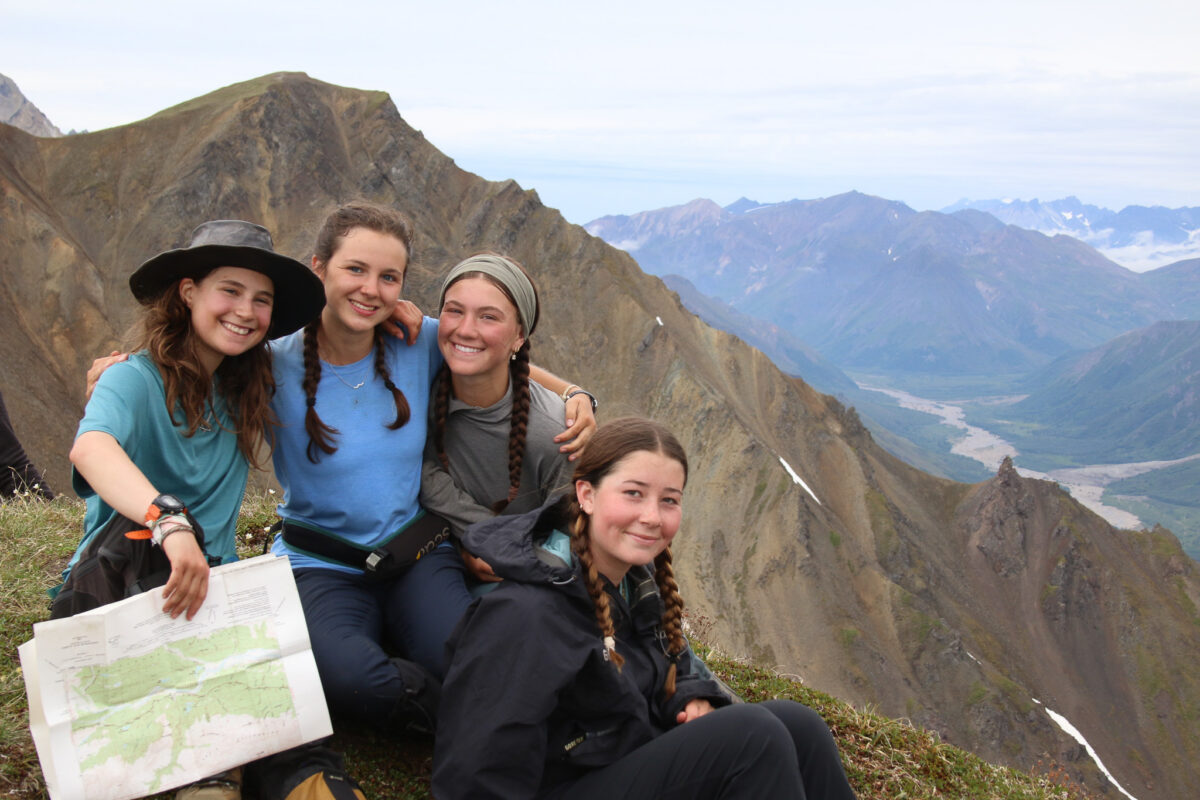
The following year, she returned for a whitewater kayaking course, where she practiced rolling and navigating Class IV rapids. Later, in Alaska’s northern Talkeetna Mountains, she carried expedition loads across tundra and thick brush, navigating rapidly shifting Arctic weather.
Instructor Sarah Nuñez remembers Weinberg as “probably the most excited and curious student I’ve had in a long time—an extremely hard worker with excellent work ethic, always willing to step out of her comfort zone and offer meaningful feedback to peers.”
On expedition, says Nuñez, Rocke became one of the most skilled navigators in her group and was chosen by classmates to lead their Independent Student Group Expedition—when students plan routes and manage risk without direct instructor oversight.
“She was inspired and inspiring,” Nuñez says. “Fun, funny, and incredibly strong in the outdoors.”
River instructors saw the same traits: unflappable in rain, heat, or challenging rapids; happiest outside; all-in when learning a new skill like hardshell kayaking. If she found something she loved, she sought extra instruction to improve.
For Weinberg, one of the biggest takeaways from these courses is the importance of fundamentals.
“It’s like NOLS teaches you building blocks,” Rocke says. “You learn the basics first. Then you build.”
In snowboarding, progression works the same way. An athlete doesn’t attempt a double flip on day one. They master straight airs. Then 180s, 360s, 540s. Then inverted tricks. Each layer rests on stable foundations: edge control, timing, spatial awareness, and risk assessment.
On longer NOLS courses, students internalize those same fundamentals—navigation, leadership, communication, self-care—before stepping into greater responsibility. By the time Rocke led her ISGE in Alaska, decision-making under uncertainty felt familiar.
“The risk is still there,” she says of both mountaintops and halfpipes. “The wall is still 22 feet high. But you’ve built those fundamentals so well that it’s less scary.”

During winter, Rocke trains most days on snow, balancing schoolwork at night. Summer becomes her reset—a time for cross-training and returning to the backcountry.
“It gets you away from your phone,” she says. “You learn to trust your instincts.”
Before competitions, she visualizes her runs and studies video. Then she looks down at the NOLS stickers on her board.
“They take me back to the backcountry,” she says. “To leading our group. To setting up tarps in the rain. To sitting on my pack after a hard day and thinking, ‘We made it.’”
Later this year, Rocke plans to return to Alaska for a mountaineering course and is considering pursuing a NOLS EMT certification. Long term, she hopes to become a wolf biologist.
“I can’t sit inside for too long,” she says. “I need to be outside.”
For now, “outside” is top-tier competitions, including the junior worlds. It’s 22 feet of icy wall rising in front of her. And when she drops in, it’s not only with the confidence and preparation forged in the wilderness, but also with the support and encouragement of her NOLS family.
“I’m not surprised by Rocke’s incredible level of success, but I am impressed,” says Nuñez. “She’s a tiny but mighty warrior.”
Sign up to read the latest each week
Subscribe to the NOLS Newsletter
Related
Keeping Public Lands Public
NOLS Appoints Molly Barnes as Interim Vice President for Wilderness Medicine
More Than Just Memories
Built for Steep