Where Play Meets Purpose: A Journey Through the Canyons
Since 2022, NOLS and the University of Michigan Ross School of Business have collaborated on a yearly weeklong expedition to the canyons in southeastern Utah. This expedition is the culmination of a semester-long leadership course for Ross undergraduate students. It combines concepts and learnings from the classroom course with the NOLS leadership curriculum in a real-world, hands-on experience, putting leadership into practice. Thank you, Ross, for trusting NOLS to create these experiences for your students!
“What is one word that describes how you are feeling in this moment?” Excited. Apprehensive. Eager. Curious. Sleepy. Anticipatory. We headed into the canyons, thinking we were ready for what lay ahead.
We were self-sufficient, carrying all we needed on our backs, save for the water hidden in potholes and slot canyons. We were sunburned, sun-hoodied, sunglassed, and sun-hatted. We had snacks, chocolate that would melt immediately in the sun, lemonade, hash browns, and blocks upon blocks of cheese. We had hidden away proverbial “luxury items”—camp shoes, inflatable pillows, a book or two, lotion to combat the desert dryness, and an extra pair of socks for sleeping in.
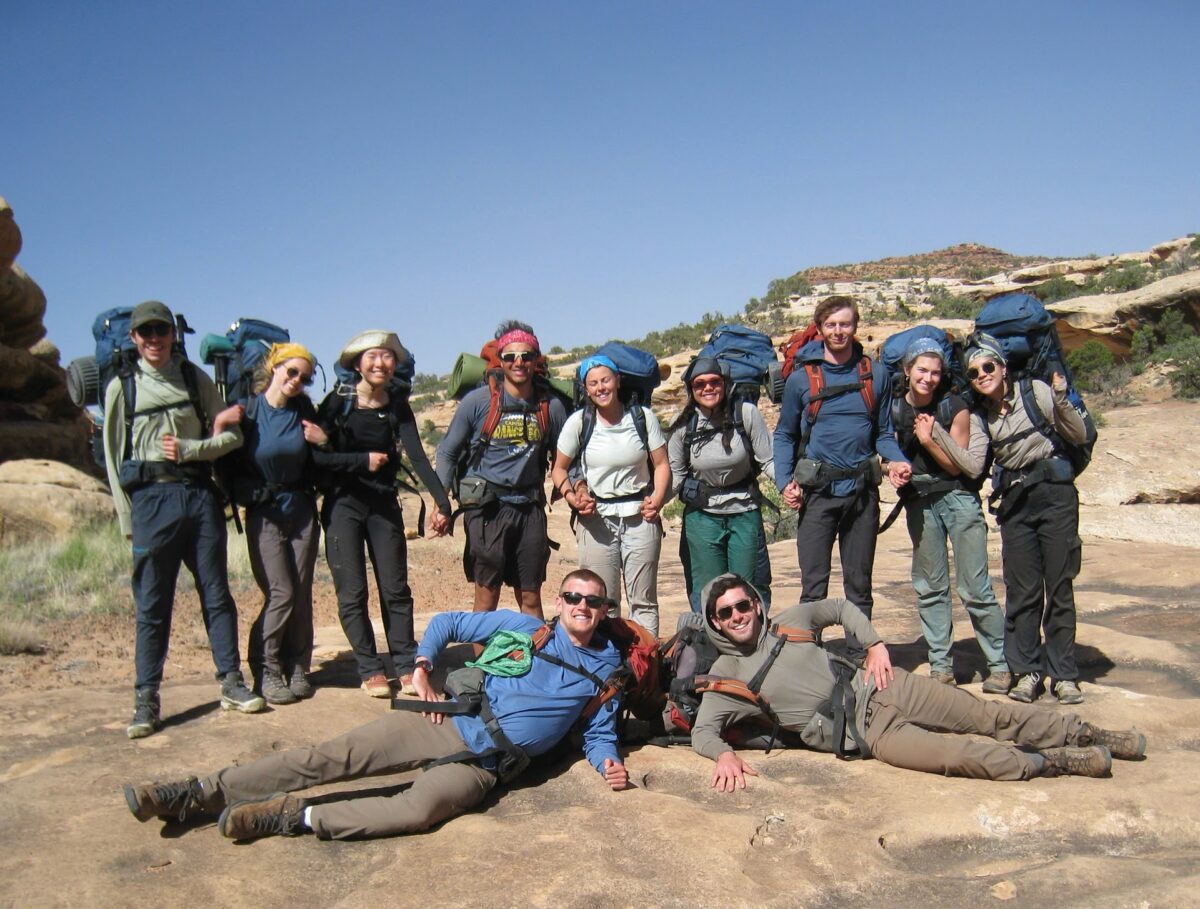
Most importantly, we had each other. Our community for the week: 15 individuals. 11 students and 1 professor from the University of Michigan. Three NOLS instructors.
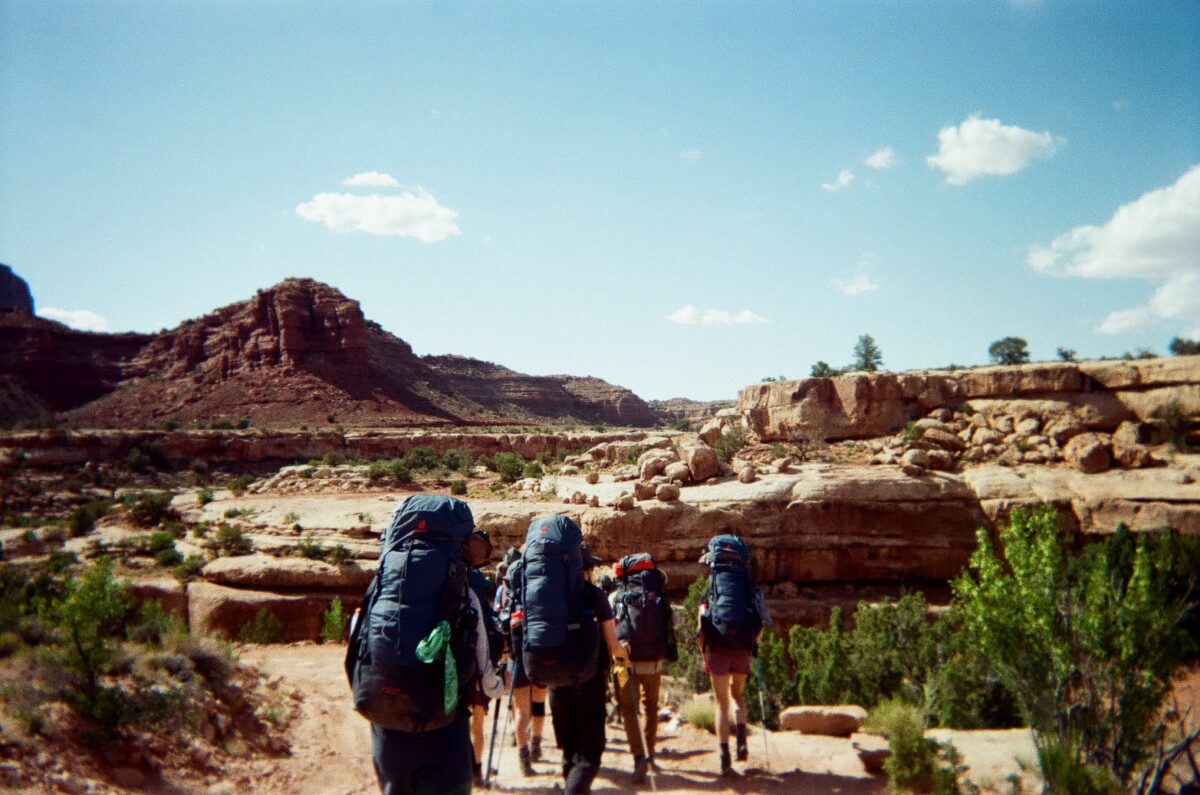
Our goal, straightforward on the map: “get from point A to point B.” In reality, our goals were boundless—to learn about each other and figure out what we needed. Figure out who I am, figure out what I want, decide what’s next.
One of the most beautiful secrets of NOLS is that every course is exactly the same, while simultaneously being magically, incredibly, wonderfully different. As NOLS instructors, we follow a loose formula, but by and large live by and believe that “camping IS our classroom.” The terrain, the students, the challenges, and our shared goals help shape the course.
A fundamental, grounding premise for this course: “simple words for complex topics.” These students had sat in a classroom together for the spring semester, studying, discussing, and thinking about self leadership, purpose, values, crucible moments, self awareness, high quality connections, energy, and time. Now, it was time to live out these concepts.
A few things stood out to me on this course:
We need play in our life. “We are never more fully alive, more completely ourselves, or more deeply engrossed in anything than when we are playing.” – Charles Schaefer
The canyons inspire immediate awe, without having to try particularly hard. Picture sandstone cliffs in all the orange hues of the sunset; twirling, swirling striations in the slot canyons, carved by the rushing paths of water; prickly pear cacti flowering a brilliant magenta; a small frog swimming through a crystal clear puddle.
It’s a landscape made for play. Every bend in the slot canyon invites curiosity and exploration, urging you to take just one step further. The canyons are quiet—maybe you hear the wind, some cottonwoods rustling, a frog—laughter was the soundtrack of our week together. Without their phones, email, Instagram, and distractions, students were fully in the moment. Scouting routes out of the canyon, figuring out how to stem up and over a chockstone, building an assembly line to haul packs, coaching each other through swims—all of that became play, exploration, a chance for curiosity and amazement.
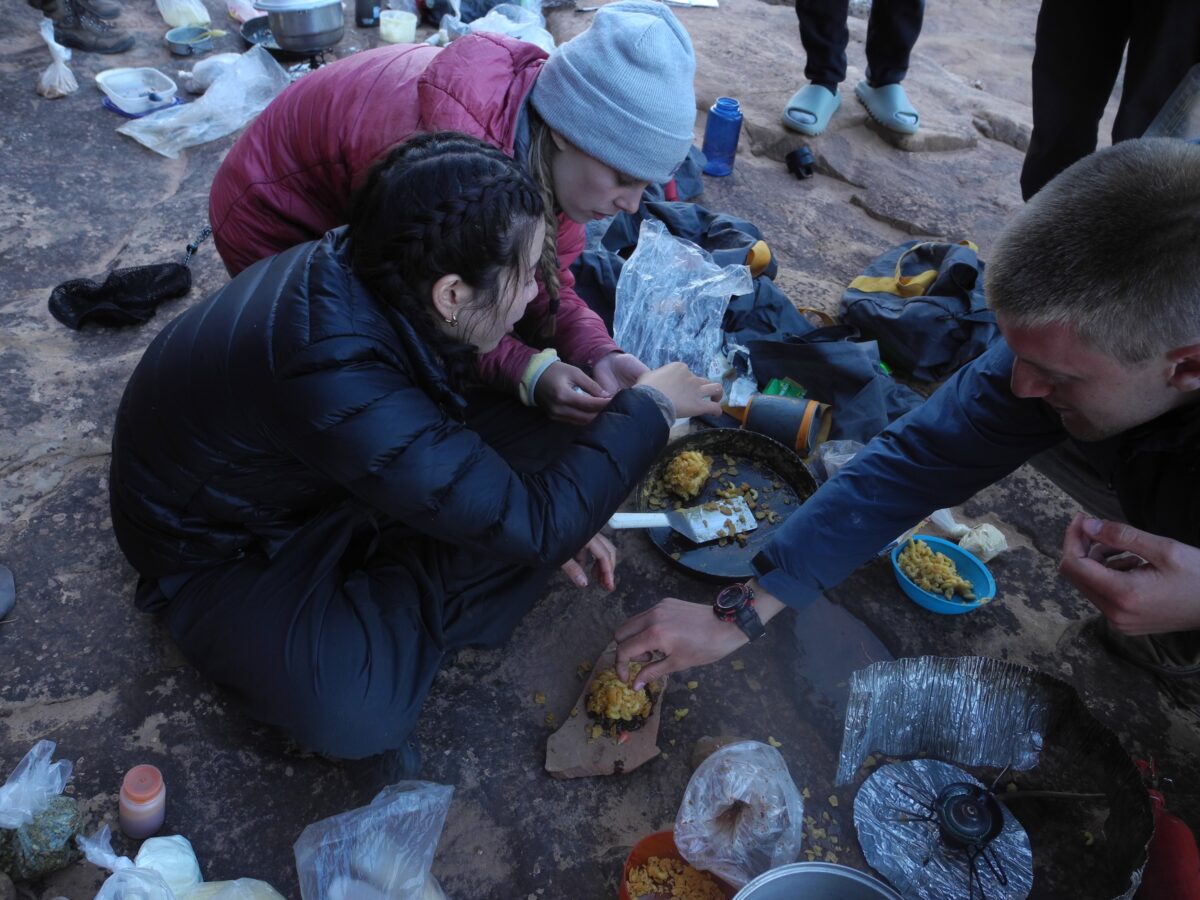
That spilled over into camp. NOLS doesn’t travel light when it comes to cooking on courses. We bring pots, fry bakes, stoves, fuel—and a pantry full of rations. You won’t find dehydrated, ready to eat meals here—rather, bags of flour, quinoa, couscous, a spice kit rivaling your kitchen cupboard, the ever popular Frank’s Redhot sauce, and a NOLS cookbook offering suggestions. The kitchen becomes a playground, a laboratory, a place to experiment. Students gather, and can spend one hour, two hours, three hours experimenting with pancake flavors or making pizza dough from scratch.
We all want a place that feels like home. Many of these students had just graduated, soon to leave Ann Arbor to start new careers in new cities, sometimes far from family and friends. To quote the Talking Heads in This Must Be the Place, “home is where I want to be.”
Being in this canyon landscape had students thinking about the places they are soon to call home—and what shapes a home. Is it the physical setting, is it the friends, is it the community, is it how you spend your time?
As Arthur C. Brooks describes in Find the Place You Love. Then Move There, “There is a word for love of a place: topophilia, popularized by the geographer Yi-Fu Tuan in 1974 as all of “the human being’s affective ties with the material environment.” In other words, it is the warm feelings you get from a place. It is a vivid, emotional, and personal experience, and it leads to unexplainable affections. One of my fellow Seattle natives made this point to me when he said he hated the rain in Boston but not Seattle. Why? “Only Seattle rain is nice.”
I listened as they planned and designed and schemed. How were they going to make their future city feel like home? What intention would go into it? What lessons about simplicity, about community, about connection from this expedition would shape these choices?
We’re looking for our reason for being. One day, our hiking group was talking about ikigai, a Japanese concept about defining your purpose in life. It’s a simple yet powerful framework—how do you identify what you love, what you’re good at, what the world needs, and what you can get paid for? The end goal: how do you design and live a life that is both joyful and meaningful?
Existential? Yes. Important? Very. Easy? Not at all. Worthy? 100 percent.
I kept reminding myself that these students were 20, 21, or 22 years old—and recalling how many twists and turns, intentional and unintentional, my career had undergone in the decade since graduating from college, each one bringing me one step closer to how I wanted to spend my life. It’s both daunting and exciting.
When you’re walking for hours, shoulder to shoulder, not quite making eye contact, conversation feels natural, easy, essential. We were able to dedicate time, attention, and care to these big questions…certainly not solving them, but moving a step or two in the direction of clarity and conviction.
On our last day, we again asked, “What is one word that describes how you are feeling in this moment?” Rested. Reflective. Exhausted. Fulfilled. Anticipatory. We climbed back out of the canyons, knowing we are ready for what lies ahead.
Interested in learning more about custom programming and partnerships with NOLS? Contact [email protected] to design a course for your students, team, or organization.
Topics: