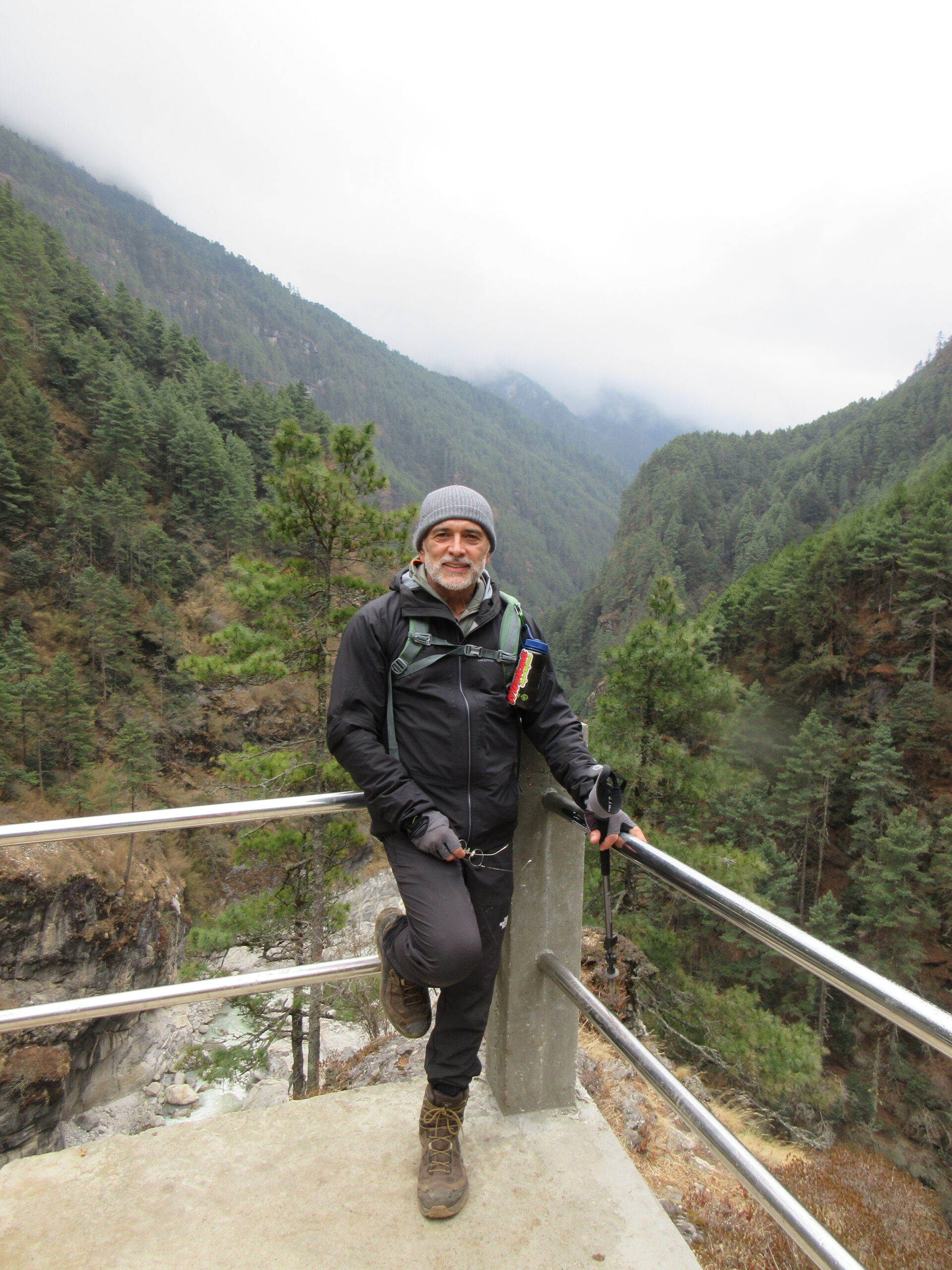
The Poley-Poley: A Chronicle in the Himalayas
It does not matter how slowly you go, as long as you do not stop. —Confucius
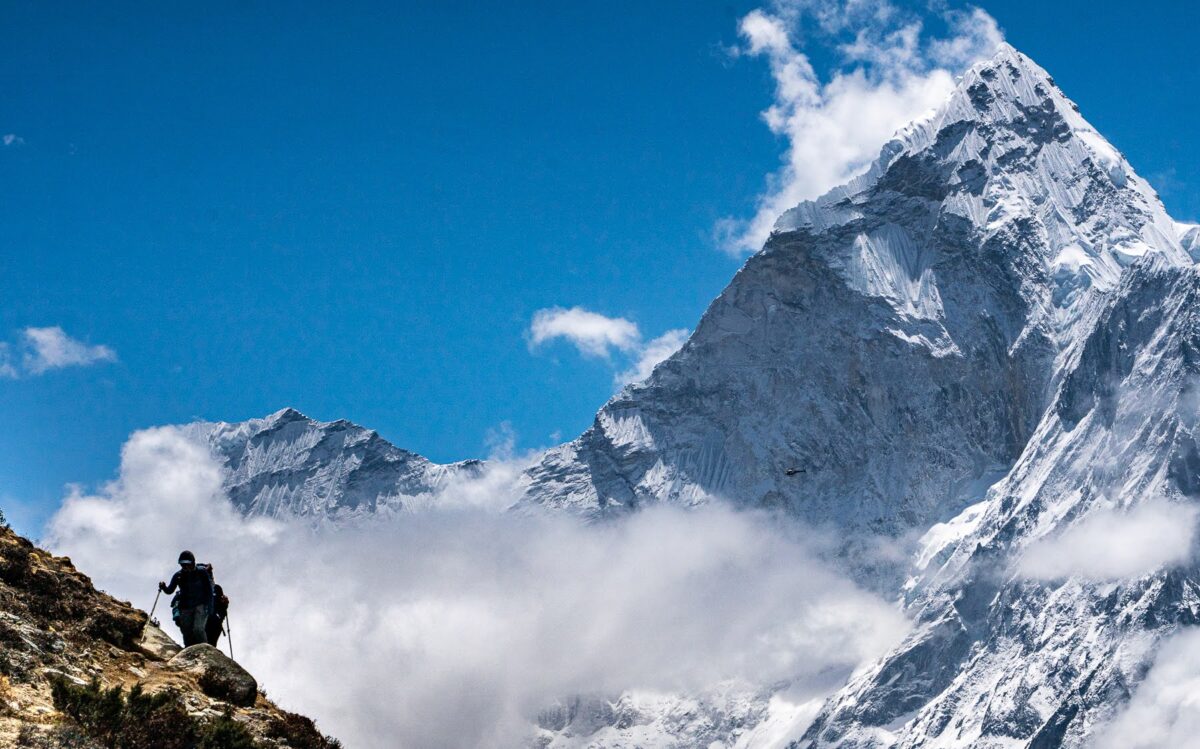
The air was thick. My strides were slow and purposeful, careful not to disrupt the group’s cadence. The thrill of spotting Everest Base Camp, still two hours away, motivated me to maintain the syncopated rhythm of deep breathing. Hypoxia was intensifying; my oxygen saturation had dropped below 70% and my heart rate was 152 beats per minute.
It was Sunday, April 20th, 2025. I was about to fulfill a childhood dream: to venture into the Himalayas and reach Everest. My interest in this adventure began almost whimsically, sparked by a chronicle about the first successful summit by Edmund Hillary and Sherpa Tenzing Norgay I read in a magazine in the 1960s. The account was electrifying. Now, sixty years later, the Himalayas were letting me feel their power.
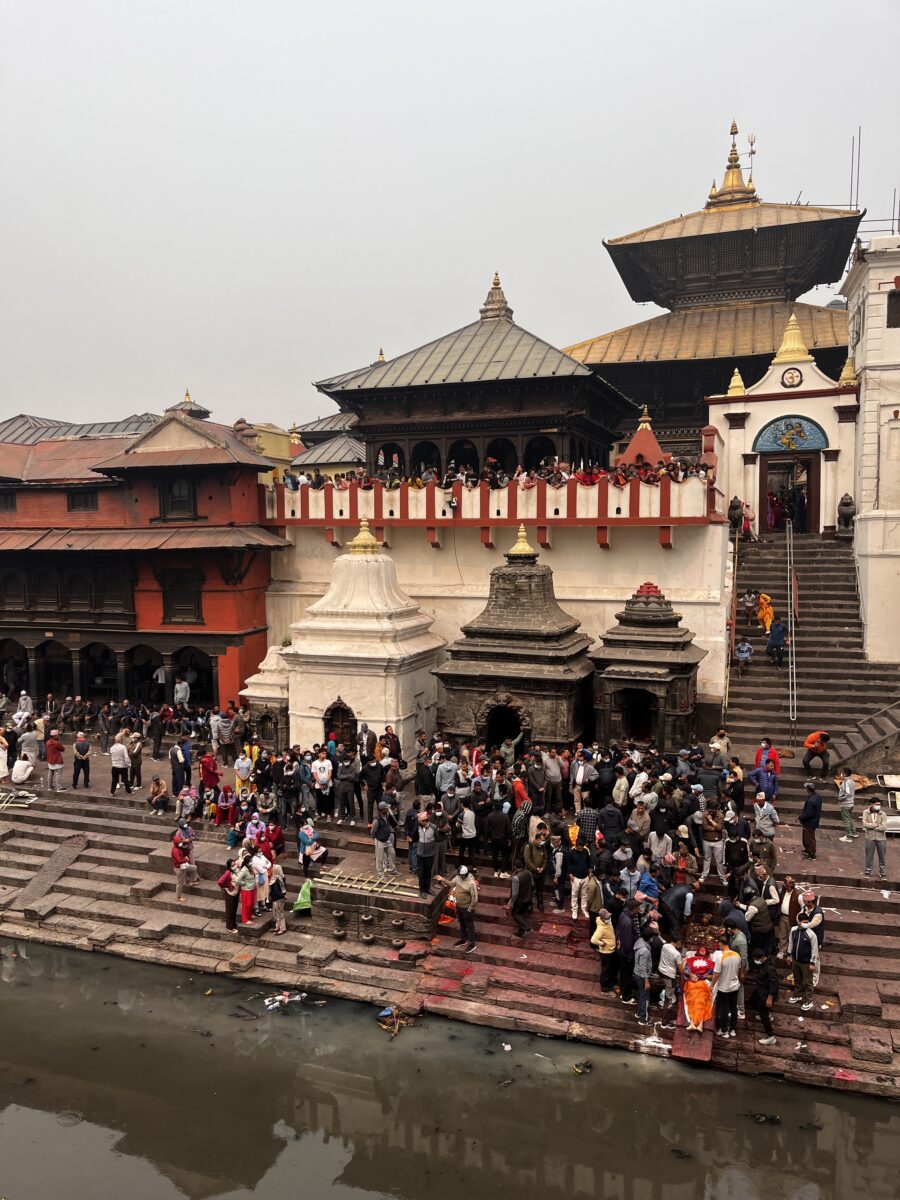
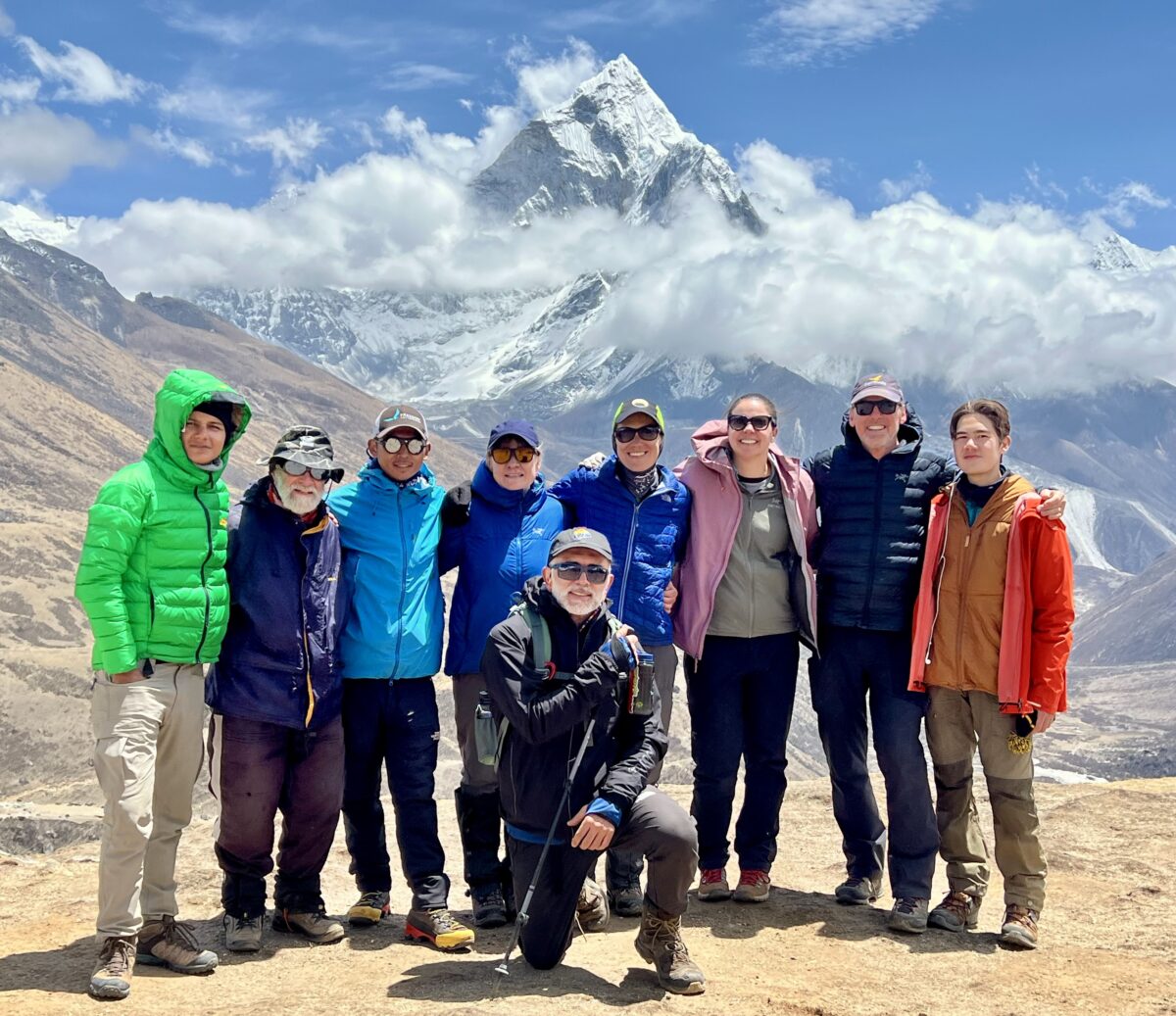
Our group of nine backpackers gathered on the afternoon of April 7th at a hotel in Kathmandu. A couple of long flights, smooth and punctual, with a layover in Istanbul, had brought me there. My excitement was a powerful source of energy. Nepal’s capital is vibrant, with a kind of chaotic order that’s hard to explain. From the outset, I sensed that Nepalese people are kind, peaceful, and cheerful.
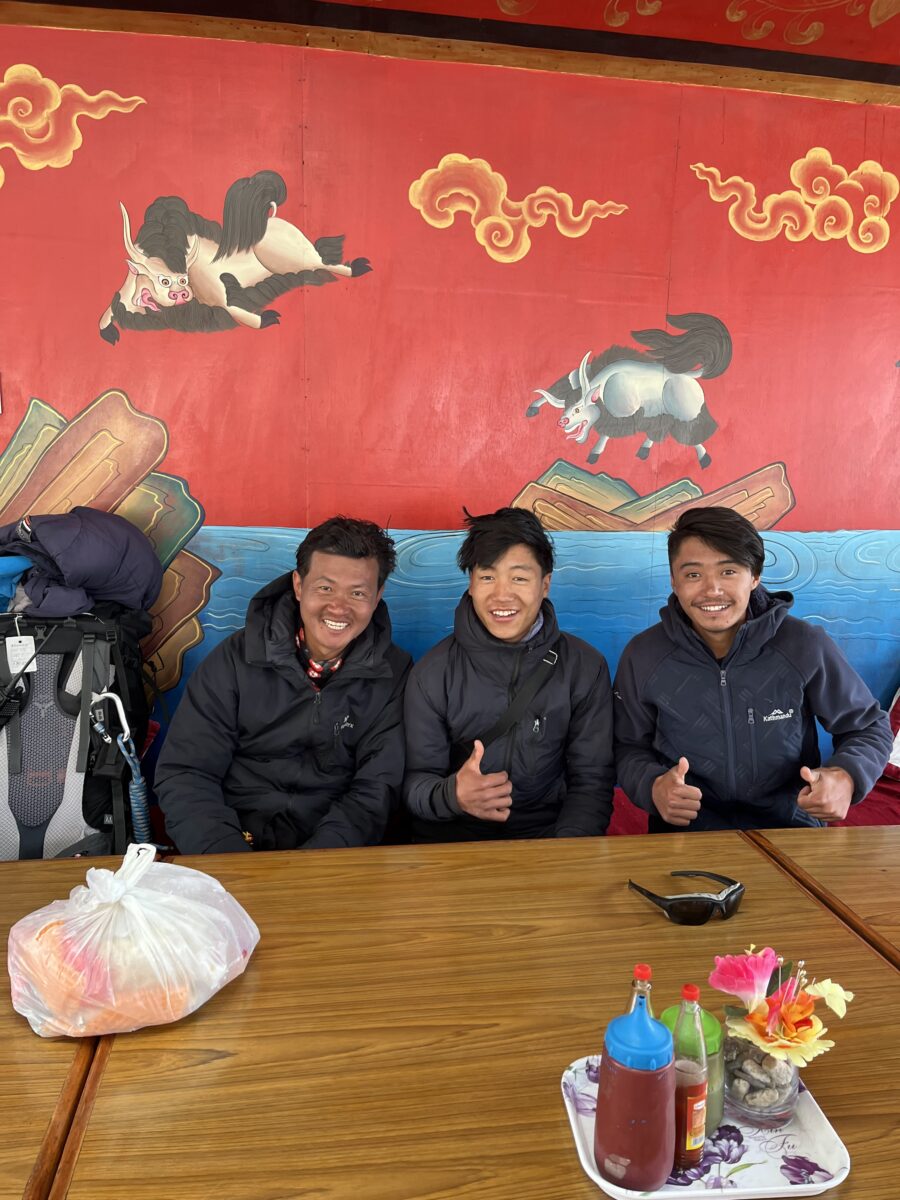
The meeting served several purposes. First, for us to get to know one another and share our expectations. Our expedition leader, Jagan Timilsina, took the opportunity to introduce us to the team of young Sherpas who would accompany us: two guides and five porters who would carry our duffels.
The second objective was to explain the 95-mile route: the segments and altitude- acclimatization process, as well as the logistics for meals, hydration, and overnight stays in tea houses — modest lodges with beds but no heat. We also reviewed the essential gear: a 15-degree sleeping bag, sturdy worn-in boots, a bandana for sun and cold, and personal items.
The third purpose of the meeting was to reiterate something Jagan had emphasized in a couple of prior emails: strictly avoid meat and chicken, even if thoroughly cooked or grilled. His words were firm: “Believe me. Gastrointestinal illnesses are the number one reason people get evacuated from the Himalayas.”
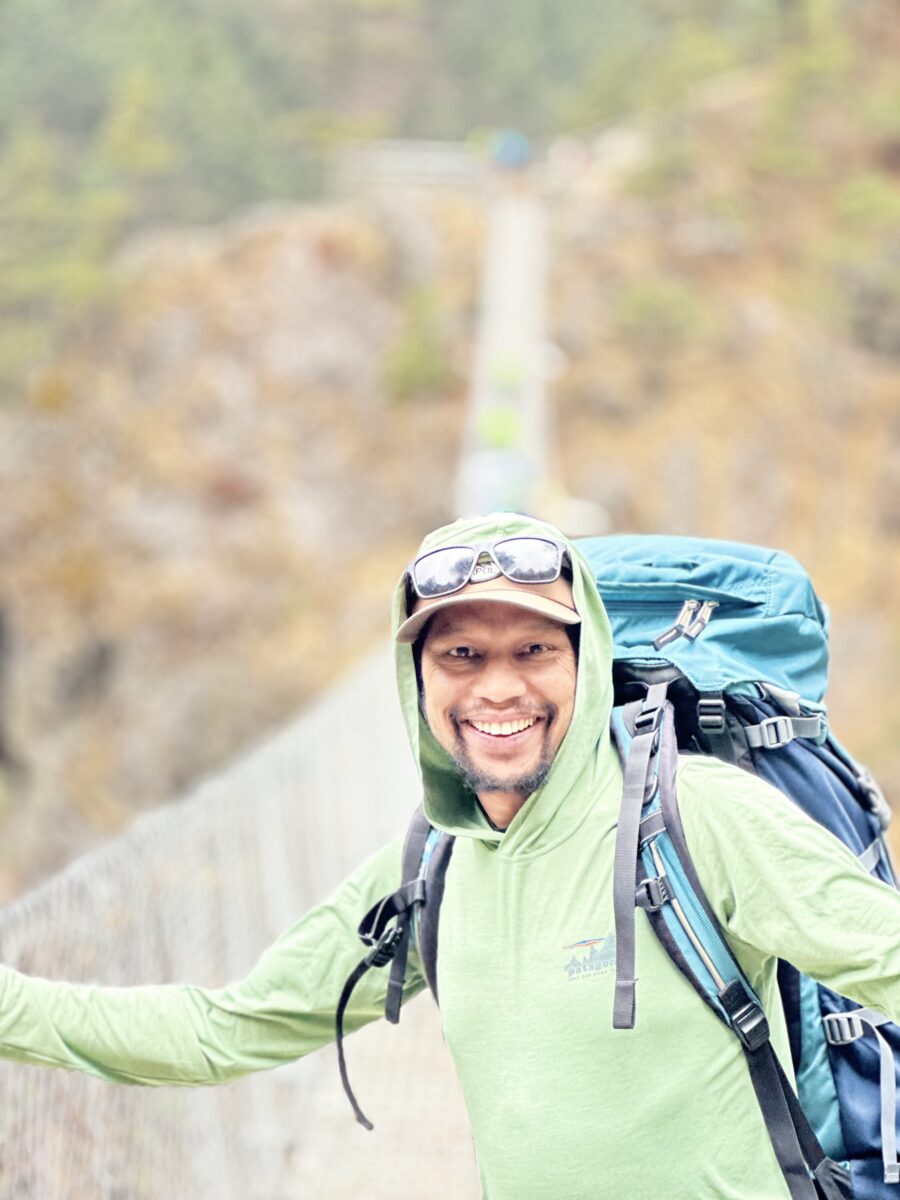
Jagan is a remarkable character — intelligent, cheerful, and sharp. At about 5 feet 6 inches tall, he’s lean but wiry, dark-skinned with a sparse beard, and hides his age well, looking younger than his 45 years.
He led with calm authority, giving clear and specific recommendations, and spoke fluent English. He told us, “To reach the goal, we must walk with discipline, following the itinerary. Only then can we get to Base Camp. No one will take us there. Take care of yourselves and your energy. Try to sleep a lot, don’t forget to hydrate constantly, and eat well whenever possible. There’s no rush: the route is long and at times the challenges will be extreme.”

The journey began on Wednesday, April 9th, in Lukla, a small town nestled at the foot of the Himalayas at 9,380 feet. It was a misty afternoon, but there was no wind and it wasn’t cold. The day’s hike covered barely three miles — a warm-up for what was to come. For the next eleven days, every stage was uphill, often on rocky trails.
During our first acclimatization hike to 14,270 feet, I understood that the key was to maintain short, steady, and firm steps. The bravado of speeding up would only result in fruitless self-destruction. Ngawang Sherpa put it in his local tongue: poley-poley, something like “step by step,” which soon became our mantra.
Of the several routes to reach Everest Base Camp, we had chosen the western one: steeper, more challenging, and less touristy. From that point on, we ventured deeper into the mountains, ascending about six miles each day.
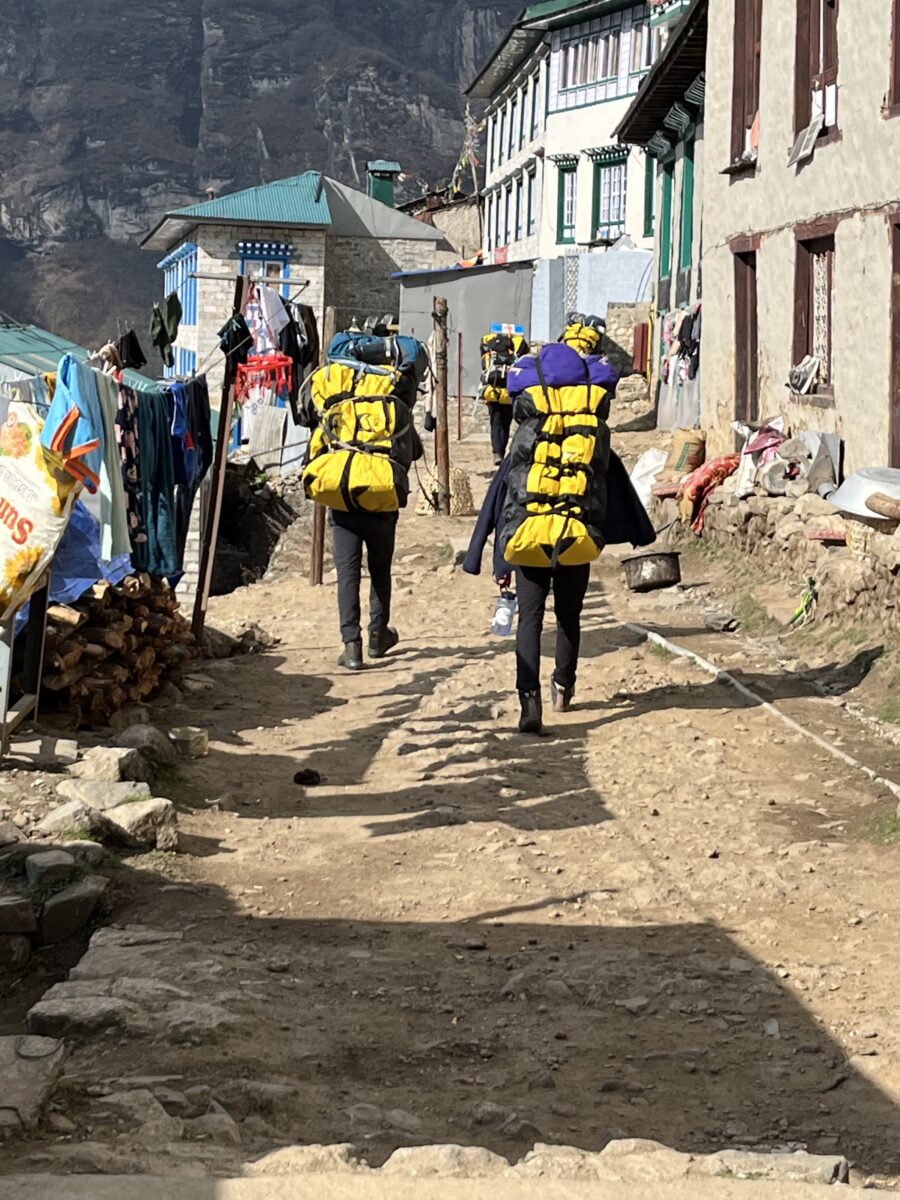
Breakfast was usually at 6:00 in the morning, and we set off half an hour later. Depending on the weather and trail complexity, hikes lasted from six to ten hours. The goal was always to be safely inside the tea houses by 3:00 p.m., when Himalayan weather tends to turn. By 7:00 p.m., we were all asleep.
Twice, we started out at 3:30 a.m., anticipating especially long and arduous journeys. One such day was Tuesday, April 15th, to cross Renjo La Pass, at 17,590 feet. It was a particularly dark, snowy dawn. With our headlamps on, we looked like small shadows lost in the vastness of the mountains. The wind was light, but my Garmin registered 10ºF. The instructors repeated: poley-poley.
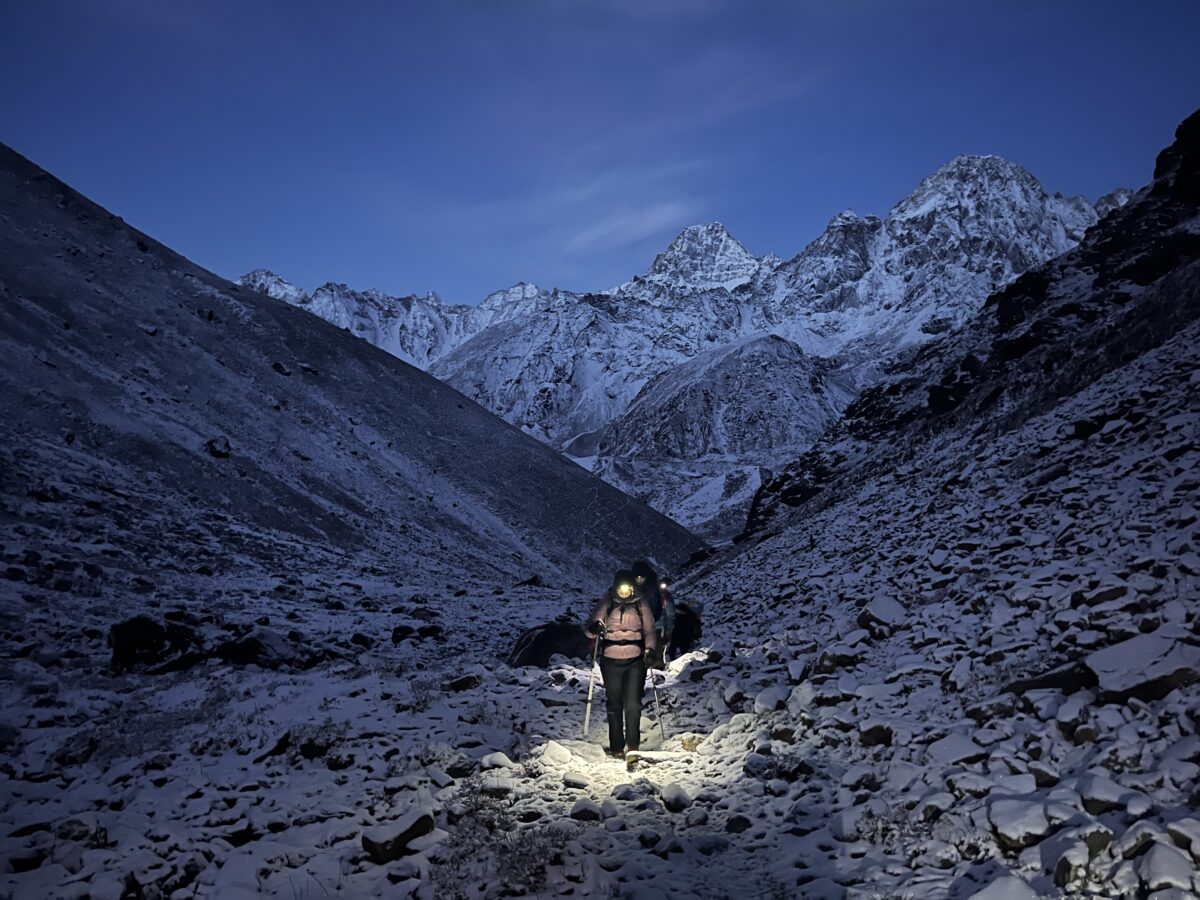
At the foot of the pass, I thought, “This is going to be tough. But let’s go. No one else is bringing me to the top.” And so, single file, each at our own rhythm, we began the crossing. I had no thoughts or feelings, only the instinctive resolve to take one small, deliberate step at a time. My heart rate soared to 165 beats per minute; the pounding echoed in my temples. I knew I was oxygen-starved, but it didn’t bother me. The only goal was to reach the top.
We sat in silence during our first break, as if saving our air. I looked up to see what lay ahead. We’d barely gone a third of the way. Tiny silhouettes appeared above, like human ants. A fleeting thought crossed my mind, “Damn, this is brutal.” I didn’t let it linger. I couldn’t afford self-sabotage. Physical endurance is key, but mental strength matters more to keep your body from breaking.
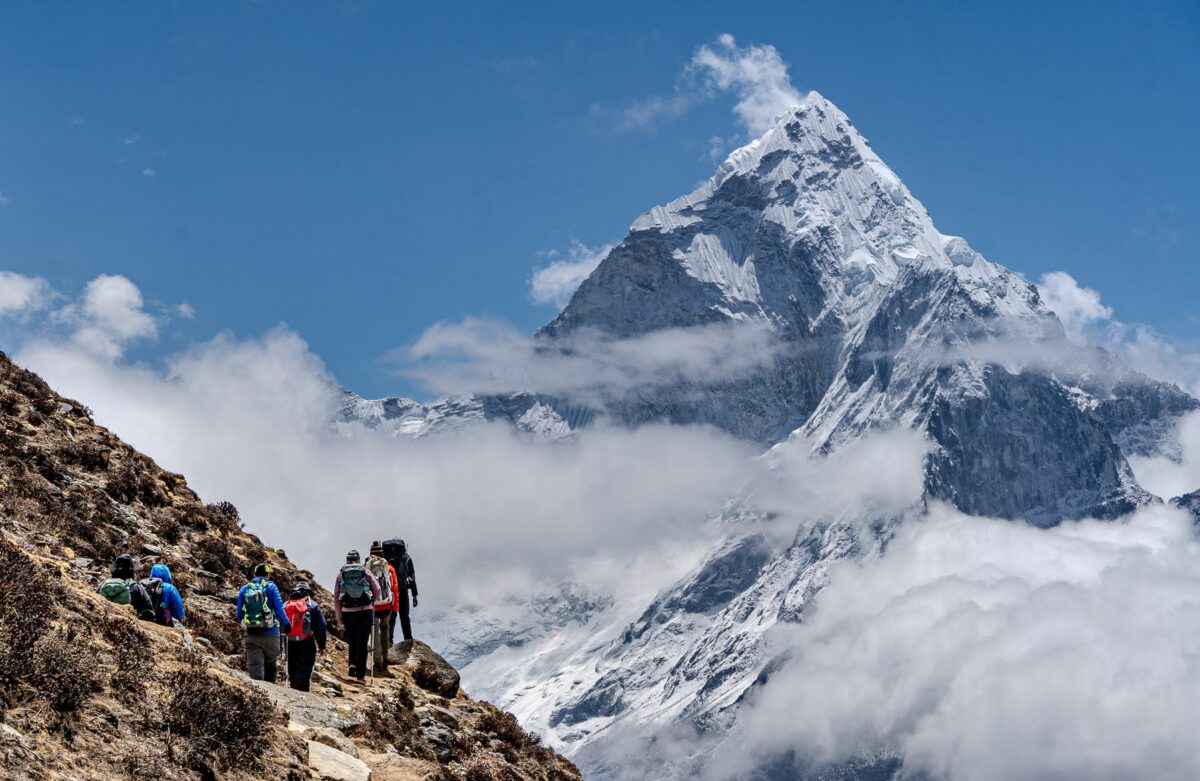
We made it through another section, then paused again. I looked down and smiled. Poley-poley was proving its ancient wisdom: slow and steady gets you far and high. At the top, I raised my arms in a V of victory and whispered to myself, “I did it.” The others arrived, and we hugged tightly and took the traditional summit photo.
We reached Everest Base Camp on Sunday, April 20th. The final hike was seven and a half miles over rugged, rocky terrain. Same plan: early departure, headlamps on. Unlike prior days, the wind was calm and the sky clear and starry.
The trail was crowded — people, porters, and yaks — and progress was slow. The sun beat down hard. The accumulated fatigue of eleven days weighed heavily on us. Still, the dream of reaching our goal gave us the extra push we needed.
We moved around a bend and Everest’s summit came into view. We all stopped in awe at the mountain’s majesty. Its 29,000 feet were towering. Collective awe radiated through our group. We stood there, mouths agape. We were the lucky ones. I forgot the fatigue. I wasn’t thinking at all. Just admiring its magnificence.
From Base Camp, the obsession with seeing Everest reaffirms its myth: vast, unreachable, and indomitable. The more it hides, the brighter its aura glows. Winds sweeping by the peak not only scatter clouds but lift long trails of snow. These phenomena magnify Everest’s splendor.
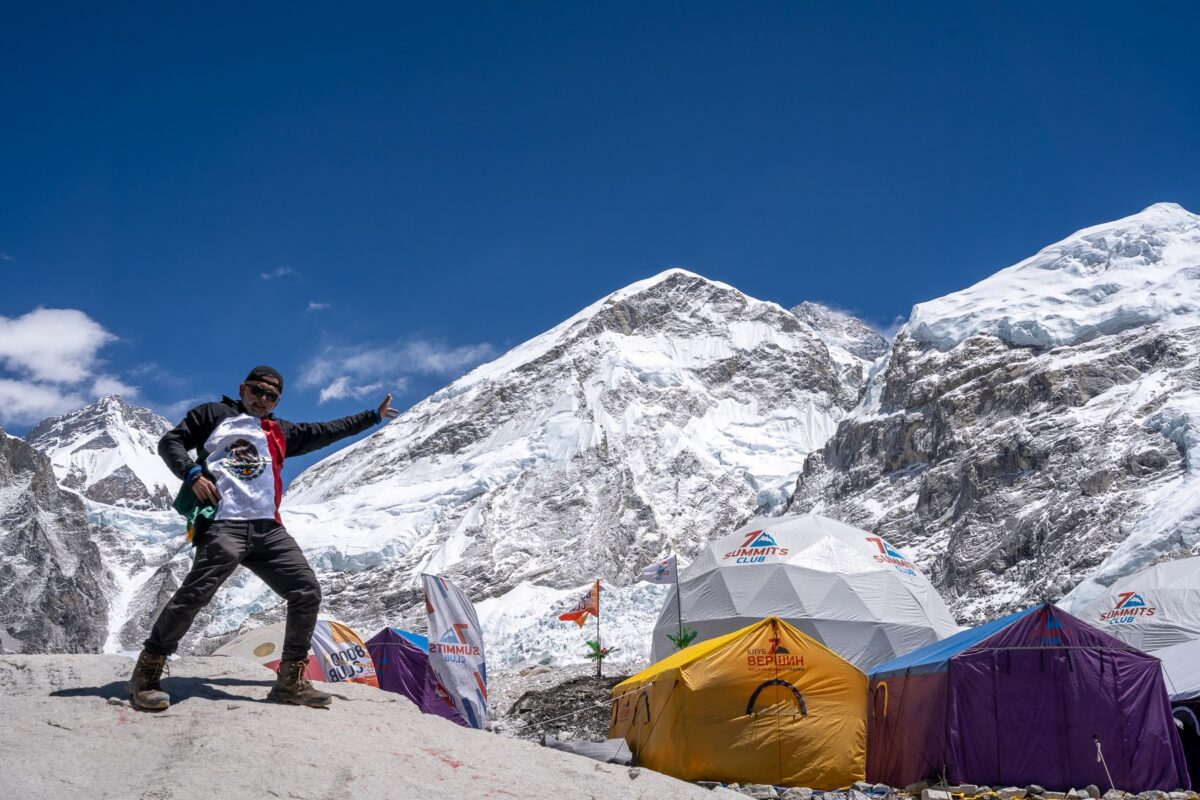
Just as we arrived, Don said, “Hey Luis, look. Some Mexicans.” Ardeth added, “They’ve got your country’s flag.” A group of four countrymen stood on a giant rock, the usual photo spot with Everest in the background. Then I heard a familiar shout: “¡Viva México, cabrones!”. I laughed and hurried over. We embraced like longtime friends. They were the mountaineering team from the National Autonomous University of Mexico.
I asked to borrow their flag. “Of course! It belongs to all Mexicans,” they said. I climbed the rock for a photo with the flag around my waist, pointing my left hand toward Everest. It was a magical moment captured by one of my companion’s cameras. I was euphoric and in disbelief, a childhood dream finally conquered.
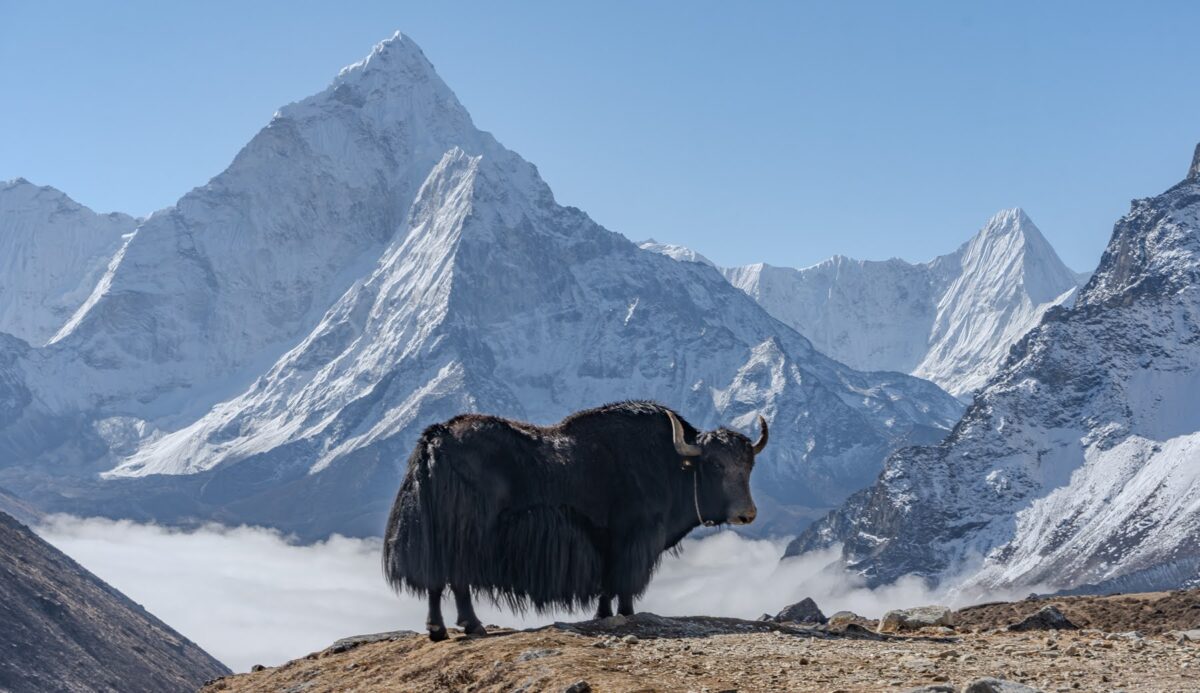
The experience in the Himalayas was, by far, the greatest of my life.
The effort was extreme. Seventy percent of the trails seemed impossible. I pushed my mental endurance to its limit, like a guitar string pulled tighter and tighter but never snapping. The two mountain crossings remain vivid in my memory as delirious fictions, under the spell of the rhythmic dance of poley-poley.
Physical fitness is essential; but without a disciplined and committed attitude, the body collapses. You have to be a bit unhinged to take on the challenge and even crazier to enjoy it. But that’s the nature of this kind of adventure; it’s harsh and exhilarating.
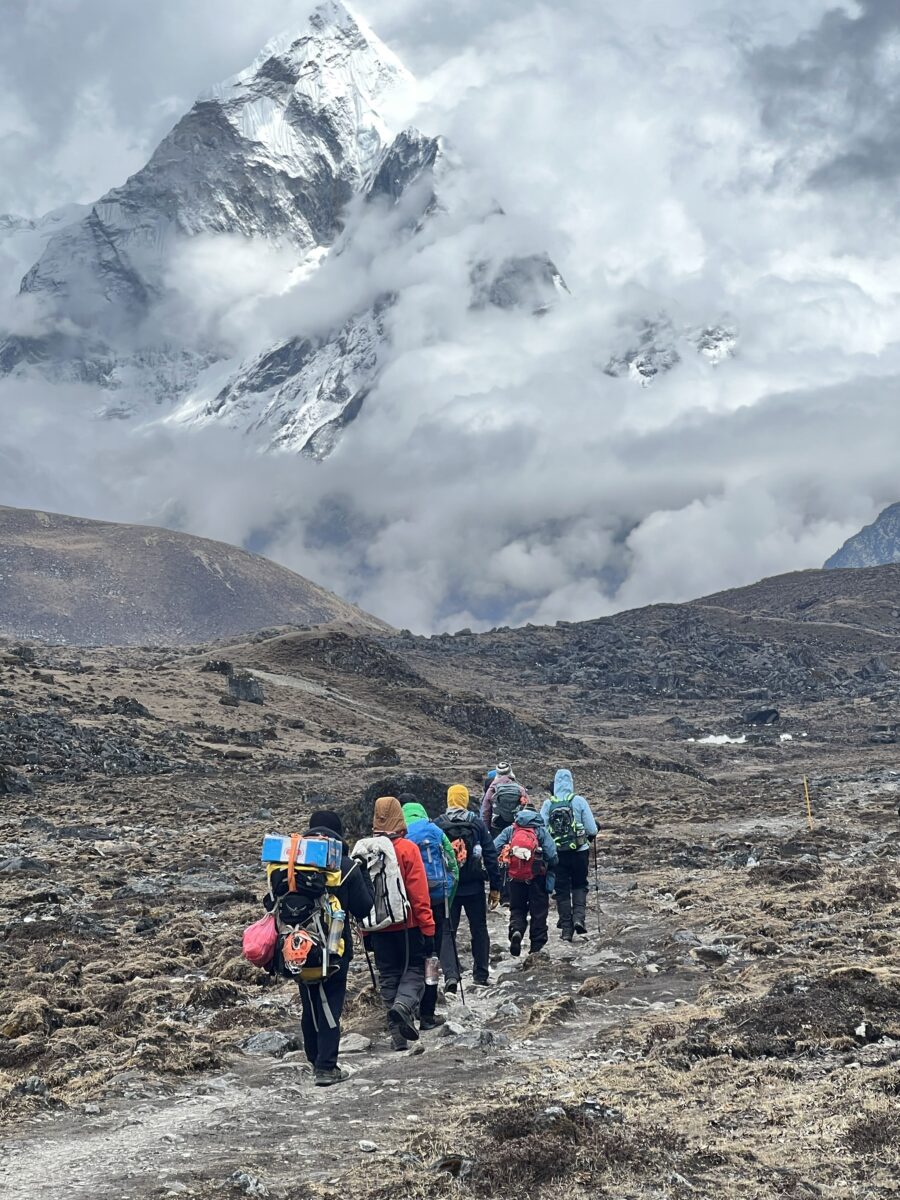
The Himalayas are savored in silence. Nature speaks, rearranges the inner pieces, and answers unexpected questions, many of them unconscious. In the deep heart of the mountains, I felt free and at peace. Nothing occupied me and even less worried me. My daily task was simple and effective: “step by step” and to savor, with full senses, whatever nature gifted me.
The Everest Base Camp is the crown jewel, but the entire journey is what captivates. The Himalayas overwhelm with their majesty. They are on another level entirely; they intoxicate and enchant as well as demand and punish. When I planned the trip, I would have been content just to reach the Himalayas and get to Everest. The journey itself was a spontaneous gift from the mountains.
Topics: Alumni, Alumni Trips, NOLS