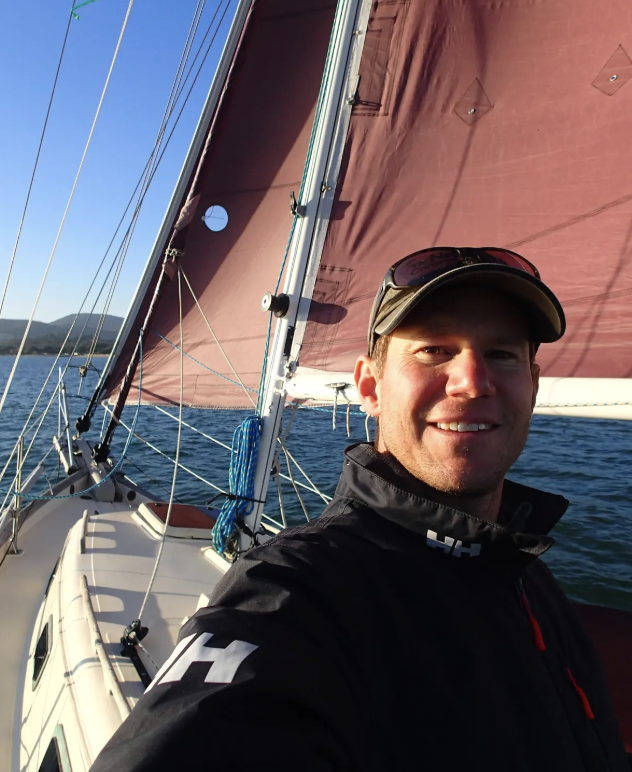
Ship’s Log: Sailing in Greece’s Ionian Sea Alumni Trip
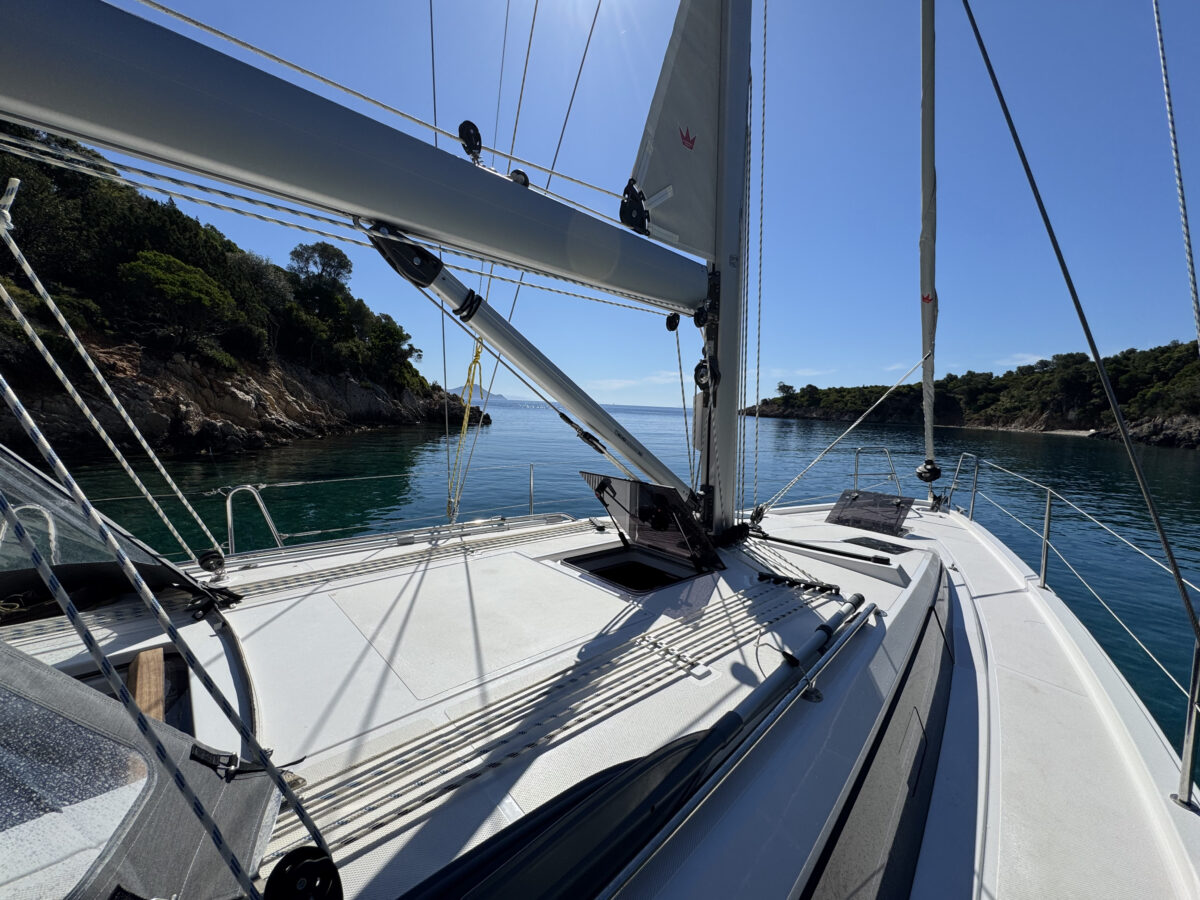
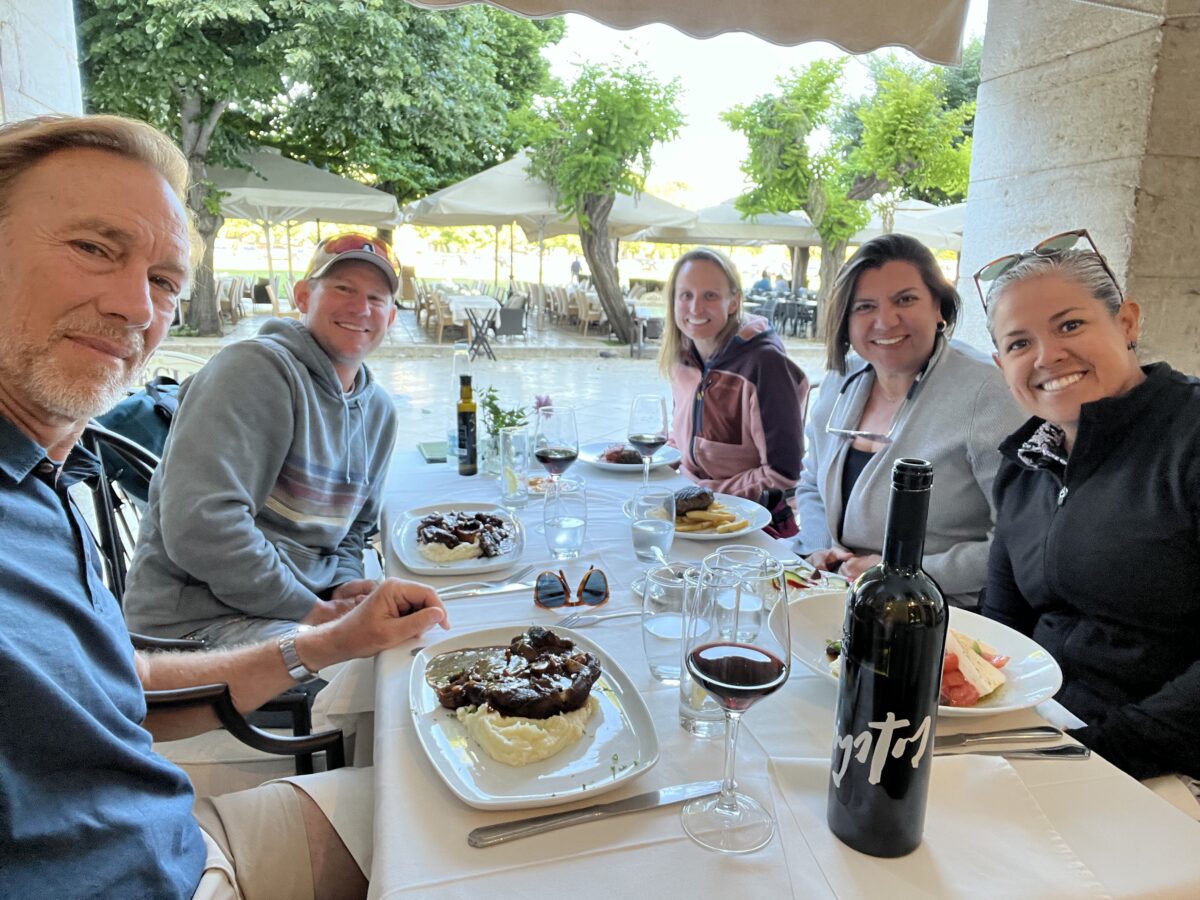
After a few days of moderate winds, good introductory sailing and island exploring while making our way to the north coast of Kerkyra along the southern border of Albania, a change in the weather was on the horizon. With the forecast in mind, we tucked into the protected harbor of Gouvia just north of Old Town Corfu and tied up on the dock for a layover day to explore Old Town and let the storm pass through. Our land-lubbing day consisted of wandering the cobblestone streets of Corfu, exploring the fortress, admiring the impressive storm-driven waves smashing up over the breakwater walls, and rounding out our evening with delicious Greek and Mediterranean cuisine and local wines comfortably seated under one of the amazing porticos that line the streets of Old Town.
Of course, our port of call would also provide an opportunity to reprovision the boat for the next few days, topping up on fresh fruit, veggies and other staples for cooking great meals aboard! We tidied up the boat, took warm showers, and discussed our departure and passage for the following day.
Forecast: West northwest 35 – 45 knots easing overnight and early morning to 20 – 25 knots and then increasing 25 – 30 knots in the afternoon holding steady into the evening.
The stars were aligning for a great downwind sail with an easing trend in the forecast yet maintaining good energy from the wind and sea to help us make the long passage into the Southern Ionian, which we were eager to explore. Considering the factors, we set our sights on reaching the northeast coast of Ithaca, approximately 100 nautical miles away! The goal was to arrive around sunset, and to that end, it meant an early pre-dawn departure from the marina. We charted our intended route, drafted our passage plan and settled in for the night. Every good NOLS adventure is defined by the challenges and long days encountered along the way that require the team to embrace their tolerance for adversity and uncertainty, and we were leaning into one of those days.
Ship’s Log:
- Time: 0430 Hours
- Weather: Dark; Mostly clear starry skies; Northwest wind 15 gusting 25 knots
- Position: Gouvia Marina Latitude 39° 38.955 N, Longitude 19° 51.169 E
- Navigation: Depart marina; Engine power @ 6 knots; ESE heading @ 117° True
- Distance Run: 0 Nautical miles
- Distance Remaining: 96 Nautical miles
- Estimated Time of Arrival: 2030 Hours
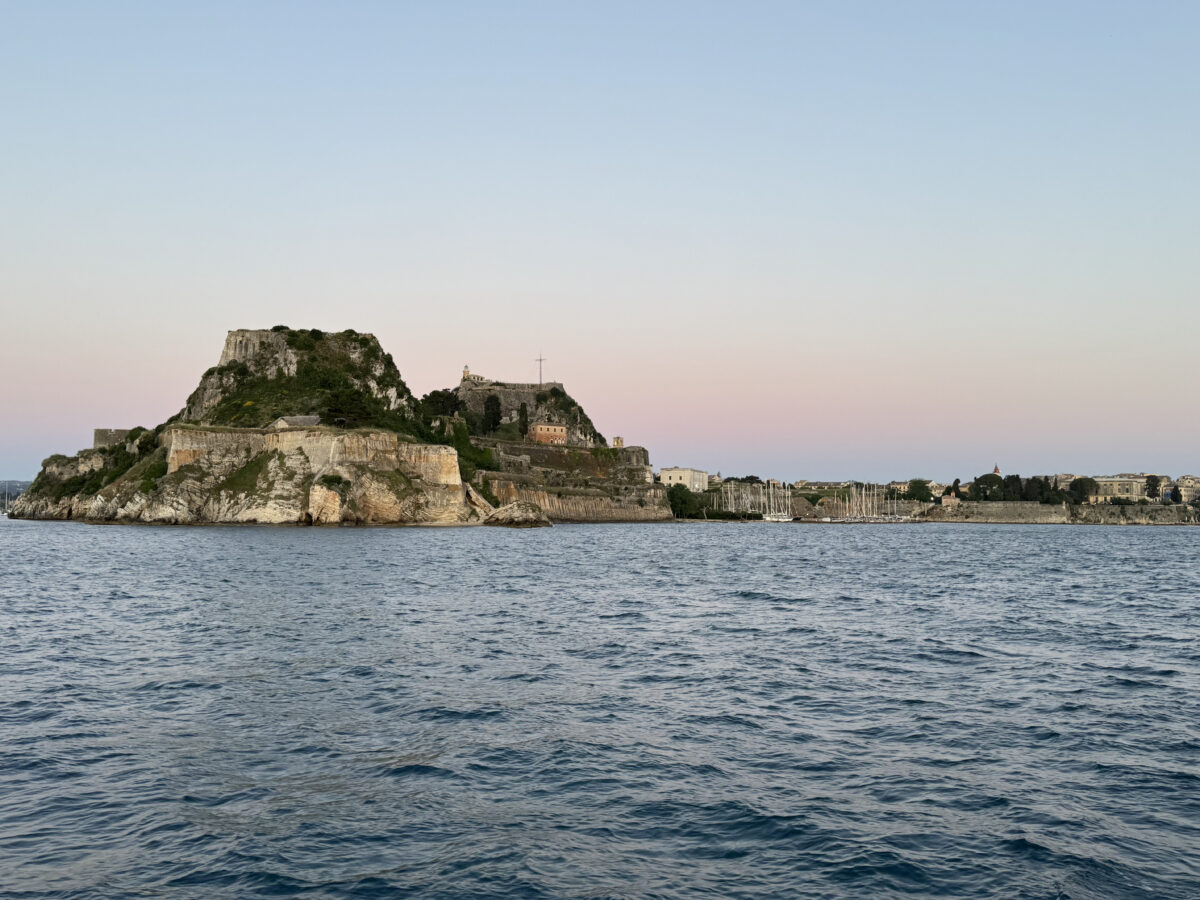
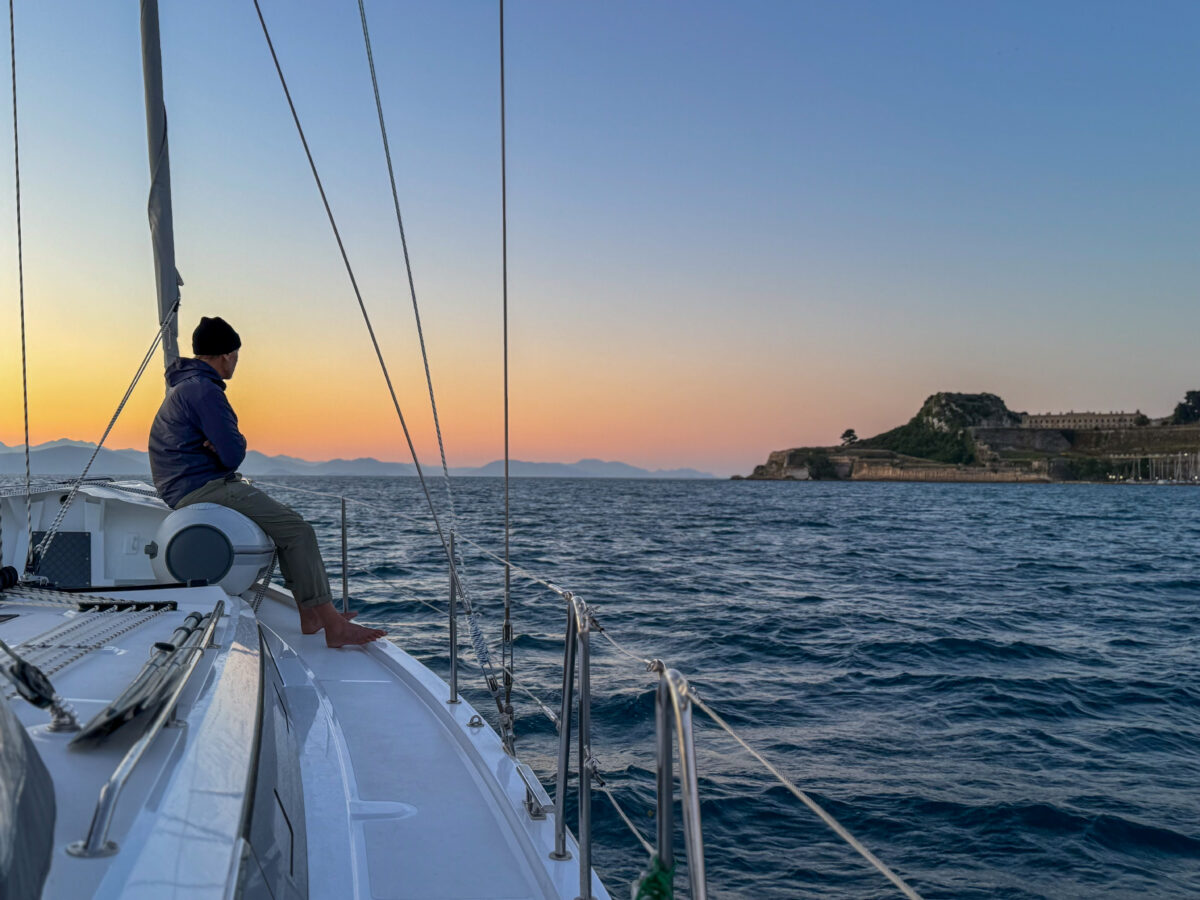
Engine running, check. Navigation instruments, check. Steaming and running lights, check. Standing by on bow and stern lines, check. With low visibility in the dark and a gusty brisk breeze blowing over the stern, we quietly cast off the stern lines during a lull. Faced with the challenge of wind over the stern off the dock and a cross breeze through the narrow exit out of the marina, we throttled up to gain steerageway, made a tight turn to starboard to avoid the laid mooring lines from the other boats, and gently glided out of the marina. After clearing the exit of Ormos Gouvia, we set a course to the east southeast toward the Old Fort of Corfu. Making way under engine power, we fired up the kettle, prepared the coffee, and made breakfast underway. With coffee cups in hand, we watched the moonset to the west and the sunrise to the east. We rounded the point, set our sails, and changed course for the Southern Ionian.
Ship’s Log:
- Time: 0820 Hours
- Weather: Clear and sunny; Northwest wind 12 – 18 knots
- Position: Latitude 39° 24.694 N, Longitude 20° 10.195 E
- Navigation: Full sail @ 6.6 knots, SE heading @ 163° True
- Distance Run: 21.6 Nautical miles
- Distance Remaining: 74.4 Nautical miles
- Estimated Time of Arrival: 2050 Hours @ 6 knots (average speed)
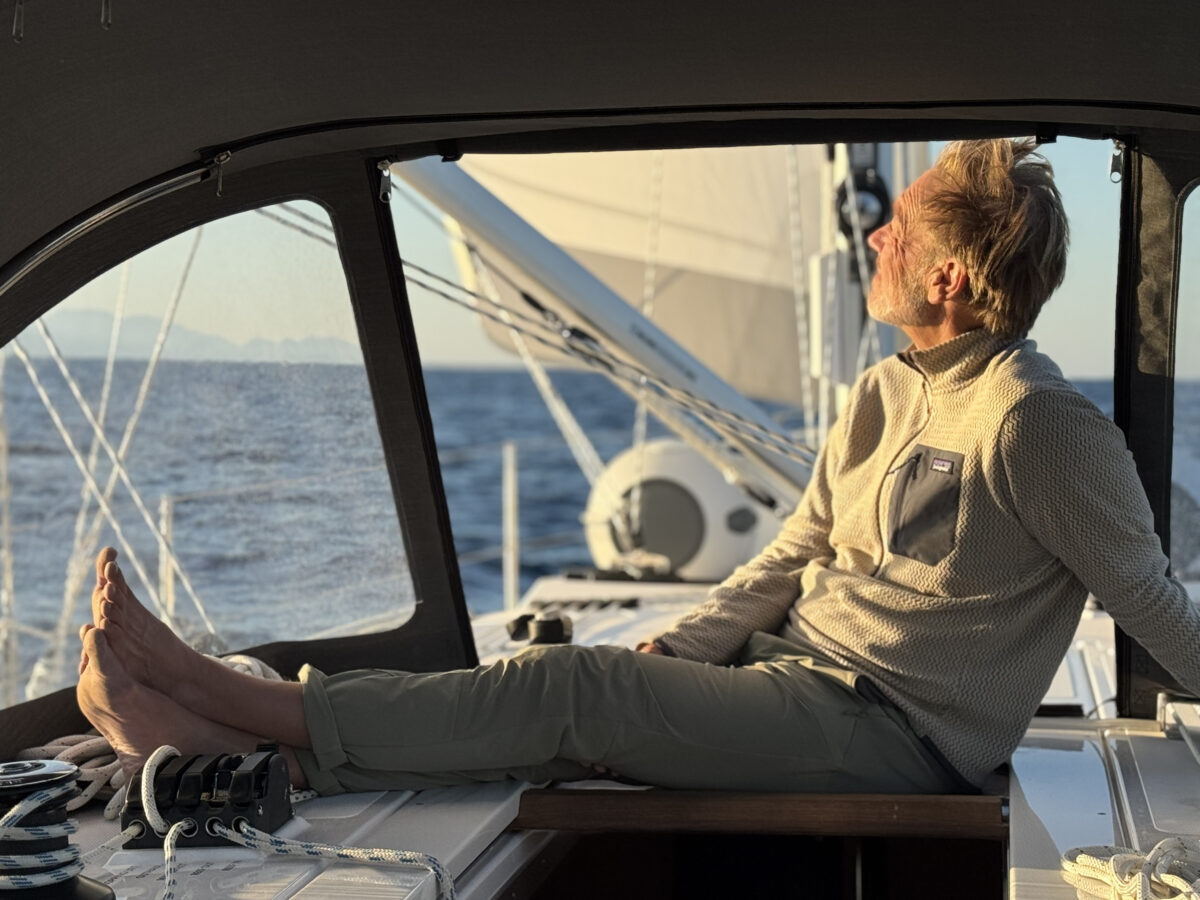
In a northwest breeze, sailing along the east side of Kerkyra placed us in the lee of the island. With a strong breeze of 30+ knots blowing down the main channel as it flowed out of the Adriatic Sea into the Ionian and beyond to the Mediterranean on the west side of the island, we were protected from the strongest winds by the high mountains of northern Kerkyra and the long ridgeline that extends from the northwest to the southeast of the island. In these conditions, the wind and sea state are often calmer on the east side of the island with the occasional strong gust that makes its way over the mountains and down the channel between Kerkyra and mainland Greece.
We were having a beautiful downwind sail in light to moderate conditions practicing our downwind sailing maneuvers and holding a steady course on a broad reach point of sail as we worked our way between the southern tip of Kerkyra to the east and the Syvota Islands to the west. As we cleared the southern point, the islands of Paxos and Antipaxos came into view with only the ocean horizon in the distance. Further afar to the west was the boot of Italy and Sicily, and the northern countries of Africa lay in the distant south. We prepared for stronger winds and building seas as we sailed further offshore with a heading just beyond the southern point of Lefkada, leaving the protection from the islands astern.
Ship’s Log:
- Time: 1440 Hours
- Weather: Clear and sunny; Northwest wind 25 – 30 knots
- Position: Latitude 38° 47.773 N, Longitude 20° 29.732 E
- Navigation: Double reef main; single reef jib @ 9.1 knots, S heading @ 178° True
- Distance Run: 64.4 Nautical miles
- Distance Remaining: 31.6 Nautical miles
- Estimated Time of Arrival: 1920 Hours @ 7 knots (average speed)
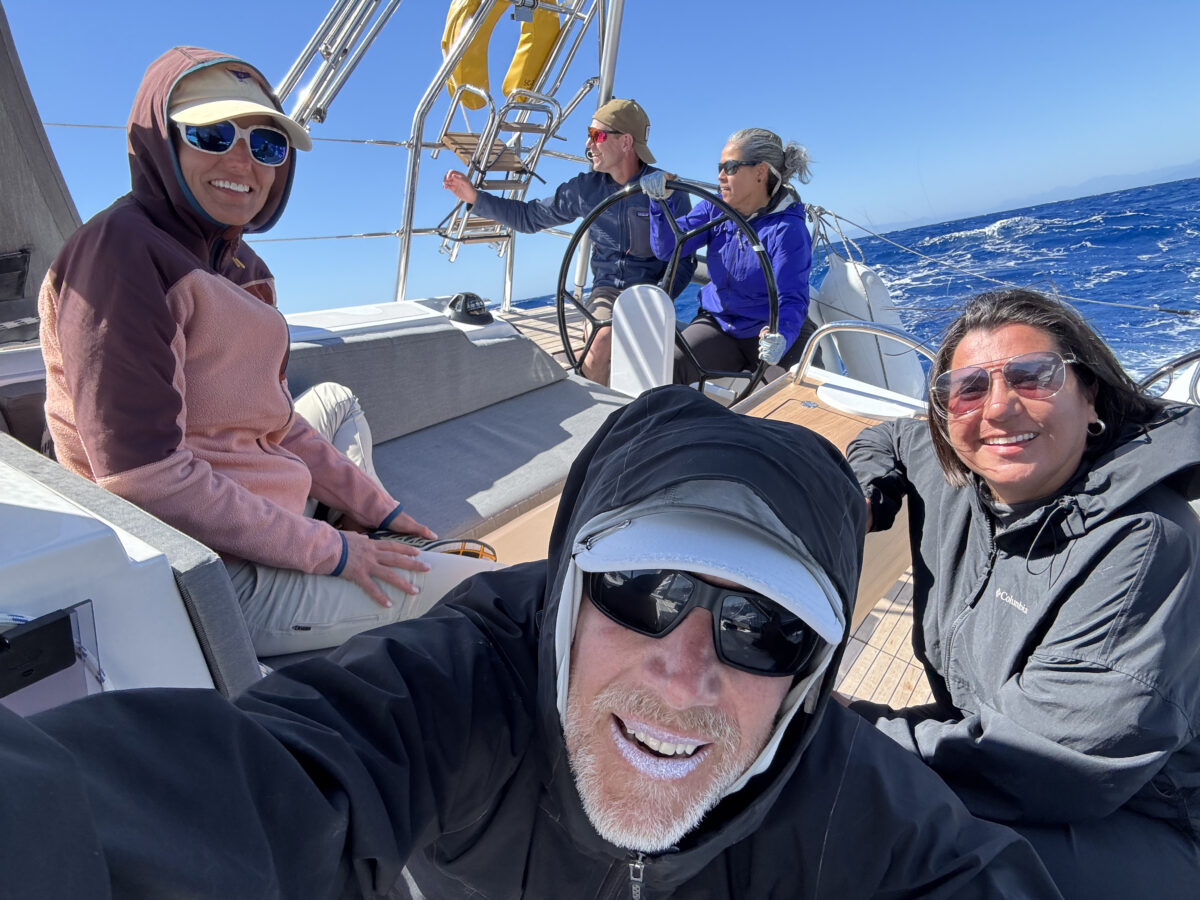
With open ocean to windward, the sea state had increased, and we sailed along with a sizeable swell and wind driven waves. The strategy was to focus on holding a steady shallow broad reach and occasionally heading up to a beam reach in order to maintain a position well off the lee shore to our southeast on the windward coastline of Lefkada. In these conditions, as the depths shallow out and the swell pushes up against the abrupt coastline, the waves get steeper and closer together. It is also possible to experience rebound waves and a sloppy sea when sailing too close to the lee shore. As the wind speed increased upwards of 30 knots with the intensifying heat late in the day, the boat was beginning to feel overpowered and difficult to control at the helm. This was our indication to reef the sails. With a brief change in direction heading up into the wind on a close reach, we eased the sheet, luffed the sail, and took in the second reef on the mainsail. After securing the reef, we promptly trimmed the sails while bearing away and got back on course with a well-controlled boat and a dialed in crew.
Ship’s Log:
- Time: 1755 Hours
- Weather: Clear and sunny; Northwest wind 25 – 30 knots
- Position: Latitude 38° 30.857 N, Longitude 20° 35.589 E
- Navigation: Double reef main; single reef jib @ 8.2 knots, E heading @ 84° True
- Distance Run: 84.6 Nautical miles
- Distance Remaining: 11.4 Nautical miles
- Estimated Time of Arrival: 1940 Hours @ 7 knots (average speed)
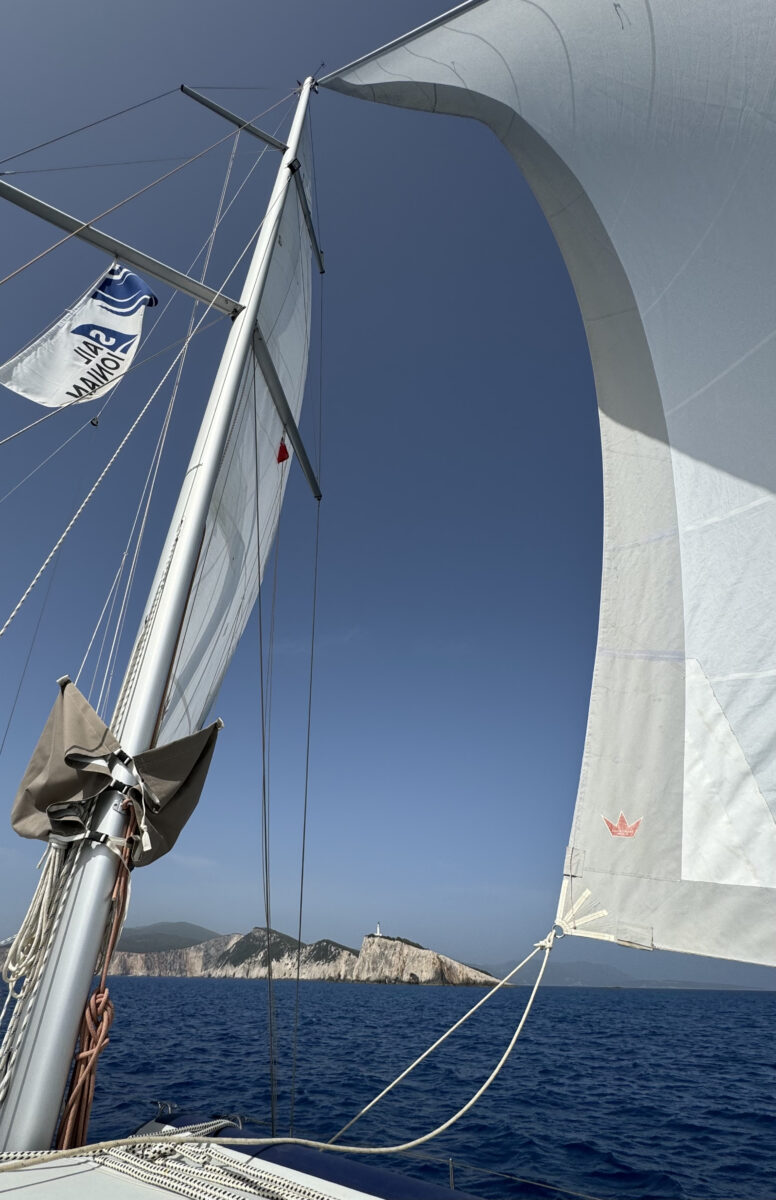
Continuing southbound along the east coastline of Lefkada, we were greeted by some of the most spectacular views of the steep cliffs, caves and extraordinary rock formations along the Cape of Lefkada, culminating with the picturesque Doukato lighthouse high above the cliffs on the southernmost point of the island. As we crossed the main passageway into the southern Ionian south of Lefkada and north of Kefalonia, the island of Ithaca came into view. Although the crew was getting tired, we jibed the boat and continued to blast along in the accelerating wind as it squeezed through the gap.
With the destination in sight, a mellowing sea with turquoise water, and the setting sun to the west, we were rejuvenated to make the final push in the strong evening breeze. As the sea state flattened out and the wind speed increased to 35 knots, we reached our top speed of the passage at 10.2 knots while we rounded the northern point of Ithaca! As we approached our destination, we fired up the engine, stowed the sails, and prepared the anchor and shorelines. The sun had already gone down, and we anchored the boat and secured the shorelines as twilight settled in.
Ship’s Log:
- Time: 2040 Hours
- Weather: Twilight; Clear and starry skies; Northwest wind 15 – 25 knots
- Position: Latitude 38° 28.566 N, Longitude 20° 40.263 E
- Navigation: On anchor
- Distance Run: 96.4 Nautical miles
- Distance Remaining: 0 Nautical miles
- Estimated Time of Arrival: Arrived
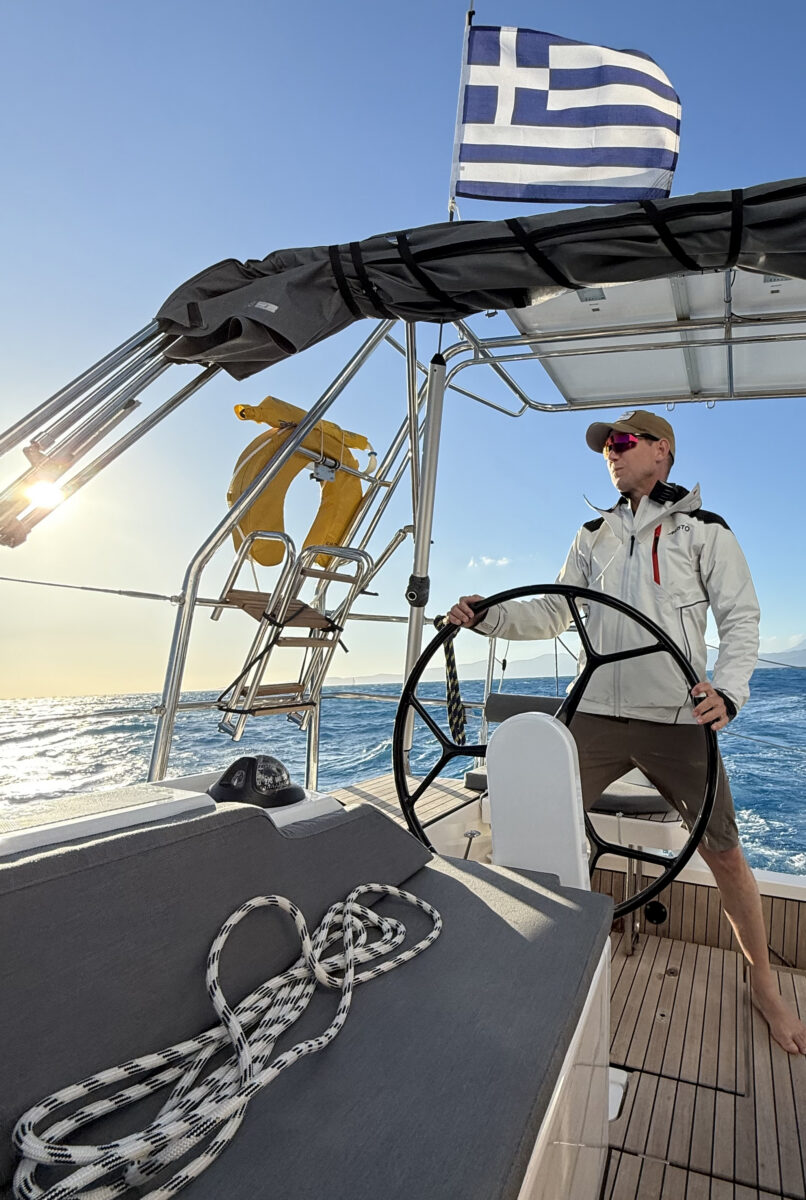
How did you get into sailing?
That’s a good question, especially for a guy who grew up in a small mountain town in Colorado. Although I never had an opportunity as a kid to spend time on a sailboat or on the ocean, I’ve always loved the aesthetics of sailboats, and as a little kid I was fascinated by nautical history and antiques. When I visited family in southern California, I always checked out this nautical antique shop in Sunset Beach; that piqued my curiosity from then on.
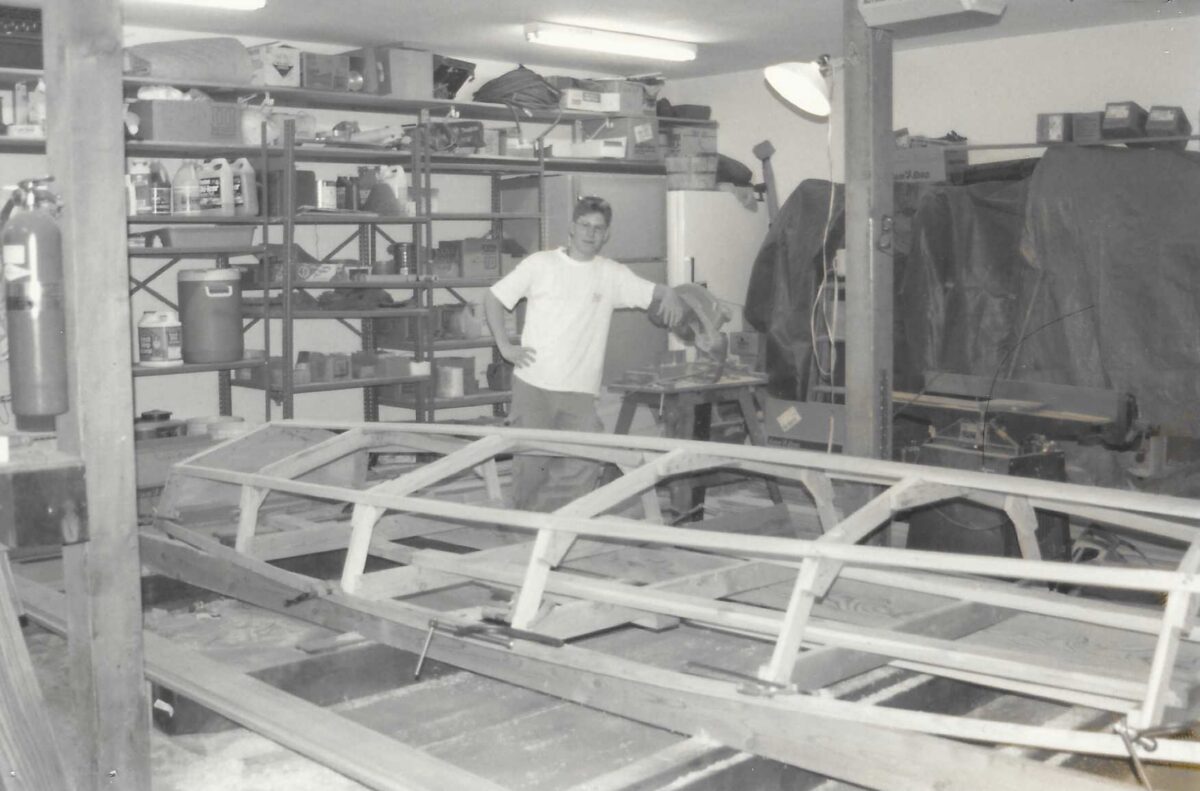
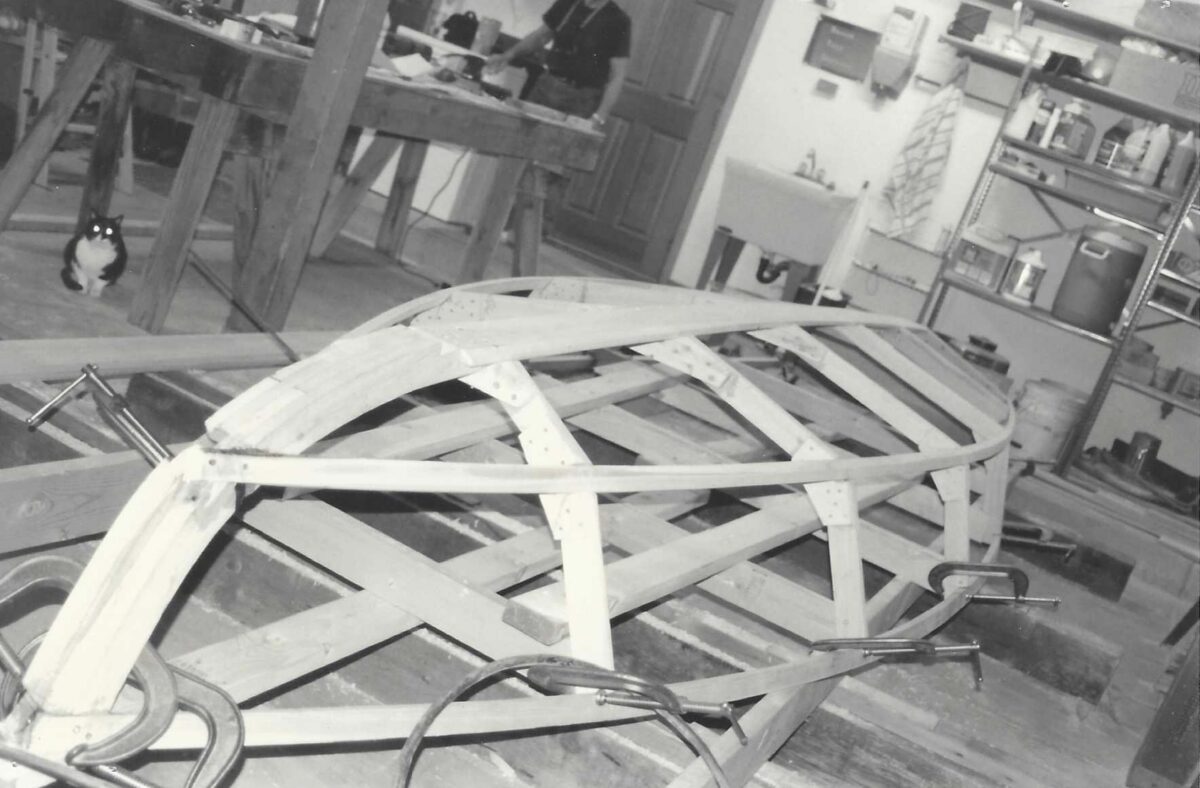
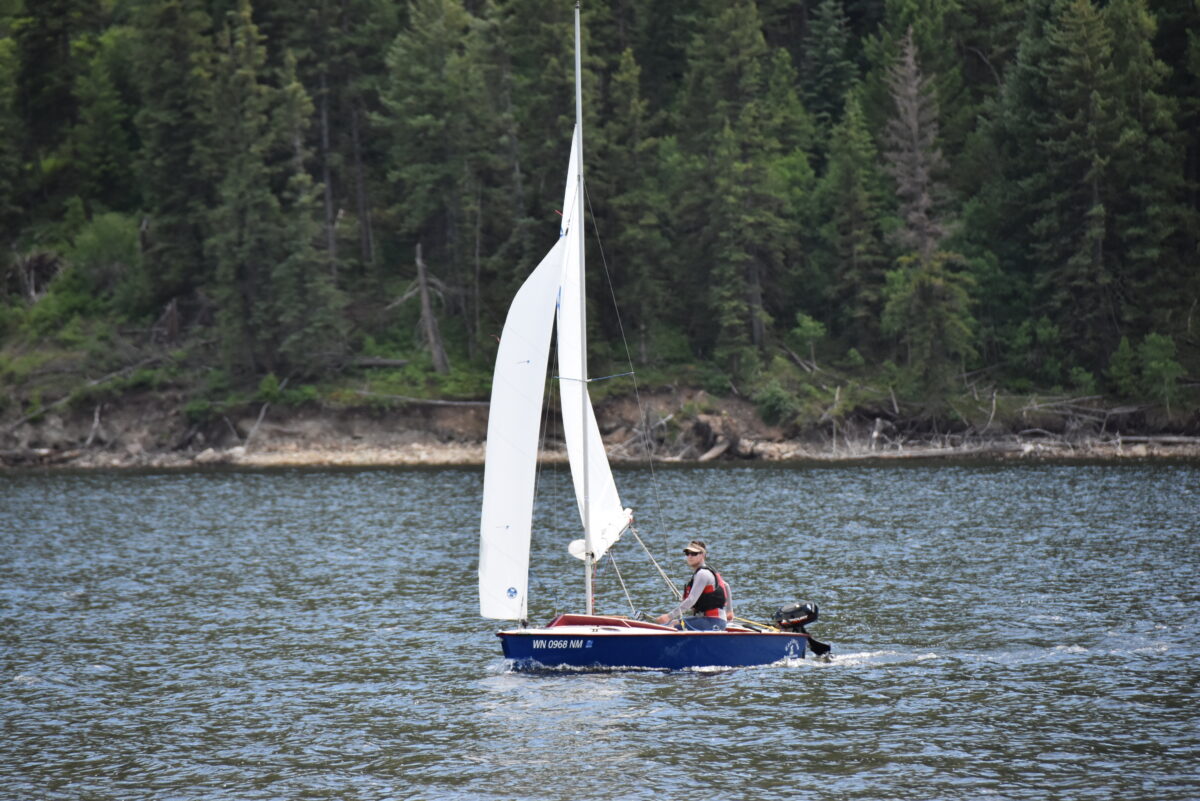
Starting in fifth grade, I took woodworking classes throughout middle and high school. By the time I was a senior, I was getting bored only making square furniture pieces. During my advanced cabinet making course, I asked my teacher if I could build something different. At that time, I thought maybe a canoe or kayak would be a reasonable thing to build for exploring high mountain lakes. My teacher was supportive of the idea, and I started looking for blueprints. In my search for a plan, I found myself looking at blueprints for sailboats instead, and I thought maybe this is my opportunity to learn how to sail. So I bought a plan for a Snipe and got started with the build!
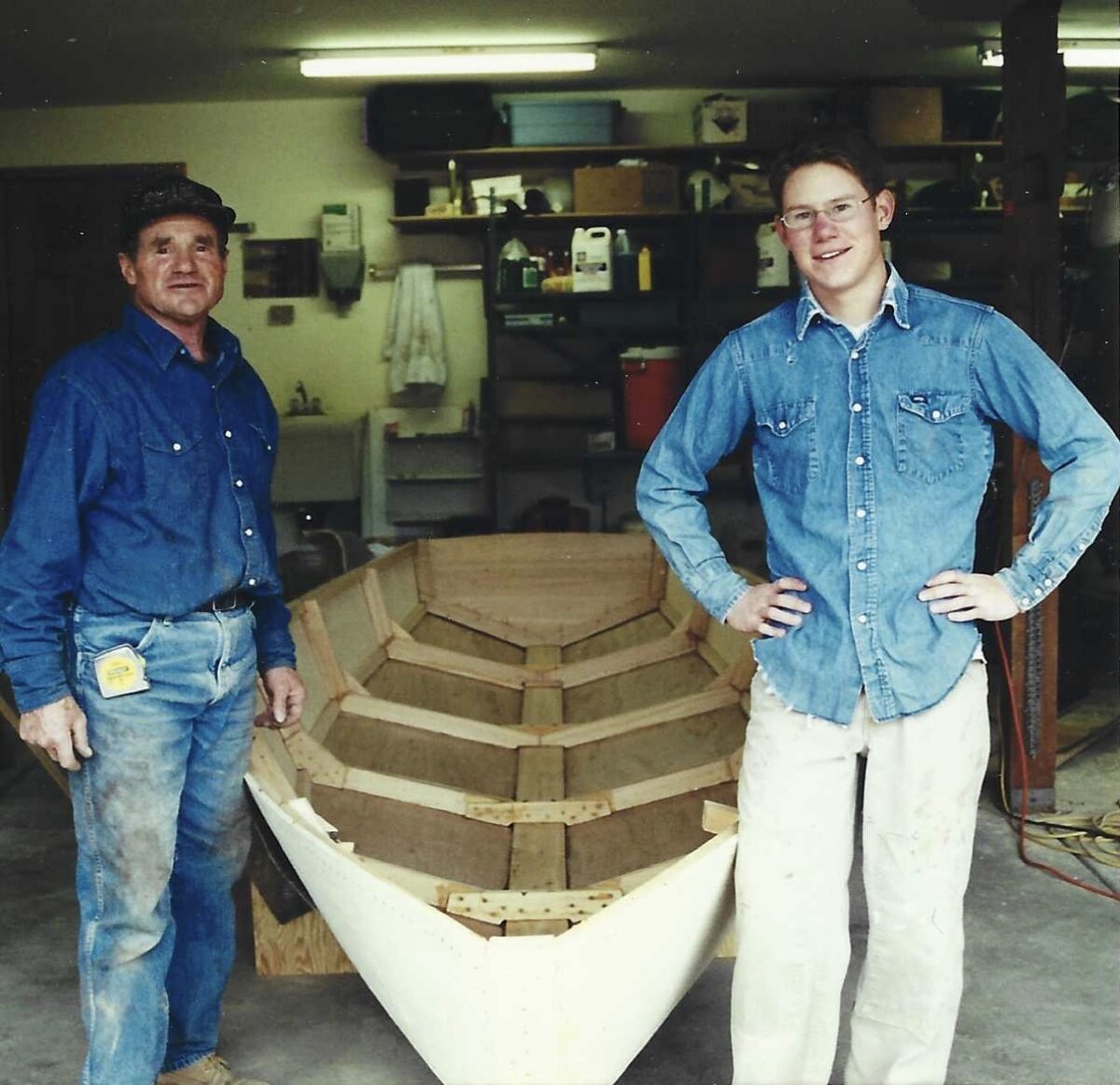
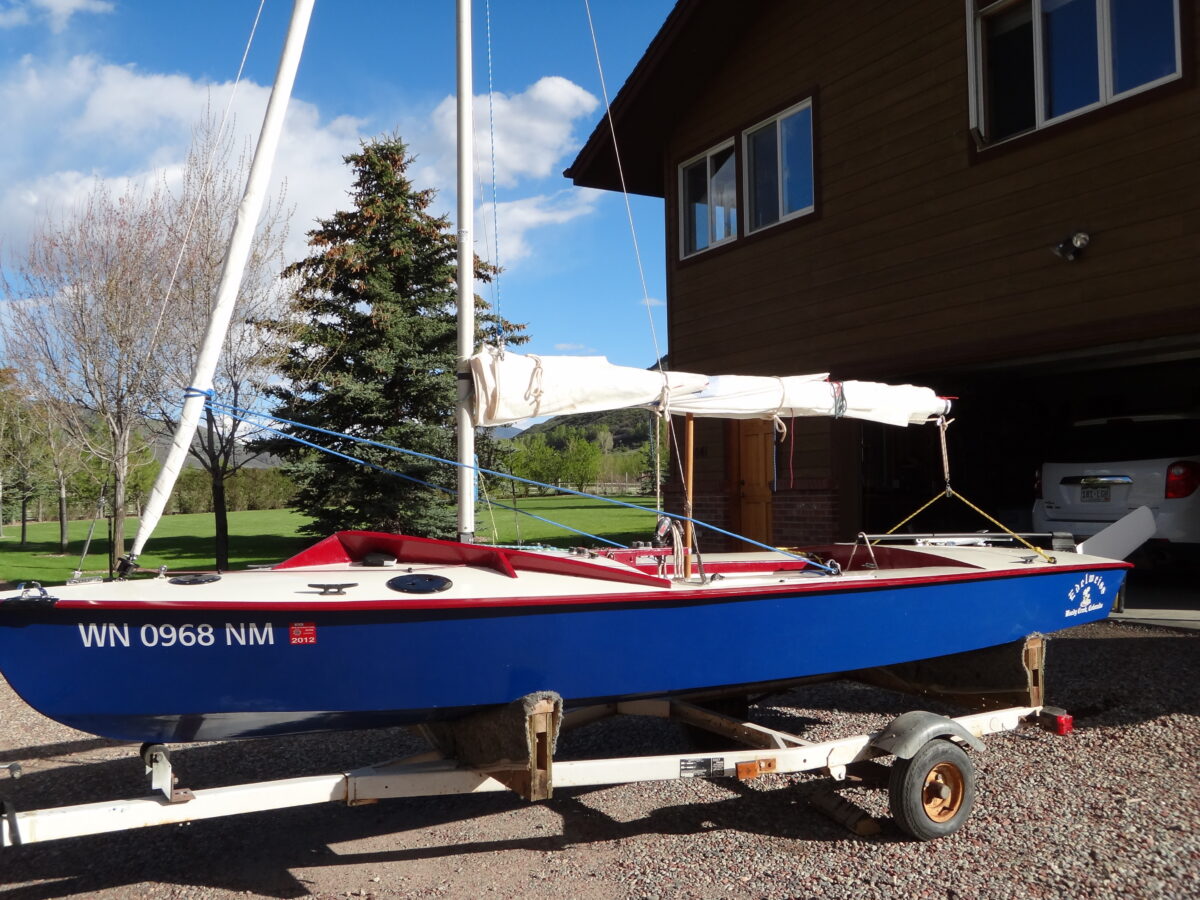
I didn’t get too far during the first year of the project, but I was committed and I continued working on it during summer and holiday breaks throughout college. It was finally ready to launch just before my senior year. It’s a 16-foot racing dinghy, called a Snipe. Over the years, it’s gone through a few versions of reinforcement and updates. Originally it was all wood, and now it is a fiberglass on wood composite build that is completely sealed in with hatches for storage capable of expedition sailing for a couple weeks at a time.
So you made your sailboat—how did you learn to sail?
Once it was built, I took it to Tacoma, Washington where I was going to college. I happened to be living in a great little house built on stilts located on the Tacoma Narrows. The house had a boat pulley attached to the deck over the water, and again, I thought this was the perfect opportunity to learn how to sail. Unfortunately, at the time, I was quite ignorant about ocean tides, currents, wind patterns, etc., and I started learning the hard way. It didn’t take long to realize that it wasn’t the right way to learn, but I was intrigued and motivated to figure it out, and that’s when I found the NOLS Mexico Sailing course and signed up. During that course, I fell in love with sailing and with NOLS.
And the rest is history, right?
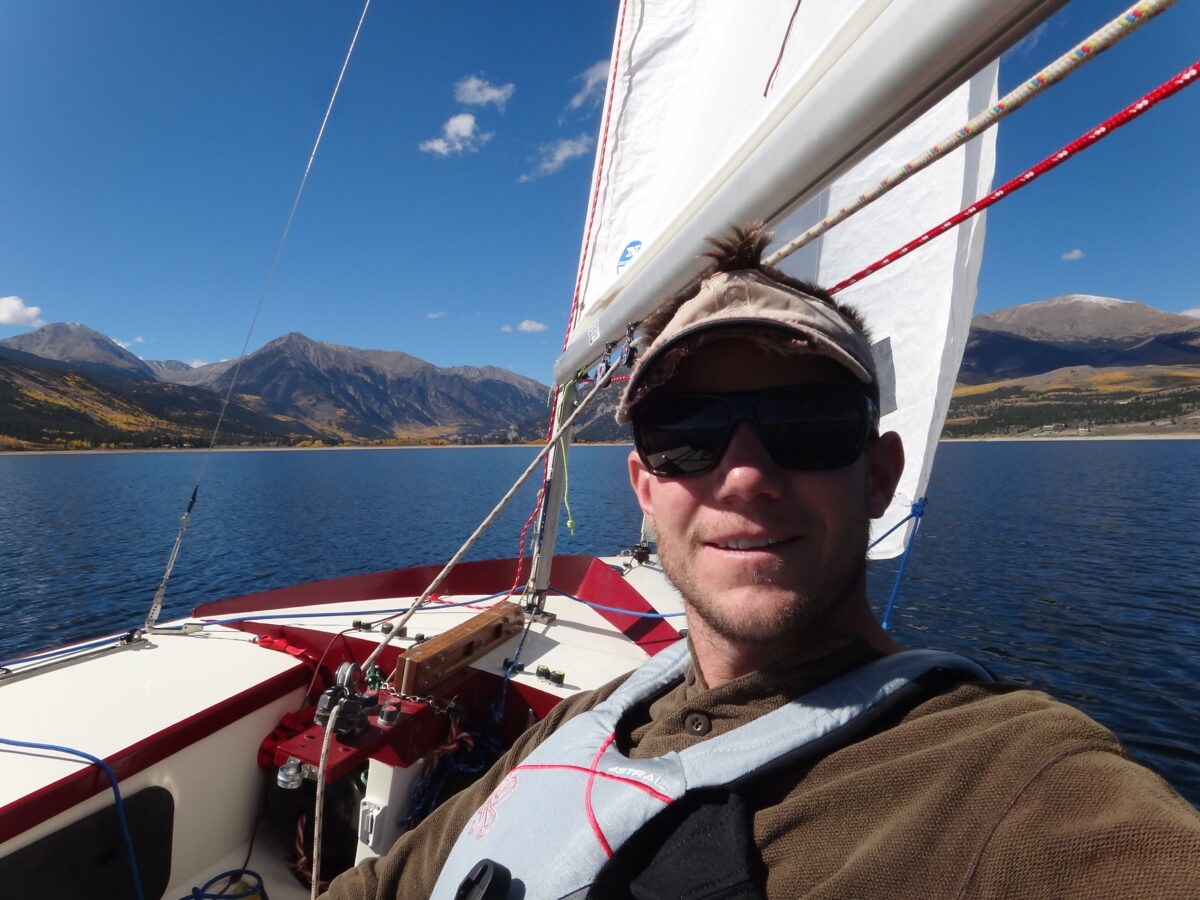
Well, the NOLS Mexico Sailing course got me interested in working for NOLS. So, in 2007, I became an instructor and started working in the hiking program. Early on, I sought out opportunities to work in Mexico so I could focus on learning how to sail between the courses that I would work. After developing my skills through seminars, clinics and personal sailing trips, I started teaching Drascombe sailing courses in Mexico. After a couple years of teaching in Mexico, I learned to sail larger keelboats and began working in the Pacific Northwest and New Zealand sailing programs. I eventually joined the Alumni Department and I’ve instructed Alumni sailing trips in the Caribbean, Croatia, and Greece as well. Personally, I have pursued a NOLS supported advanced offshore sailing course in South Africa, and I’ve also explored the far reaches of the Arctic around Svalbard by sailboat.
How would you describe sailing to someone who has no experience with it?
Sailing spans the gamut. One of the things I love about sailing is that there is an avenue for everyone, from being a novice, to someone hungry for wild adventures, and anywhere in between. There are a plethora of options from day sailing without a destination in mind, to multi-day passages exploring a local cruising area, to full blown expeditions making blue water (ocean) crossings.
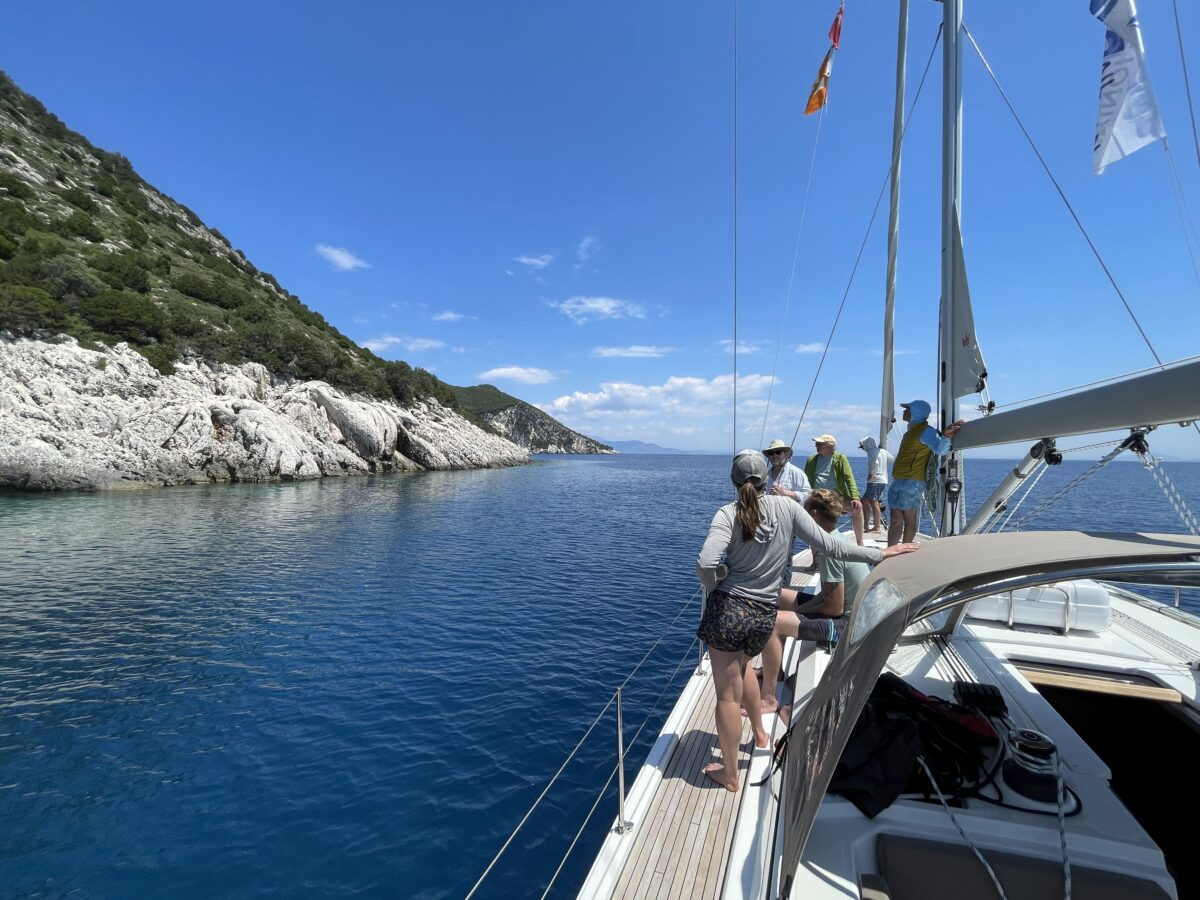
Sailing allows you to learn and admire the coastal and maritime environments while traveling in a unique way harnessing the wind. While the days can be adventuresome, once you drop an anchor or tie up to a dock, you have cozy and comfortable living quarters for the night. Keelboats are essentially small houses on the water that are outfitted with separate cabins with beds, a galley (the kitchen) for cooking, and a gathering place around the dining table with comfortable seating. Sailing with NOLS offers an avenue to get your feet wet learning the basics as well as developing more advanced skills while exploring beautiful areas, indulging in new cultures, and sharing a great experience with the crew!
How would you describe the split between comfort and challenge for the Sailing in Greece’s Ionian Sea?
There is a little of everything, and we cater to the group that shows up. If people are interested in shorter passages going to more places including different islands, bays, coastal towns and exploring ashore, we can do that. If the crew is interested in longer passages and more challenging conditions, we will seek out opportunities to bring that into the mix. It is important to keep in mind that sailing is physical. You need to maintain good balance and maneuverability. Even though it’s not cardio heavy, it’s an active trip, and there are bursts of cardio activity. There are moments when you are active and moments where you are relaxing. Sometimes there are unexpected challenges, and you need to be ready to respond. There are also days with light winds, easy cruising, and lots of exploring, swimming, and just enjoying where you are. At the end of the day, it’s a mental game where you need to stay engaged.
What are the important pieces of the log and why are they organized in this way?
A good ships’ log creates constant situational awareness. By taking time to fill it out, it forces you to take stock of things like wind, weather and sea state conditions, where you are, if you’re on track, if your plan is still a good one, and whether or not you should consider deviating from the original plan. Ideally you make a log entry about every hour. It’s an intentional moment to be aware of what’s going on around you.
In this account, I recorded turning points for the day. Noting the time is important when it comes to deduced (dead) reckoning: using your position to determine the remaining distance and calculating your estimated time of arrival (ETA) at your planned destination based on the speed made good. It’s important to know where you are and how much longer it will take to get to the destination. It’s a decision-making and situational awareness tool.
What would you tell someone who has never sailed and is interested, yet intimidated by it?
Sailing offers something for everyone, and sailing with NOLS is a great choice! NOLS takes a compassionate approach to teaching and coaching people through something new or unfamiliar. It’s an accommodating way to step into learning new skills. If you’re intimidated by the idea of sailing, then this trip is a perfect opportunity to get out there with NOLS where you will have a compassionate instructor team and a caring crew. In difficult circumstances, NOLS instructors are very good at staying calm in the chaos and coaching people through challenges. It is a great learning environment and a wonderful way to explore new places and have a great time too!
What’s special about sailing off the coast of Greece?
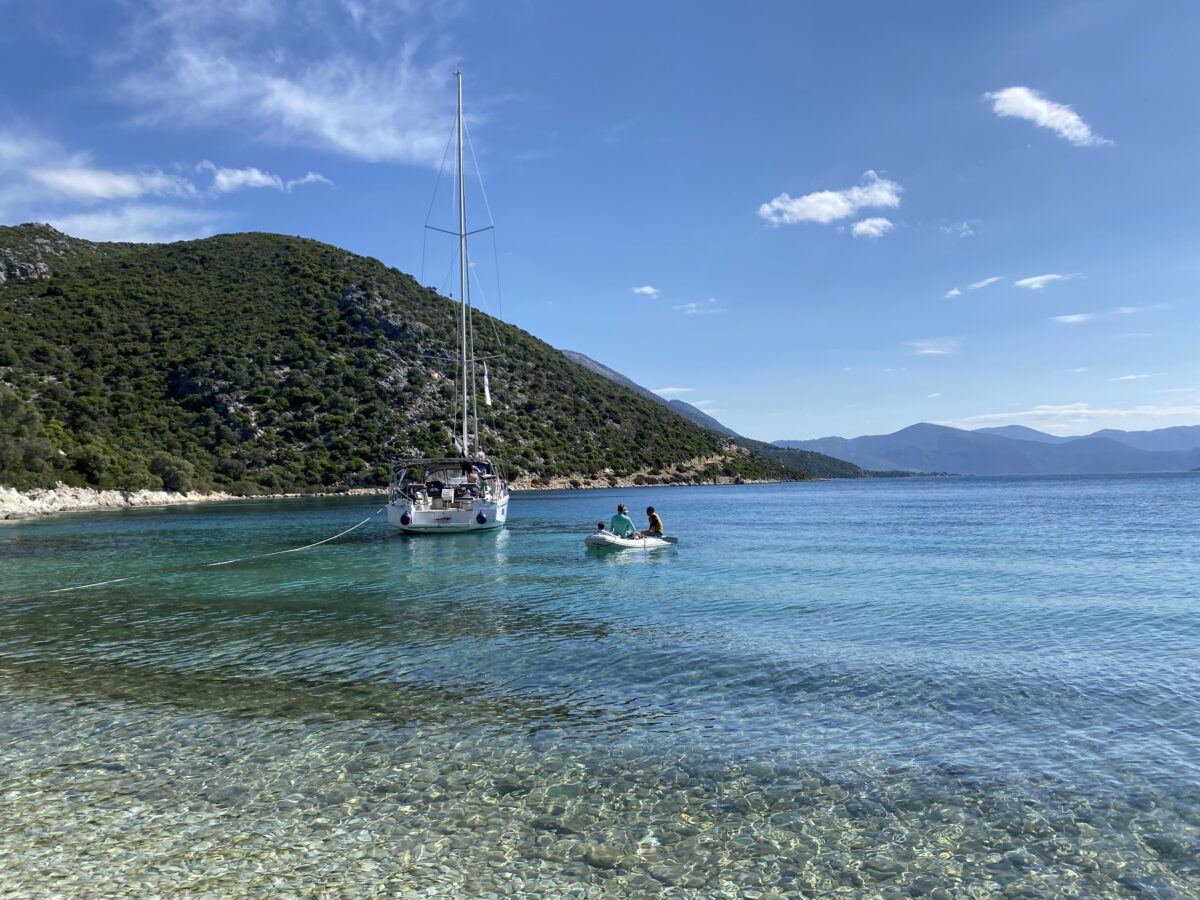
There are a lot of awesome things about Greece. We sail in the Ionian Sea for a few reasons: the Greek Isles are stunning, there is amazing history in the area, and the local people have a friendly and fun culture.
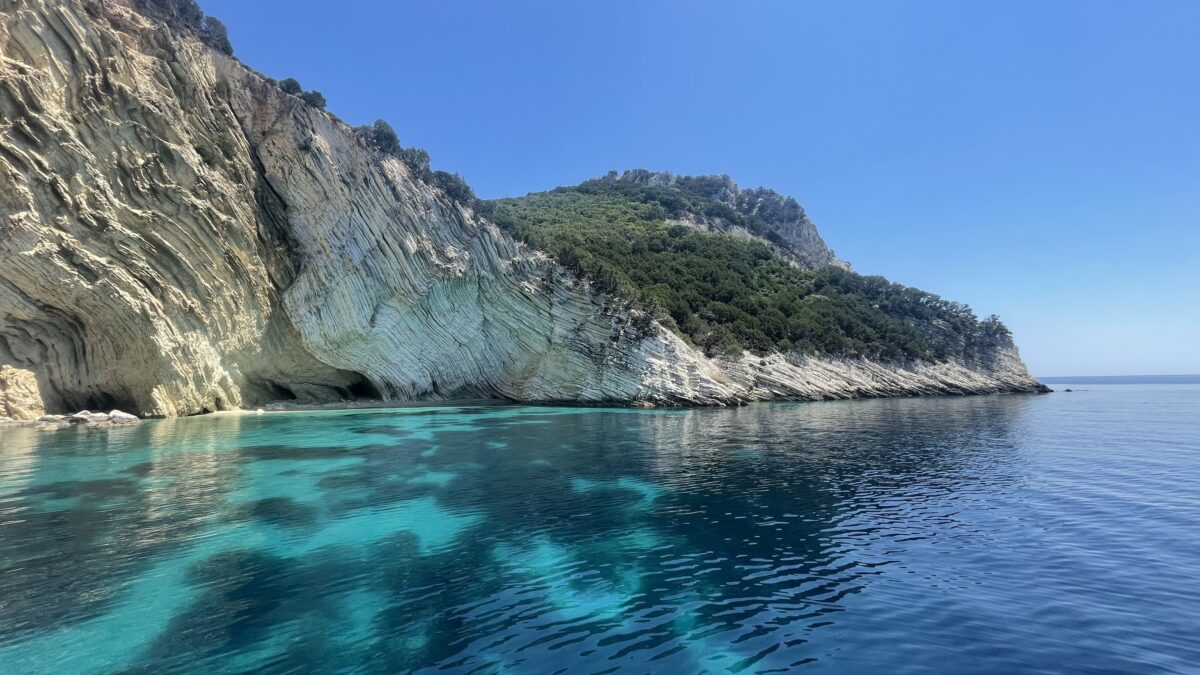
Greece is spectacular in spring and summer. The weather is often really nice, the water is a beautiful turquoise color, and there are stunning rock formations and coastlines. We sail in places that are referenced in well known literature and history such as Homer’s Odyssey and The Iliad. Additionally, the local tavernas are a fun cultural experience that bring the ocean/sailing and local communities together.
In particular, this area is awesome for cruising due to the protected waters in the Southern Ionian that create an avenue for people to learn skills with good wind and a protected sea state. In the Northern Ionian we have the opportunity for longer passages and more challenging conditions. Regardless of where you are in the Ionian Sea, the sailing is great and there are always opportunities for a good swim, exploring ashore, and enjoying the Greek culture and cuisine!
Is there anything we missed that is important for folks interested in sailing to know?
Given that NOLS is a leadership school, sailing is an incredible platform for teaching leadership, collaboration, and teamwork. The NOLS leadership model really comes into play in the sailing environment due to the natural leadership progression that is built into the process of sailing a boat and caring for the crew along the way!
Inspired? Join us in Greece May 11-23, 2026! Click this link to learn more about the Sailing in Greece’s Ionian Sea Alumni Trip!
Topics: NOLS, NOLS Alumni Trips