Connection, Resilience, and Dal Bhat: Manaslu Circuit Alumni Trip 2025
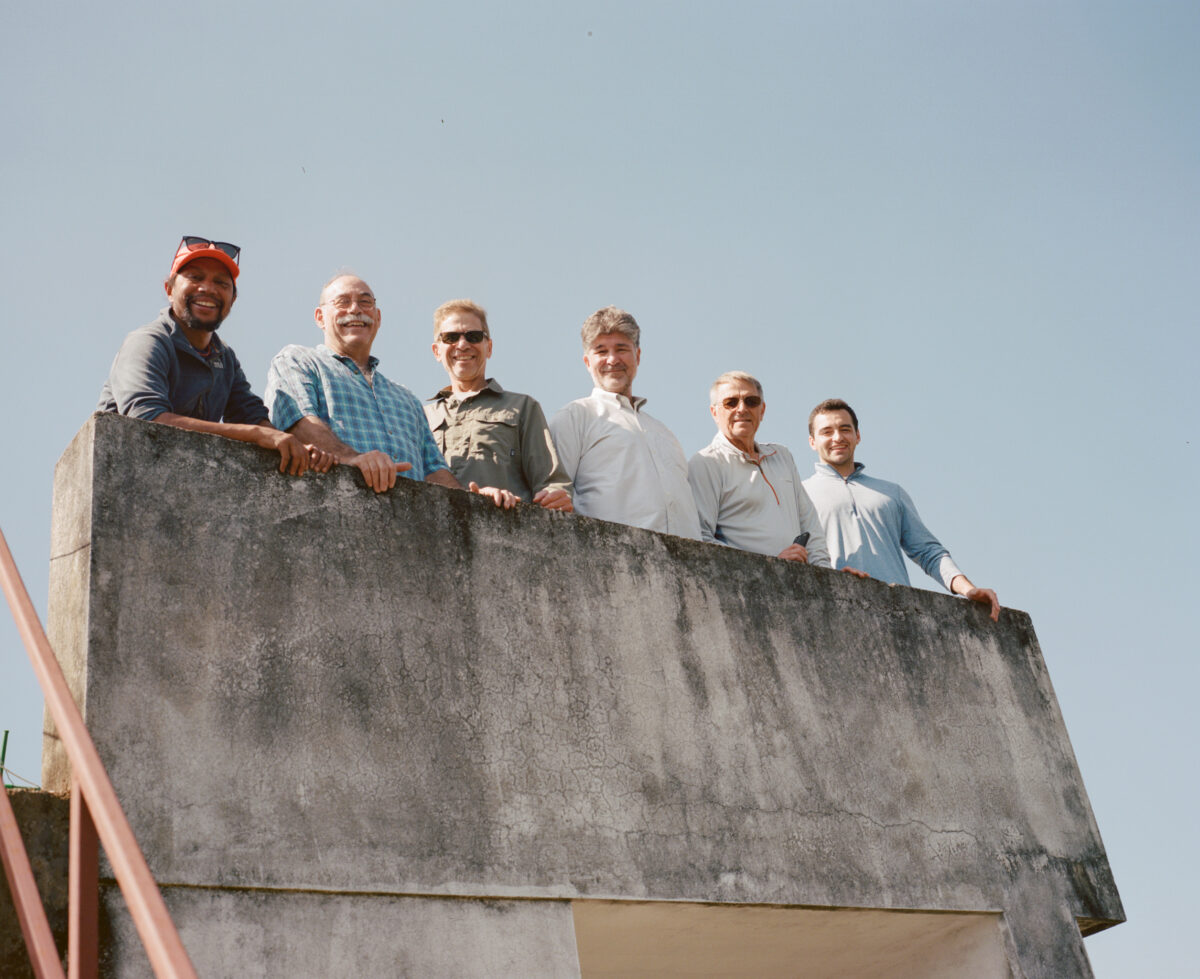
In November 2025, five gentlemen, one lady, three guides, and three support staff met in Kathmandu in preparation for a two-week NOLS alumni trek on the Manaslu Circuit in Nepal. Although we were all strangers coming from different parts of the world, our shared excitement for setting foot in the Himalayas was palpable. During those two intense weeks, we hiked through valleys, traversed high-altitude passes, and immersed ourselves in a rich and ancient culture.
Growing up in one of the most famous hippie towns in the world containing almost every type of spiritual center you can think of, I always felt very drawn to Hinduism and Buddhism. Woodstock, New York always offered a taste of spirituality from foreign lands, but the opportunity to combine my love for the outdoors with the chance to learn about these rich traditions at their source was something I couldn’t miss. Each member of our trekking group came with different interests and left with new insights on life in the Himalayas.
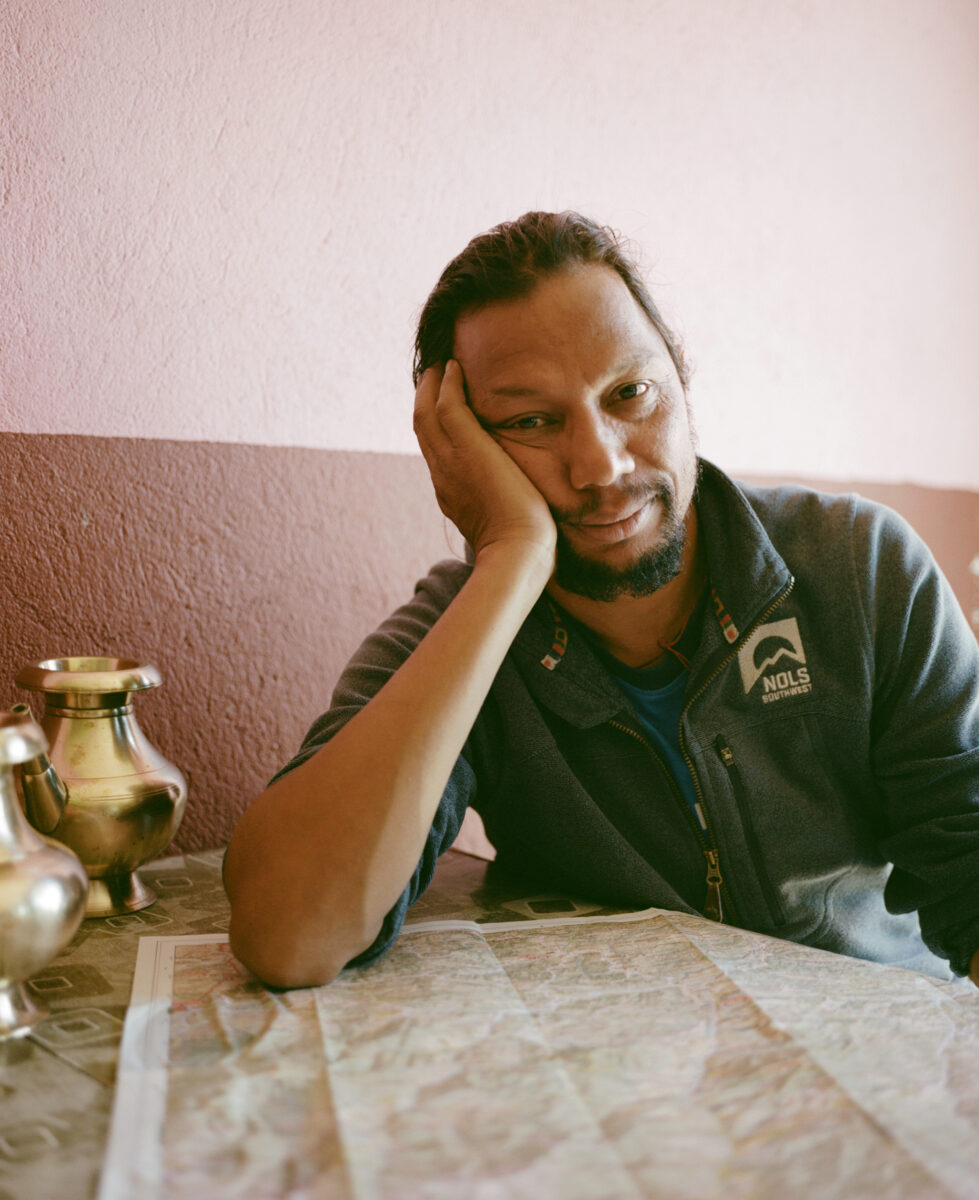
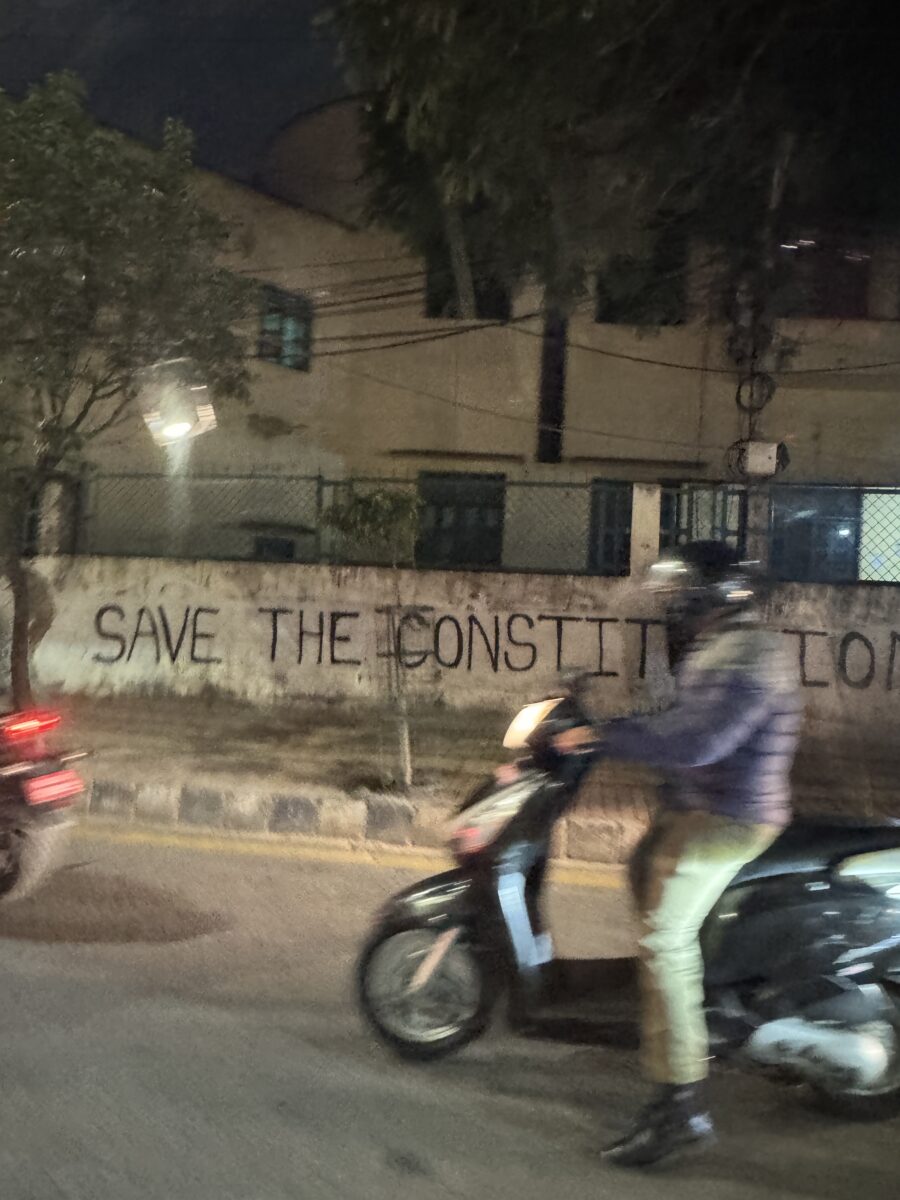
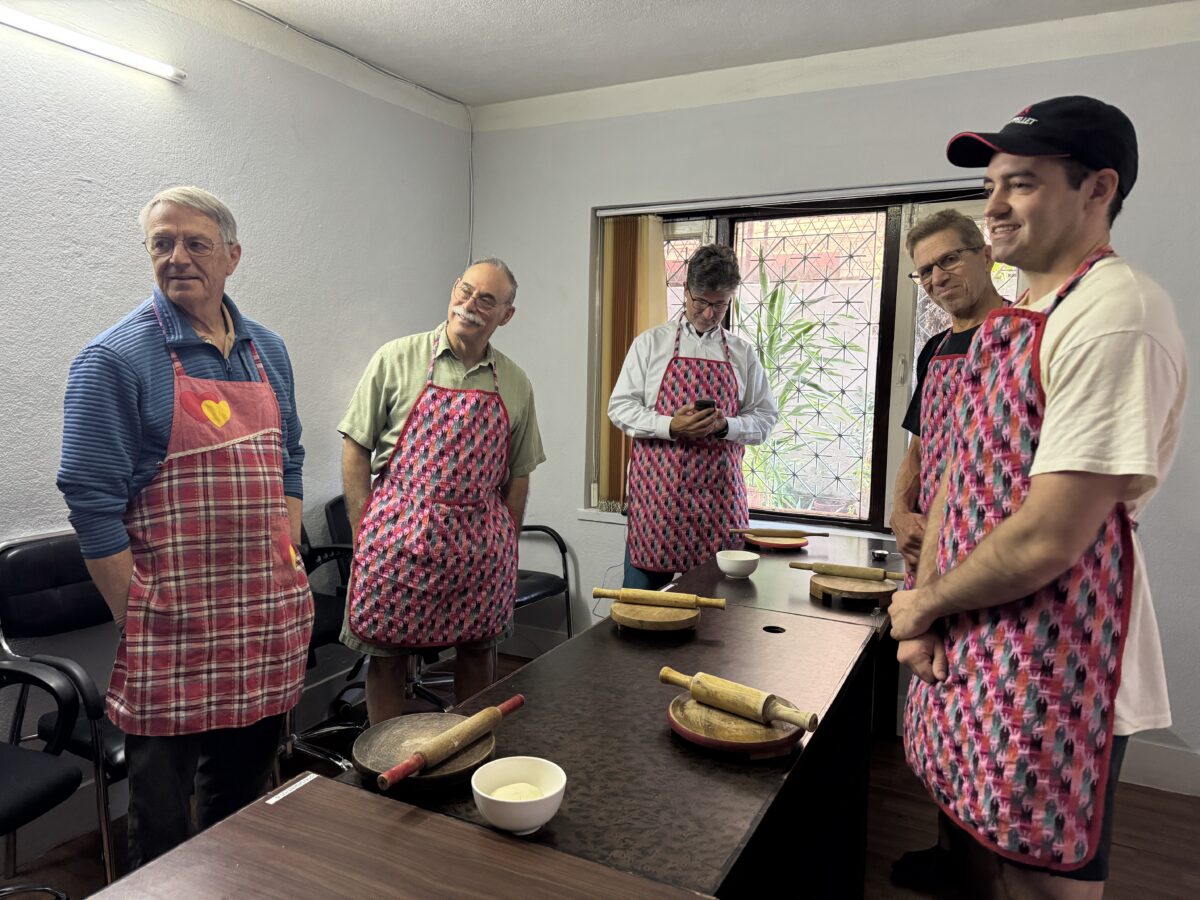
During the first couple of days, we prepped our gear and acclimated to the time difference in Kathmandu. Jagan, our fearless NOLS instructor and accomplished multi-Everest-summitting mountaineer, arranged sightseeing at holy religious sites and a dumpling-making class where we learned about Nepali culture and social issues affecting the country. Only a few months earlier, there were mass protests by Nepali Gen Z on corruption and social media censorship that made world headlines. Graffiti proclaiming “Save the Constitution” was plastered throughout the city. The political life of Kathmandu combined with shrines and Hindu chants blasting in many corners of the city made it obvious that it was an urban organism breathing with life and energy.
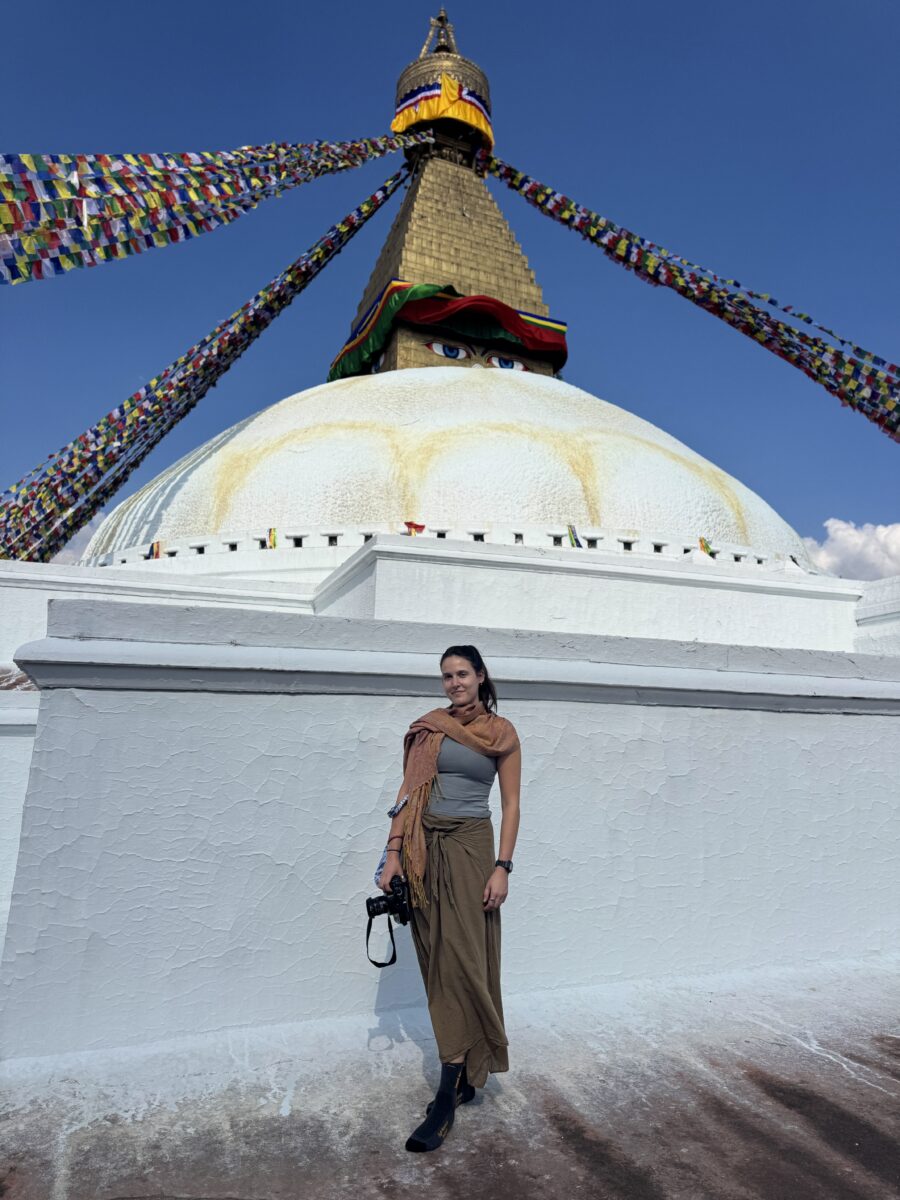
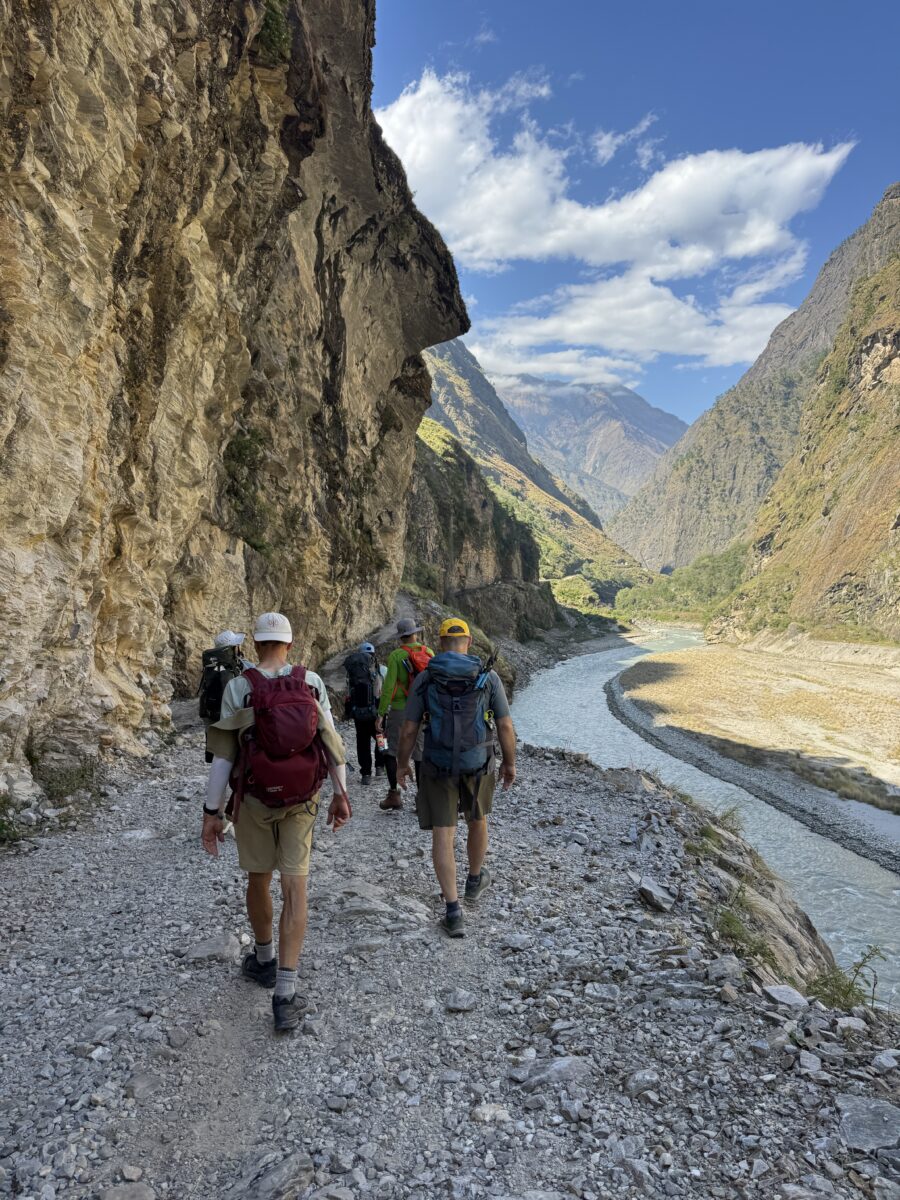
The next day, we began our journey to the trailhead: an eight-hour drive through beautiful rural villages alongside a raging river. Things began to look different as the elevation increased. Boulders got bigger, mountains got steeper, and an abundance of waterfalls lined our path. It felt as if massive rocks, rivers, and life began in the mountains and slowly inched their way downhill to the regular sizes that we’re used to. After the long drive, we arrived at our first accommodation on the trek: a tea house with barebones rooms that included beds, bathrooms, and hot meals — the first of many to come.
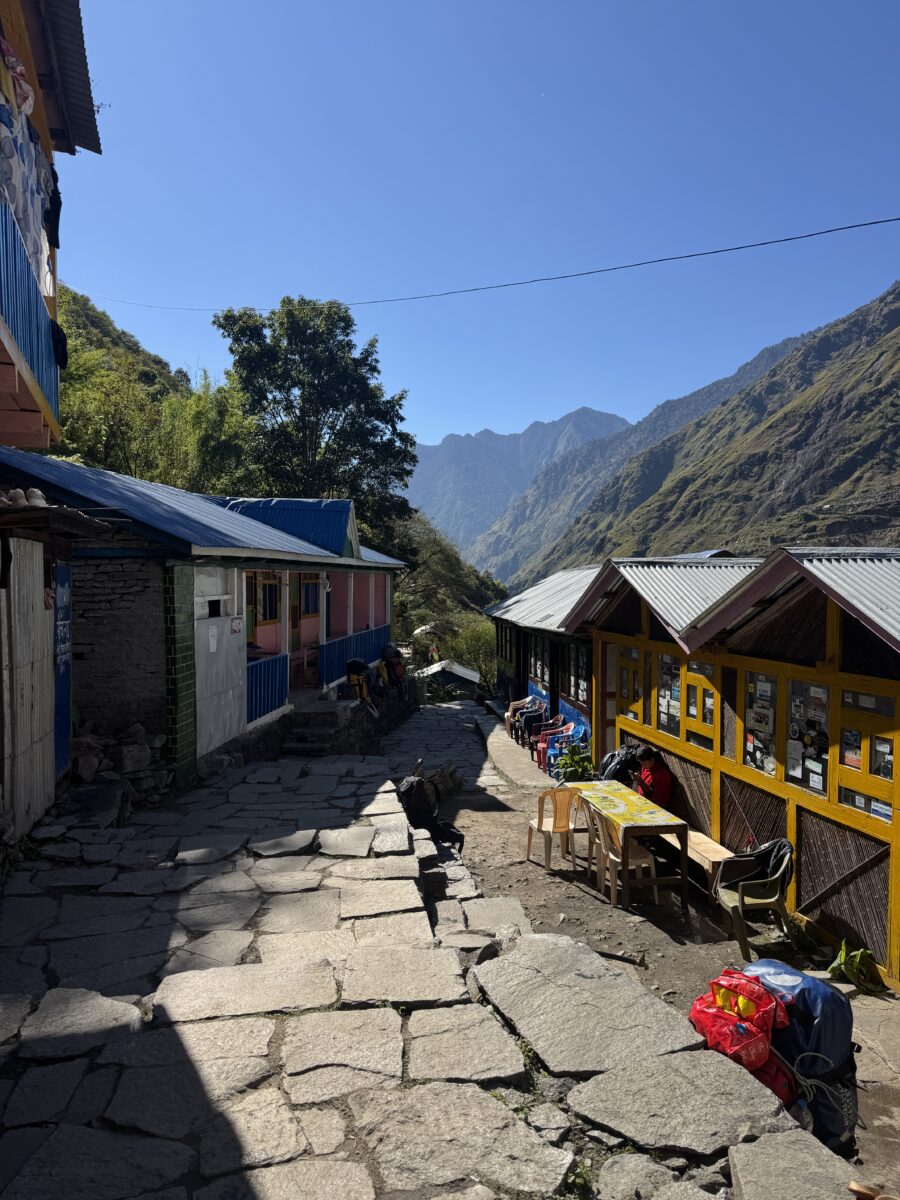
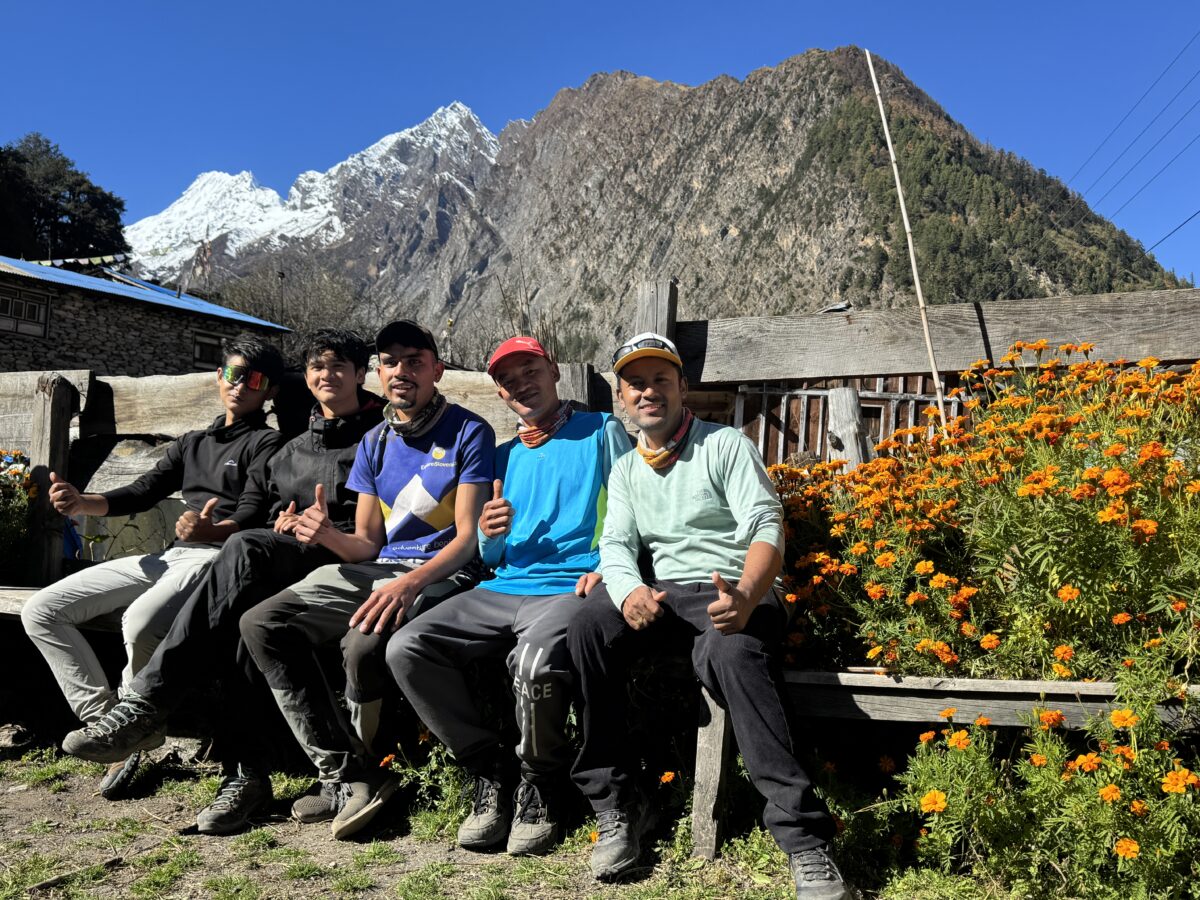
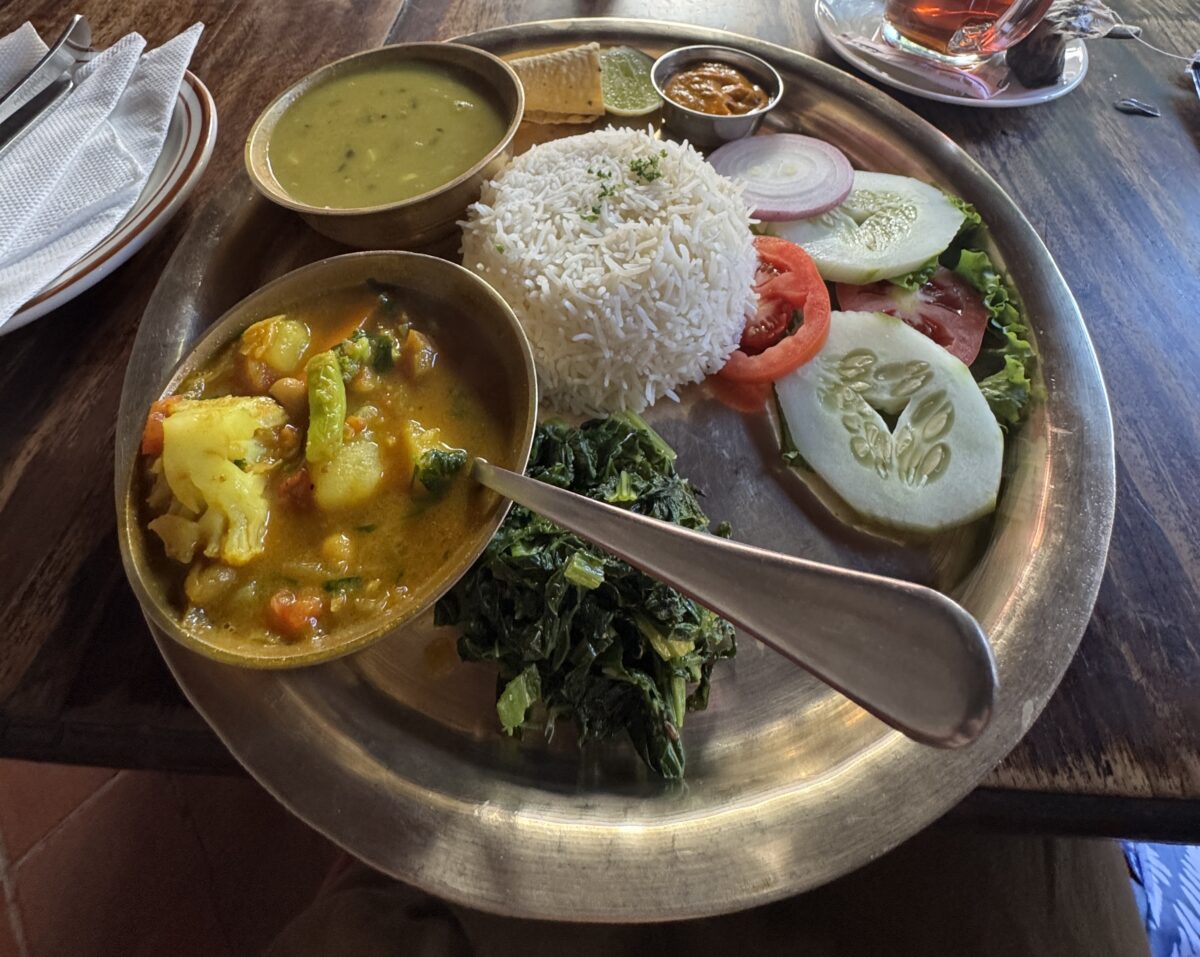
Despite the fact that there were trekkers from all over the world staying at each tea house alongside us, we found ourselves to be the only Americans during the majority of the trip. The food at each tea house was repetitive, but nonetheless delicious. Vegetable egg omelette for breakfast, fried lo mein for lunch, and dal bhat, a traditional medley of lentils, rice, curry, and vegetables for dinner. All the guides and support staff from every trekking group would convene to eat this dish at every meal. I can still hear the tea house owners yelling “DAL BHAT!” when it was time for everyone to serve themselves and sit at a communal table chatting, laughing, and recharging.
There seemed to be an intimate closeness between the Nepali guides, support staff, and tea house owners. No one was afraid to express their love for each other through words or physical closeness. In a place where men and women spend weeks away from their families on these treks, this love between them was especially moving to witness while eating my own meal. Even in the Nepali language, everyone calls each other brother or sister regardless of genetic relation. Dal bhat appeared to be a vehicle for this family time and connection.
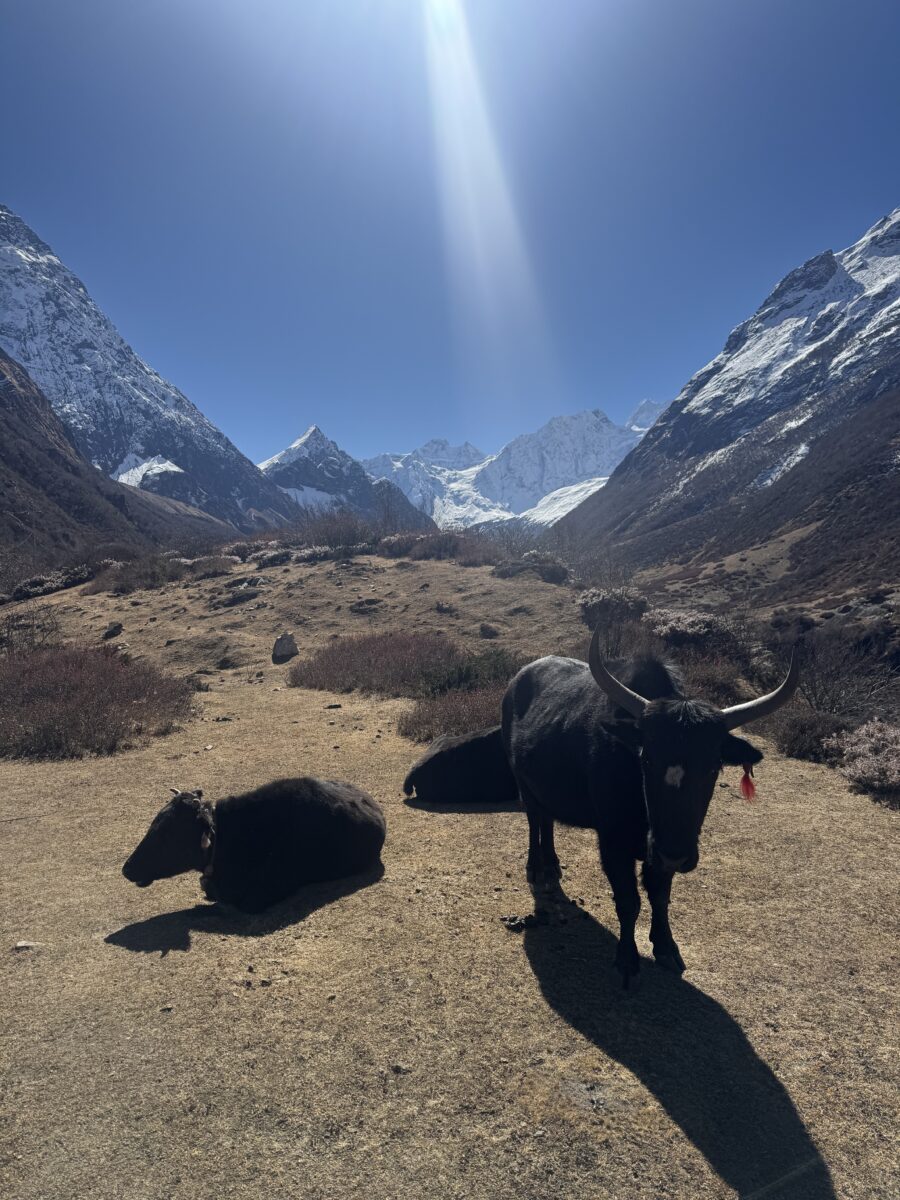
We had long days between villages, but would stop for lunch and snacks in between. The route started as a road bustling with motorbikes and the occasional off-road vehicle and slowly transformed into a narrow, uneven trail. After the first couple of days, the only mode of transport that we had to clear out of the way for were trains of muscular donkeys carrying food and supplies to remote villages. We welcomed the time to rest, backs leaning against the sides of the trail, as the donkeys made their way past us and onto their next destination.
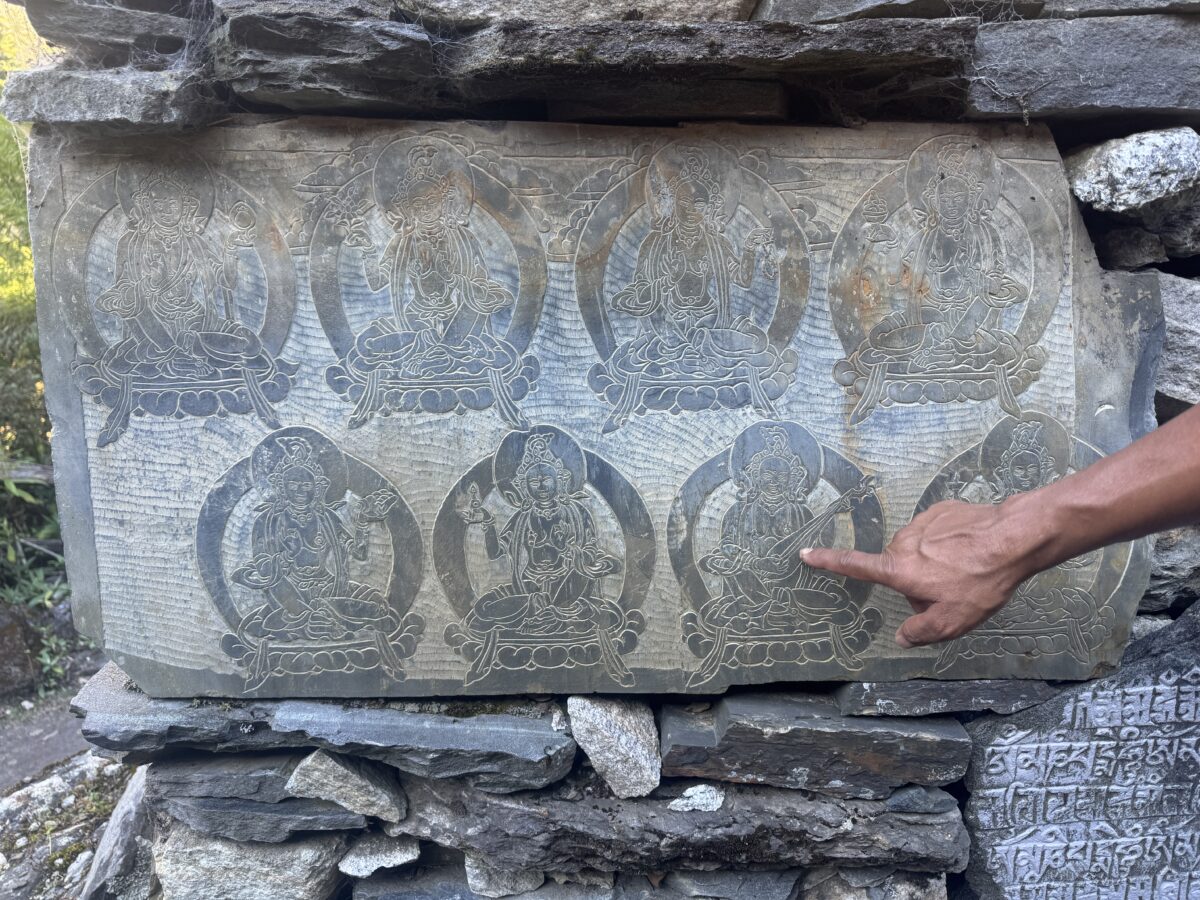
I became fascinated with the shrines that stand at the start and end of each village in order to keep out bad spirits and protect those who resided within. There were Buddhist deities carved into stone, hand-painted mandalas depicting realms of existence, and dharma wheels that rang their singing bells through the valley when you spun them, to name a few. Jagan took time to explain the various deities and their qualities and would often give nightly “dharma talks” on happiness and finding purpose in life. His deep belief in karma and everything happening for the benefit of the soul was refreshing to listen to. I began to notice a similar resilience among many of the other guides.
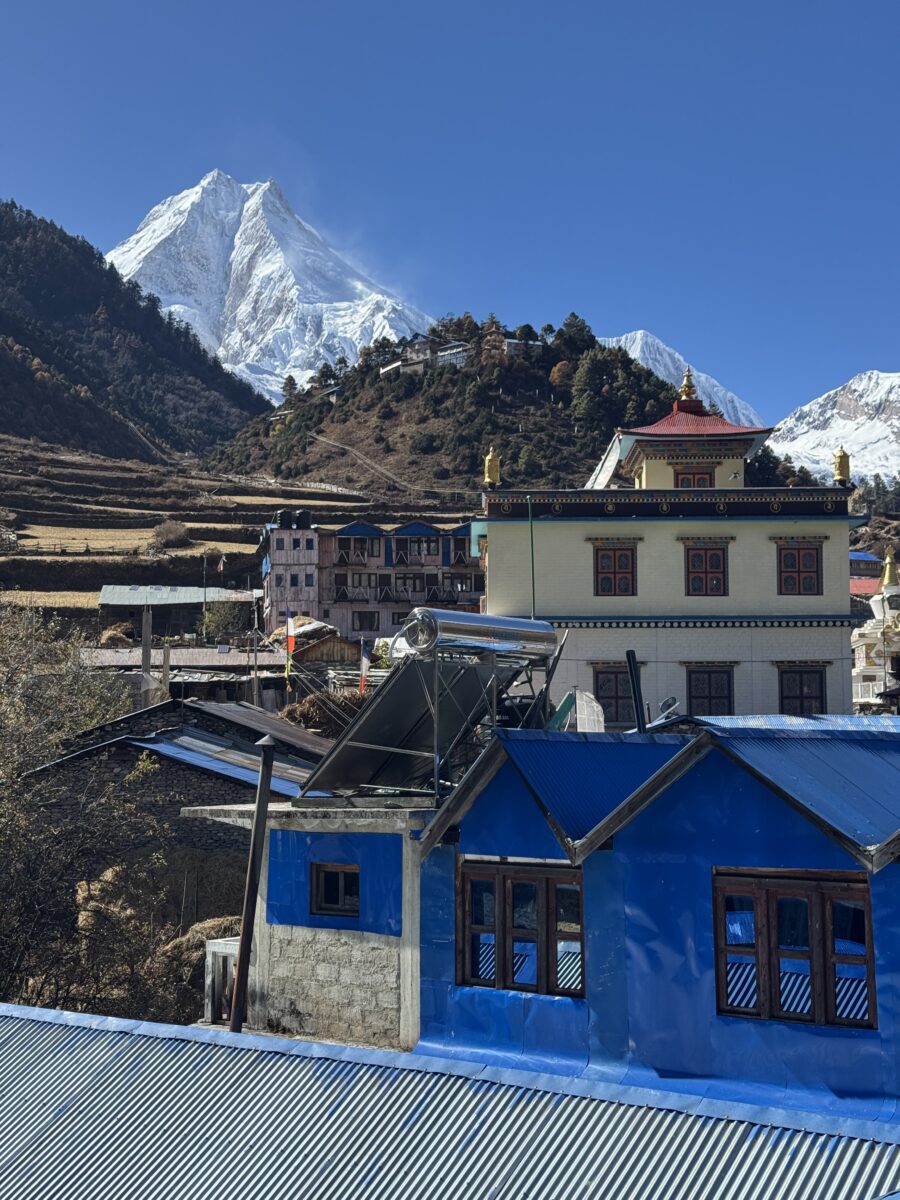
As Manaslu made its grand entrance into our sight, the air was beginning to get noticeably thinner. I found that a few extra breaths here and there was a worthwhile tradeoff for the feeling of euphoria that only increased as we gained elevation. The further we ascended, extreme nausea and headaches became a concern throughout the group. When we reached our 14,500-foot camp at the base of Larke La Pass, we began to mentally prepare ourselves for our ascent to 16,752 feet beginning at 3:00 AM the next morning. The tea house was filled to the brim with trekkers projecting a mixture of nervousness and excitement for the following day’s challenge. Sitting in that bustling room, I realized that I did not want to leave. Perhaps largely because of a lack of oxygen or a closeness to the spirit of the Himalayas, I felt the most at peace I had felt in a long time. Knowing that our ascent was inevitable and eager to see how I felt at 17,000 feet, I joined the group as we all ate a hearty helping of dal bhat for dinner before turning in at around 8:00 PM.
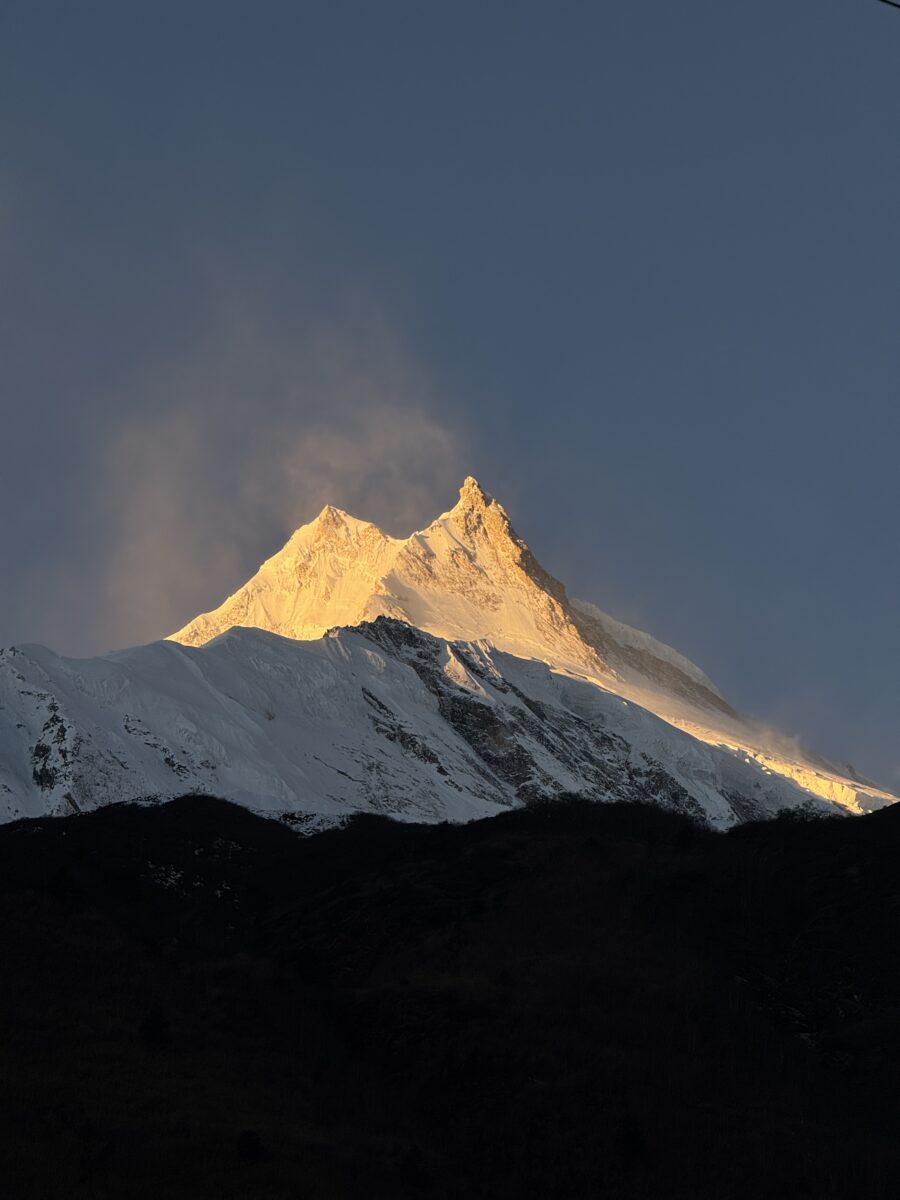
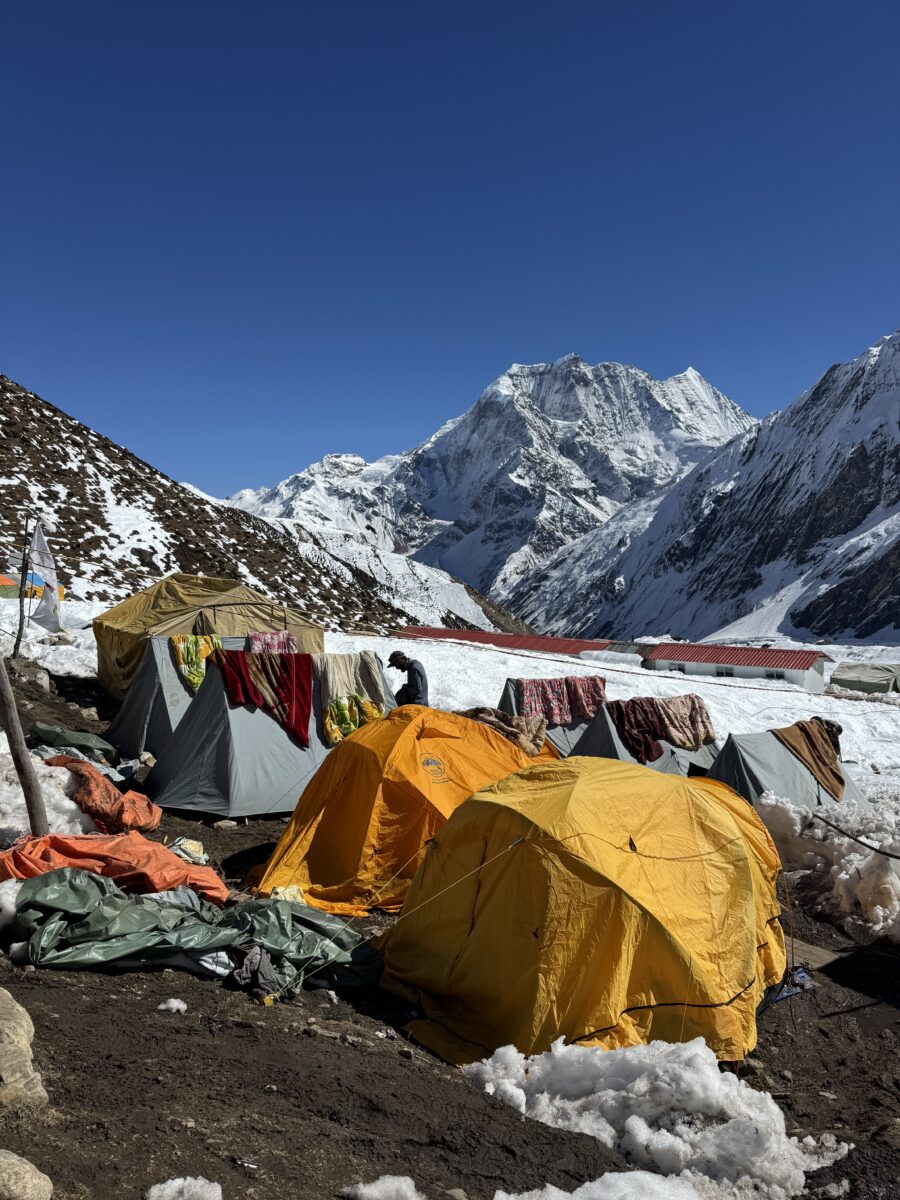
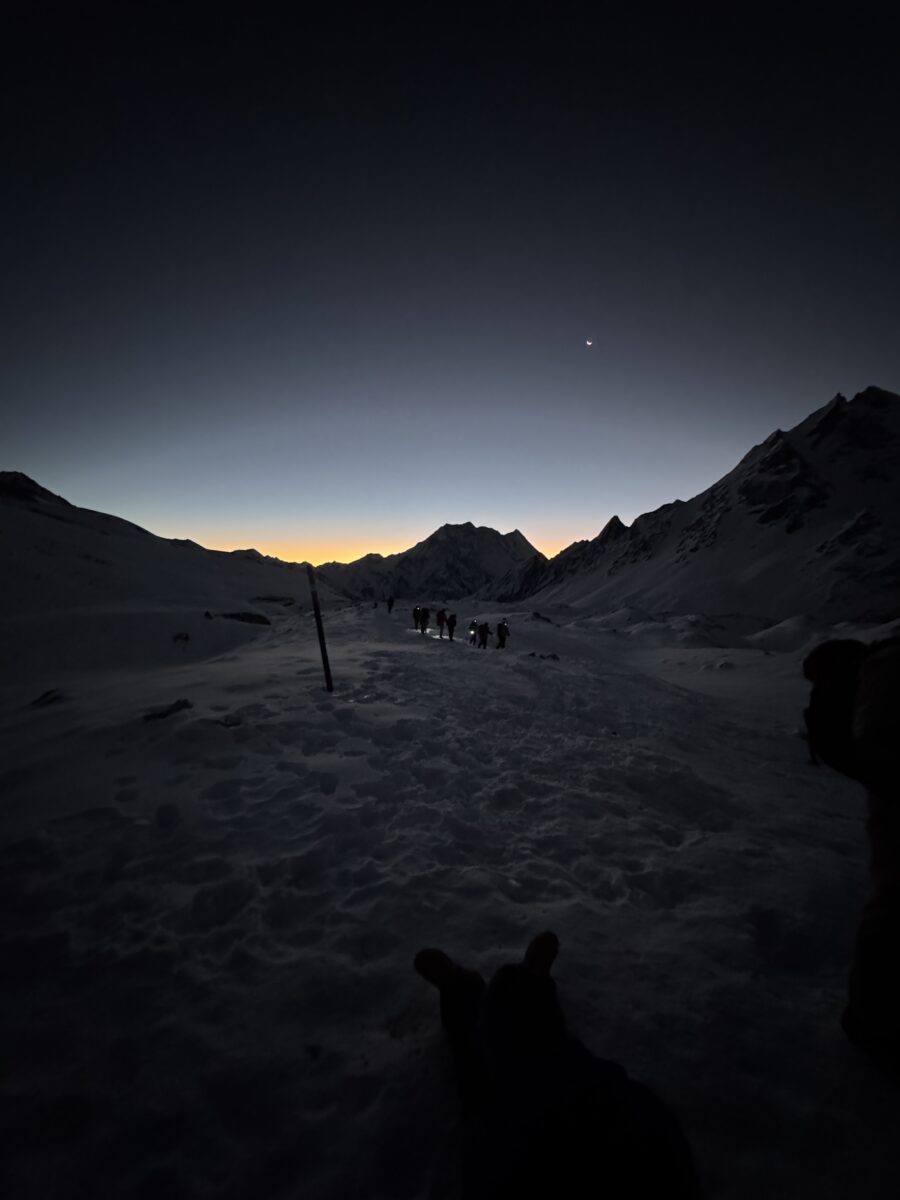
In the wee hours of the morning, we scarfed down a quick breakfast consisting of thick porridge, trying to eat as many calories as we could to sustain our energy for the ascent. Microspikes on our boots, trekking poles in hand, and headlamps strapped to our bundled heads, we began to climb. It was dark and the only visible light for the first few hours were headlamps lining an unknown snowy path ahead and the vivid stars above us. As the sun began to rise, the outlines of snow-covered peaks began to emerge out of the night. At around 7:30 AM, we reached the top of the pass and came upon other groups celebrating the feat. We joined a lively dance party between trekkers, guides, and support staff. The majority of these guides have done this trek many times, but there seemed to be an indescribable sense of joy in the accomplishment of each group that was not lost to repetition. Seeing trekkers at the top of the pass with whom we formed unspoken bonds filled my heart with an excitement that I rarely feel towards strangers.
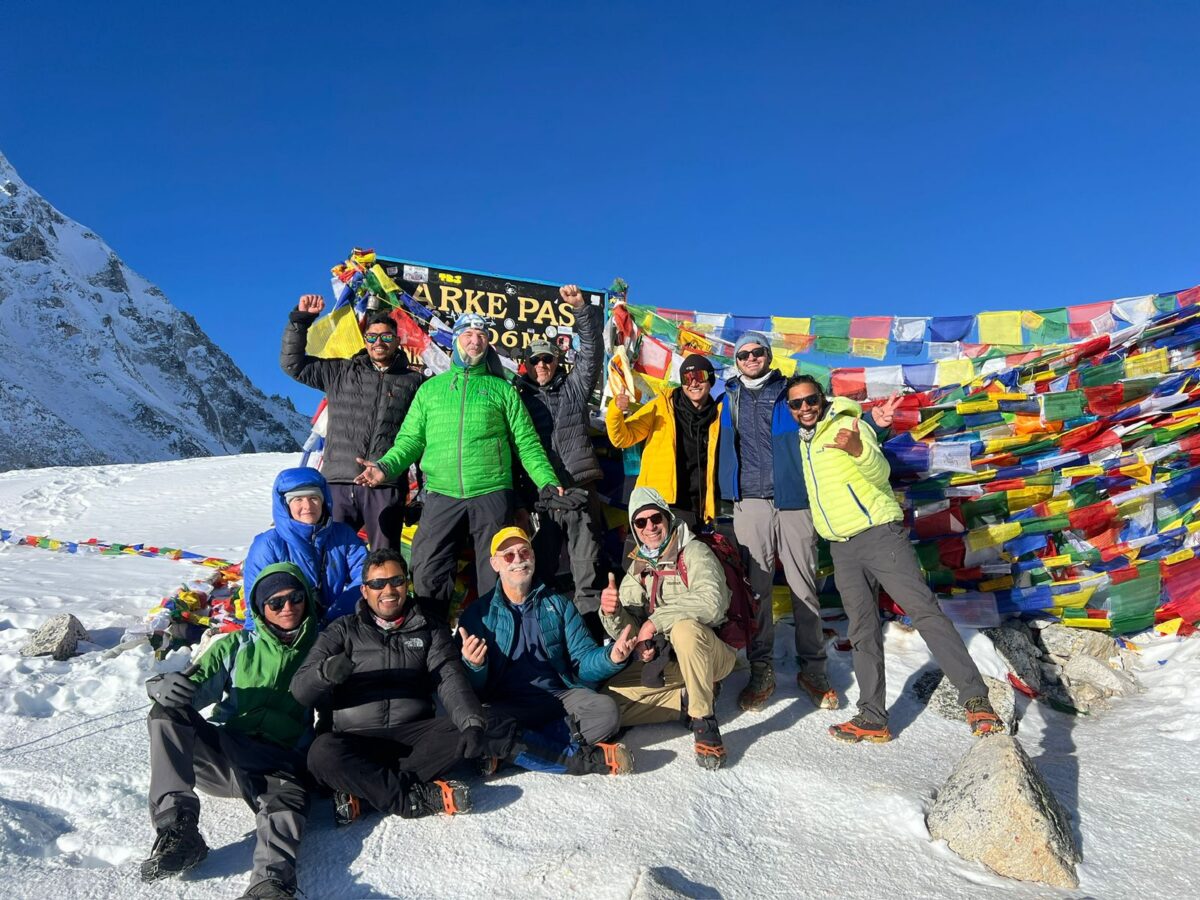
After taking countless pictures to share with our friends and families and bittersweet nods to the other trekkers, the reality of our descent began to set in. I had unknowingly put one of my microspikes on my boot upside down (rookie mistake, I know), which made the already extremely icy path even more slippery. Thankfully I figured it out halfway down the other side of the pass, but not before fearing I would slide all the way back down to Kathmandu. We safely arrived at our second-to-last tea house and tucked in for the night after a long day.
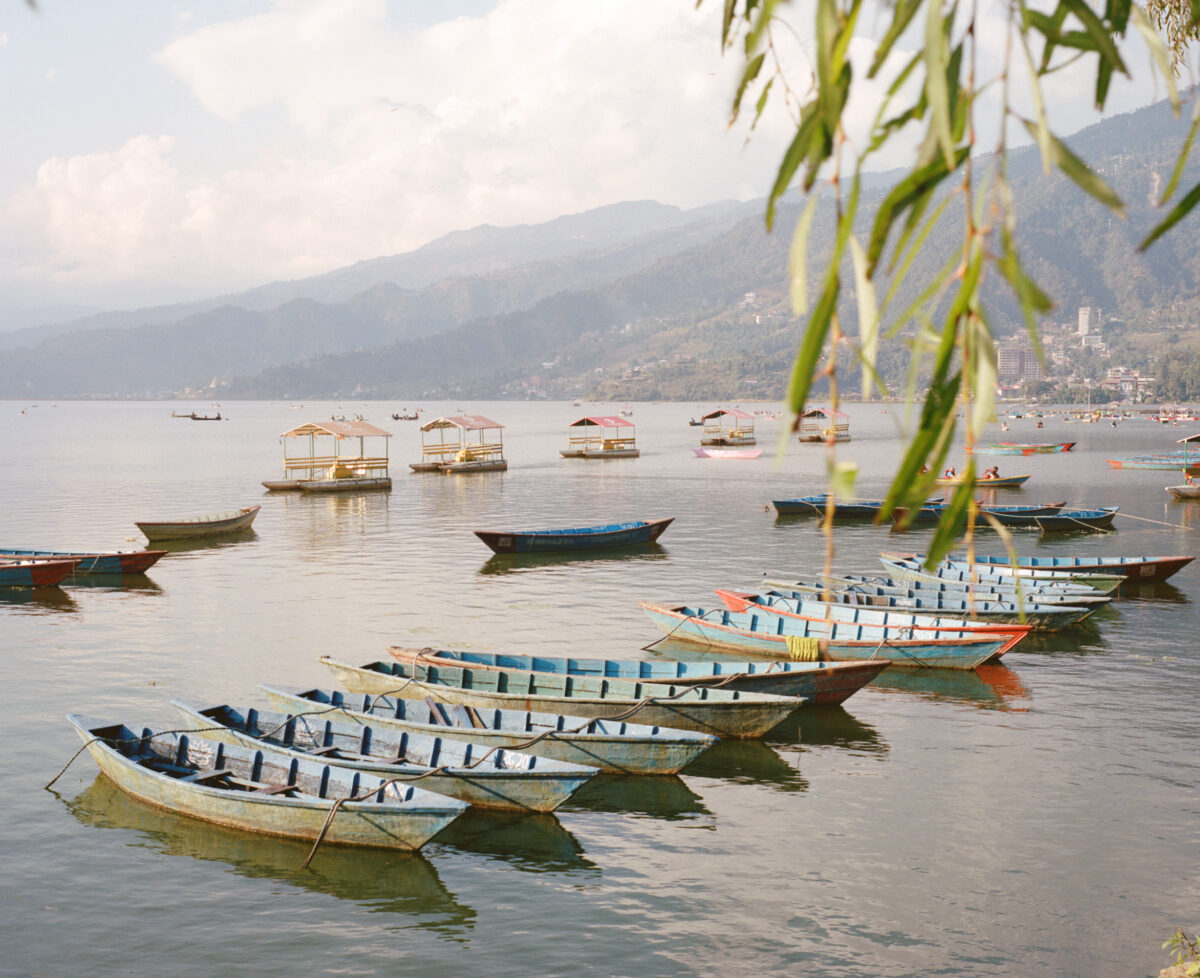
When we reached the end of our trek, we hopped in vehicles that were waiting for us and began the drive to Pokhara, our last stop before the end of our trip. Once in the city, we all found a much-needed hot shower and did our laundry containing all the physical remnants of the trail. We all met for dinner and did some relaxed sightseeing the following day around the beautiful lakeside region of the city. Needless to say, I think we all needed a break from a diet largely consisting of dal bhat. It was a relief to have access to a variety of cuisines. Despite this, I did end up splurging on a t-shirt reading “DAL BHAT POWER: 24 HOUR” that I spotted in a trekking shop. After a somber goodbye the following day, I decided to remain in Pokhara for a meditation course as the rest of the group flew back to Kathmandu for one last day of sightseeing.
Sitting at my desk back home in Woodstock, almost two months after the end of our adventure, I’m finding myself actually craving dal bhat. The simplicity and repetition of a shared meal that sustained us through the trek is an important reminder of how little we need to survive, feel connected to others, and remember that we are resilient creatures. Coming from a culture where excess is often sought after and a sign of living a fulfilling life, dal bhat, in tandem with seeing how a shared meal can offer a feeling of belonging that money can’t buy, turned this belief upside down. We often have everything we need right in front of us and can use what we have to connect with our community, pursue our purpose, and have a sense of gratitude through it all.
ཨོཾ་མ་ཎི་པདྨེ་ཧཱུྃ
Inspired to experience Nepal for yourself? Join us this fall on the Backpacking Nepal’s Manaslu Circuit Alumni Trip.
Topics: NOLS, NOLS Alumni Trips