Teen Wilderness Programs: What Parents Need to Know
If you’ve started searching for programs that will allow your teen to spend time outside learning leadership, adventure skills, and more, you’ve probably noticed that the term “teen wilderness programs.”
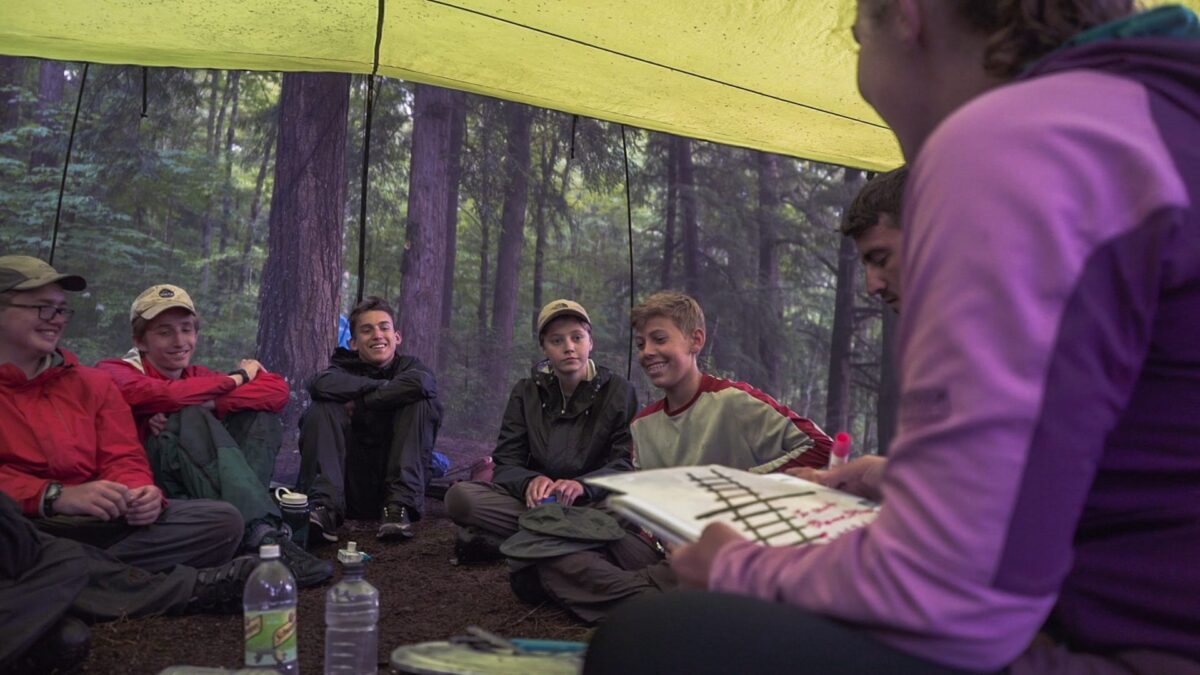
This term covers very different types of experiences. Some are clinical. Some are recreational.
And some are educational: multi-week expeditions built around outdoor skills, leadership development, and the kind of personal growth that happens when your teen is responsible for themselves and their team in genuinely wild places.
This guide covers what that experience actually looks like, day by day and week by week — along with the safety, instructor qualifications, and practical details that matter when you’re making this decision.
A Quick but Important Distinction
If you’re researching teen wilderness programs, you’ll encounter two fundamentally different categories, and it’s worth understanding the difference early.
Wilderness therapy programs are clinical interventions designed for teens facing behavioral, emotional, or mental health challenges. They’re staffed by licensed therapists and typically recommended by a clinician or educational consultant.
Wilderness education programs are something else entirely. These are expedition-based outdoor education experiences for motivated teens who want genuine challenge, real outdoor skills, and a summer that means something. Students learn to navigate, lead, cook, and manage themselves in the backcountry — with trained instructors, not therapists, not tour guides, teaching a real curriculum.
NOLS teen expeditions are the industry standard for wilderness education. They’re designed for young people who are excited about being outside, interested in learning how to lead, and ready to work hard alongside a small team in some of the most striking landscapes in the country.
Understanding Wilderness Education — and Why It Matters
The core idea behind a NOLS expedition is simple: put young people in a real environment with real challenges, teach them the skills to meet those challenges, then progressively hand them the responsibility to lead.
That process of learning by doing, in a setting where decisions have real consequences, develops things that are difficult to build any other way. Students learn to navigate with a map and compass, not because it’s on a test, but because they need to get their team to camp before weather moves in. They learn to communicate clearly because a group of eight people traveling through mountain terrain cannot afford ambiguity. They learn to lead — and to follow well — because the expedition depends on both.
By the end of a two-, three-, or four-week course, students have a set of skills and experiences that belong entirely to them: the knowledge that they can carry everything they need on their back, make sound decisions under pressure, take care of themselves and the people around them, and do hard things they didn’t think they could do.
That’s the value of outdoor education. It’s experiential, it’s demanding, and the growth it produces tends to last.
Teen Wilderness Expeditions: Where Your Teen Can Go
NOLS runs teen expeditions across multiple environments and formats, from one-week introductions to month-long multi-activity courses. All share the same core curriculum — technical outdoor skills, Leave No Trace ethics, leadership development, and Expedition Behavior — adapted to the landscape and activity.
Here’s what’s currently available:
Backpacking
Backpacking trips for teens are the most common format and where the foundational curriculum is most fully developed. Students carry everything they need, navigate using map and compass, set up camp, cook their own meals, and rotate through leadership roles daily.
- Wyoming Backpacking Adventure — 2- or 3-week options in the Wind River Range. Granite peaks, alpine lakes, elevations up to 13,000 feet. Ages 14–15. ($5,350–$6,790)
- Girls Wyoming Backpacking Adventure — Same Wind River terrain, all-female cohort. 3 weeks, ages 14–15. ($6,590–$6,790)
- Idaho Backpacking Adventure — Remote Idaho mountain ranges with opportunities for peak climbs, fishing, and wildlife observation. 2 weeks, ages 14–15. ($5,350–$5,510)
- Girls Idaho Backpacking Adventure — All-female cohort in Idaho’s backcountry. 2 weeks, ages 14–15.
Rafting and River Expeditions
Students learn paddle strokes, boat rigging, rapid scouting, and river rescue — all while traveling through some of the most remote river corridors in the country.
- Salmon River Rafting Adventure — Two weeks on the Main Fork of the Salmon through Idaho’s Frank Church–River of No Return Wilderness. Sandy beach camps, natural hot springs, wildlife. Ages 14–15. ($6,150–$6,330)
- Utah Whitewater River Adventure — 12 days on the Green River in Utah. Kayaking, rafting, geology, ancient petroglyphs. Ages 14–15. ($4,500)
- Whitewater River Adventure — Additional whitewater options for teens ready to develop river skills.
Multi-Activity Courses
These combine two environments — typically backpacking paired with rafting or canoeing — within a single expedition. A strong option for teens who want variety or aren’t sure which activity they’ll connect with most.
- Salmon Backpacking and Rafting Adventure — 4 weeks combining 50–70 miles of backpacking through Idaho’s mountains with 80 miles of rafting through the Salmon River corridor. Ages 14–15. ($7,950–$8,190)
- Adirondack Backpacking and Canoeing Adventure — 3 weeks in New York’s Adirondack Mountains. Paddling, peak bagging, wildlife. Ages 14–15. ($6,300)
- Salmon River Adventure — A combined backcountry and river experience in Idaho.
For Younger Teens
- Adirondack Exploration — A 7-day introduction to backcountry travel designed specifically for ages 12–13. Mountain hiking, wilderness camping, map reading, and bear safety in the Adirondacks. A first step for younger teens considering a longer expedition down the road. ($2,300)
All courses are eligible for high school credit (typically 0.5–1.5 credits in Physical Education and Leadership, depending on course length). For the full list of dates, pricing, and availability, visit the Teen Expeditions Coursefinder.
What a Day on Teen Wilderness Expedition Actually Looks Like
Parents ask this more than any other question, and it deserves a detailed answer. No two days are identical — that’s part of what makes the experience work — but the structure is consistent.
A Typical Day
Early morning. The designated leader for the day wakes the group. Students pack their personal gear, take down tents, and organize the campsite. Someone checks the weather. Someone inventories food for the day’s meals.
Breakfast and route planning. Cook groups prepare breakfast on camp stoves. While the group eats, the day’s leader reviews the route on the topographic map — identifying the terrain, estimating distance, and talking through decision points with the team. The instructor is present but lets the student lead the conversation.
Travel. The group moves through the backcountry — hiking a mountain pass, paddling a river section, or navigating off-trail through alpine terrain, depending on the course. Students take turns with navigation. The leader manages pace, rest breaks, and group energy. Instructors observe and coach.
Midday. The group stops for lunch — typically trail food prepared that morning. This might be a natural point for a skill session: reading weather patterns, practicing knot work, discussing Leave No Trace principles, or debriefing the morning’s leadership.
Afternoon. More travel, or arrival at the next camp. On layover days, the afternoon might include a peak attempt, fishing, rock climbing instruction, geology exploration, or rest — depending on location and course type.
Evening. Cook groups prepare dinner. This is a highlight — students learn backcountry cooking that goes well beyond boiling water. On some courses, they bake cinnamon rolls, pizza, and bread on camp stoves. After dinner, the group debriefs the day: what went well with leadership, what could improve, what they noticed about group dynamics.
Night. Stars. Quiet. Sleep. The cycle resets.
How the Weeks Unfold
The daily routine is consistent, but what changes across the expedition is who is responsible for what — and how much.
Week 1: Foundations. Instructors lead most activities and teach core skills from the ground up: how to set up a tent properly, how to use a camp stove, how to read a topographic map, how to pack a backpack so it’s sustainable to carry over long distances. Students are learning the systems, getting comfortable with the physical demands, and finding their place in the group. This is also when homesickness and adjustment are most common — and instructors are experienced at supporting students through that transition without removing the challenge.
Week 2: Growing responsibility. Students begin leading for full days. They plan the route, set the pace, make the weather call, and manage group dynamics — with instructor oversight but decreasing direction. Skill sessions get more advanced: off-trail navigation, wilderness first aid basics, more complex cooking, environmental awareness. The group is functioning as a team. Conflicts that surfaced in week one are being worked through, not avoided.
Week 3 and beyond: Student-led expedition. On courses of three weeks or longer, the final phase often includes a multi-day stretch where students plan and execute the expedition independently — choosing the route, managing logistics, making every decision. Instructors shadow the group for safety but step out of the leadership role. This is the part students remember most. They discover what they can do when no one is directing them, and the confidence that comes from that experience is the kind that stays.
On shorter courses (one or two weeks), the same progression happens on a compressed timeline. Students still rotate leadership daily and may travel in student-led groups for up to a day at a time.
Expedition Behavior: The Framework Behind Everything
If there is one concept that ties the entire NOLS experience together, it is Expedition Behavior — what we call “the guiding principle and foundation behind what we do, how we teach, and who we are.”
Expedition Behavior (EB) is the idea that individual success and group success are inseparable. On an expedition, how you treat yourself, your teammates, and your environment determines whether the group functions or falls apart. Students practice this through a set of principles that show up every day in the field:
- Concern — Care for others as much as yourself
- Dignity and respect — In how you speak, how you listen, how you share space
- Support — Foster leadership and growth in every member of the group, not just the loudest
- Organization — Contribute your share of the work without being asked
- Integrity — Be honest and accountable, even when it’s uncomfortable
- Constructive resolution — Address conflict directly and productively rather than avoiding it
- Concise communication — Say yes or no clearly; don’t leave people guessing
These aren’t abstract values posted on a wall. Students practice them under real pressure — when the group is tired, when someone is struggling, when a decision has to be made and no one agrees. An instructor might pause the group mid-trail to debrief how a leadership handoff went, or ask a student to articulate what they noticed about group energy that morning.
What makes EB valuable beyond the expedition is that it transfers. The communication skills, the accountability, the habit of noticing how your behavior affects a group — those apply at school, at home, on a sports team, in a first job. Parents consistently tell us that Expedition Behavior is the thing their teen brought home that stuck.
Who’s Leading the Course
This is where most parents’ attention goes — and it should.
NOLS instructors are professionals who have completed NOLS’s own rigorous instructor education, covering technical outdoor skills, leadership facilitation, risk management, and teaching methodology. All hold Wilderness First Responder (WFR) certification or higher — the industry standard for managing medical emergencies in remote environments.
NOLS doesn’t use the word “guide.” That word implies someone who takes you somewhere. Instructors are educators who teach your teen to get there themselves. Every course has a lead instructor and at least one additional instructor, with ratios kept small, typically no more than 12 students per course.
Instructors are also trained in youth development and group dynamics. They know the signs of physical stress, emotional withdrawal, and group friction. They know when to push and when to slow down.
How Risk Management Works at NOLS
Wilderness travel carries inherent risk. Any program that tells you otherwise isn’t being honest. What matters is how that risk is managed, and our approach is built on 60 years of continuous refinement.
Before the course: Students complete medical screening and families provide health history. Instructors review student files and are briefed on any conditions requiring awareness. Gear is standardized and checked.
In the field: Instructors continuously assess conditions, terrain, and group status. The curriculum teaches students to recognize and articulate risk — not just avoid it, but understand it. Route decisions, weather holds, and turnaround calls are made by lead instructors with full situational awareness.
In emergencies: Every instructor carries a full medical kit. NOLS maintains emergency communication systems on all expeditions, and the Risk Management department provides 24/7 support. Evacuation protocols are established before any group enters the field.
More than 300,000 students have completed NOLS courses. That operational experience is built into every decision on every expedition.
Communication While Your Teen Is in the Field
Your teen will be in the backcountry without their phone. That’s intentional! And it’s one of the reasons the experience works as well as it does. When there’s no option to text a friend or scroll through social media, students engage fully with where they are, who they’re with, and what they’re learning.
Before the course, we provide detailed pre-departure information including the course itinerary, emergency contact procedures, and what to expect. For medical emergencies, we contact families immediately — the emergency line is staffed around the clock. After the course, your teen will debrief with instructors, and many families arrange a follow-up conversation with the instructor team as well.
The quiet on your end while the course is running is real, but so is what’s happening on their end. They’re navigating mountain passes, learning to lead, cooking meals for their team, and solving problems they’ve never faced before. When they get home and start telling you about it, the silence will make sense.
What to Expect When They Come Home
Parents often tell us that they notice the change before their teen even talks about the expedition. There’s a steadiness, a confidence, a willingness to step up that maybe wasn’t there before.
Here’s what’s behind it: on a NOLS expedition, students build a specific set of skills that show up long after the course ends:
Problem-solving under real conditions. Your teen spent weeks making decisions that mattered (ex. reading terrain, choosing campsites, or adjusting plans when weather changed). They didn’t practice problem-solving in a workbook. They did it with a 40-pound pack on their back, a team counting on them, and no one handing them the answer. That kind of problem-solving transfers to school projects, part-time jobs, college applications, and every situation where they need to think on their feet.
Clear, honest communication. Expedition Behavior teaches students to say what they mean, give feedback constructively, and listen when it’s their turn. When you’re traveling through the backcountry with a small group for three weeks, vague communication creates real problems — so students learn to be direct, specific, and respectful. Families often notice this one first.
Self-sufficiency. Your teen can cook a meal from scratch on a camp stove, set up shelter in the rain, navigate with a map and compass, and manage their own gear and schedule. These are practical skills, and they add up to something bigger: the knowledge that they can take care of themselves. That’s a different thing from being told they can.
Leadership and the ability to be a good team player. Students rotate through leadership roles every day on expedition, which means they practice leading, supporting, giving feedback, and stepping back. They learn that good leadership isn’t about being the loudest person in the room — it’s about paying attention, making decisions, and taking responsibility for how things go. They also learn that being a strong follower is a skill in itself.
Comfort with being uncomfortable. This is the one that’s hardest to teach anywhere else. Your teen hiked through rain, slept on the ground, carried a heavy pack up a mountain pass, and kept going when they wanted to stop. They now know — from experience, not from being told — that discomfort is temporary and that they can handle more than they thought. That kind of confidence doesn’t come from a pep talk. It comes from doing the hard thing and coming out the other side.
The specifics vary by student. Some come home and immediately want to plan their next expedition. Others are quieter about it — the experience settles in over weeks and months. But the through line is consistent: they come back knowing what they’re capable of, and that knowledge tends to shape what they do next.
Is a NOLS Teen Expedition Right for Your Teen?
NOLS teen expeditions are designed for young people ages 12–17 who are physically healthy, motivated to be challenged, and ready to commit fully to a multi-week experience with real work, real wilderness, and no screens.
No prior outdoor experience is required. What is required: a genuine willingness to try, to be uncomfortable, and to be part of a team.
If your teen is resistant to the idea, the program won’t work. The growth comes from engagement, and engagement requires buy-in. But if your teen is excited, curious, or nervous in the way that signals readiness rather than avoidance — a NOLS expedition can deliver the kind of formative summer experience that stays with them for years.
Browse available courses, dates, and pricing on the NOLS Teen Expeditions page. For a broader look at summer options, read the guide to the best summer programs for teens. And if you want to talk with someone who knows these courses from the inside, contact a NOLS admissions advisor — they can help match your teen’s interests and readiness to the right expedition.
Frequently Asked Questions
What age range do NOLS teen wilderness programs serve?
NOLS offers a 7-day introduction for ages 12–13 and multi-week expeditions for ages 14–17. Separate programs are available for young adults 18 and older.
Do teens need prior wilderness experience to join a NOLS expedition?
No. NOLS courses start from the foundations and build skills progressively. What matters is physical readiness and genuine motivation — not prior experience.
How do parents communicate with their teen during the course?
Students are in the backcountry without phones or internet access. NOLS contacts families immediately in any medical emergency. Full emergency contact procedures are provided before the course begins.
What certifications do NOLS instructors hold?
All NOLS instructors hold Wilderness First Responder (WFR) certification or higher and have completed NOLS’s professional instructor education covering technical skills, leadership facilitation, and risk management.
How much do NOLS teen expeditions cost?
Courses range from $2,300 for the 7-day Adirondack Exploration (ages 12–13) to $8,190 for the 4-week Salmon Backpacking and Rafting Adventure. Most two- and three-week courses fall between $5,350 and $6,790. Current pricing is listed on the Teen Expeditions coursefinder.
Can my teen earn academic credit?
Yes. Most NOLS teen courses are eligible for high school credit — typically 0.5 to 1.5 credits in Physical Education and Leadership, depending on course length.
What is the difference between a NOLS wilderness expedition and wilderness therapy?
Wilderness therapy is a clinical mental health treatment for teens facing behavioral or emotional challenges. NOLS expeditions are outdoor education programs for healthy, motivated teens seeking skill development, leadership growth, and meaningful challenge. They serve different purposes and different populations.
Topics: