Built for Steep
4 MIN READ
As Olympic skier Sam Morse charges the most technical courses in the world, he relies on a skill set shaped by NOLS’s wilderness leadership and risk management
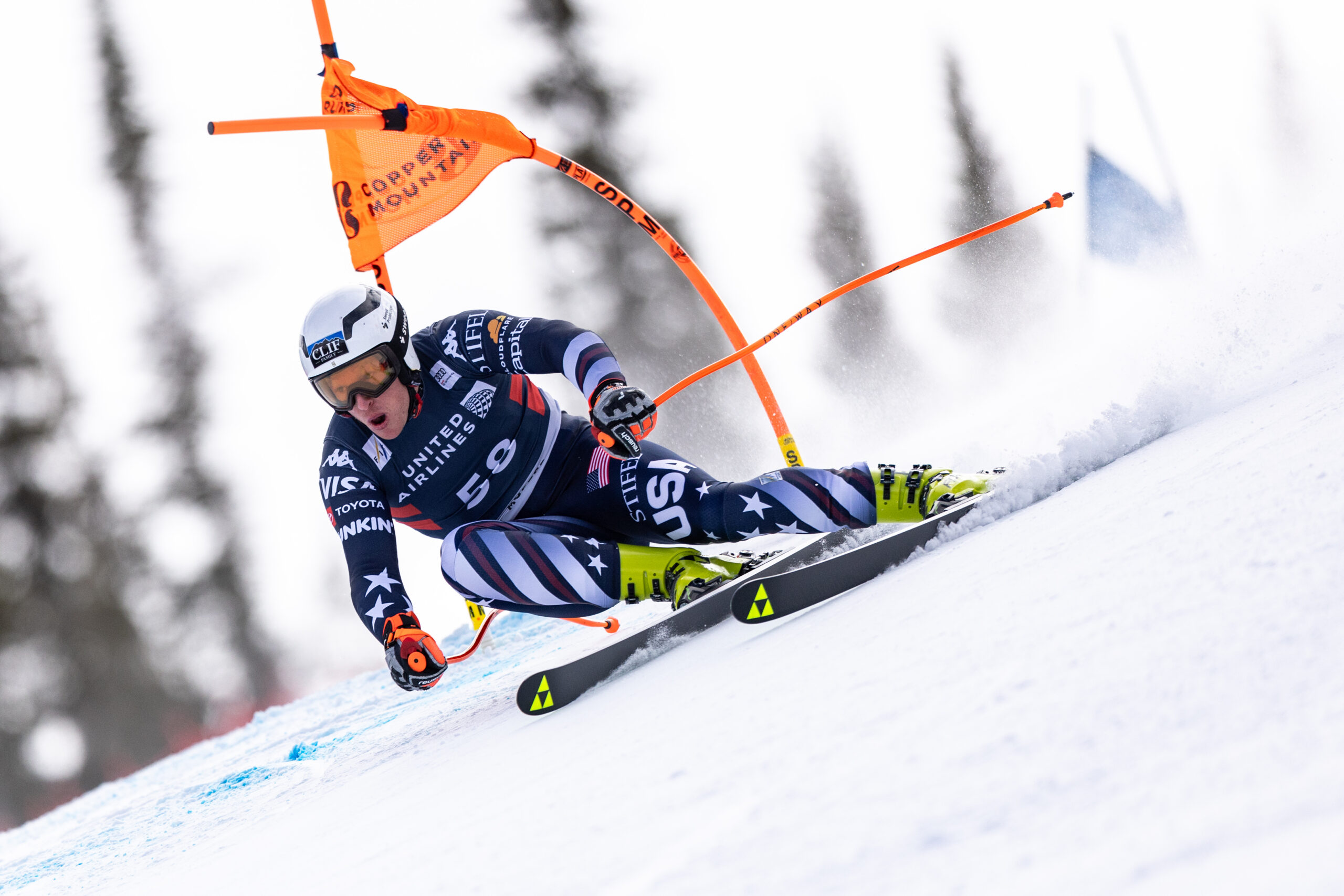
Sam Morse during the STIFEL Copper Cup presented by United - Men's Super G on November 27, 2025 at Copper Mountain in Copper, Colorado. Photo courtesy of U.S. Ski and Snowboard
SHARE:
SHARE:
February 5, 2026
MILANO-CORTINA, Italy — Sam Morse understands risk. When the NOLS alum (Wilderness Medicine ’18) arrived in Italy for the 2026 Winter Games, he did so with a deep appreciation for the dangers inherent in Olympic alpine ski racing.
We sat down to chat a few days before his downhill event. Morse had just returned from a training session at Bormio — the site of the Olympic downhill track and widely considered one of the most difficult courses in Olympic history, as well as the steepest on the World Cup circuit. That morning, as Morse prepared to queue up at the start, Norway’s Frederik Møller took a bad turn, crashed and dislocated his shoulder.
While the field waited for first responders to evacuate Møller by helicopter — the course is too steep for traditional toboggan evacuations — Morse had one thought: I wish I could help.
“I could see he was in a lot of pain,” Morse said. “It was hard to stand by and not assist.”
That instinct to help is what first brought the champion downhiller to NOLS.
Raised on the slopes of Sugarloaf in his native Maine, Morse grew up hearing stories about NOLS expeditions from his father Earle, a minister and hiking enthusiast who shares the ski mountain’s chaplaincy with Morse’s mother, Pamela.
“My dad talked a lot about how great the NOLS experience is and the ways the school uses wilderness to develop the whole person,” Morse said.
After graduating from Carrabassett Valley Academy and joining the U.S. Ski Team, Morse also began working as a wilderness guide in northern Maine. When it came time to earn his Wilderness First Aid certification, NOLS was the obvious choice.
“NOLS isn’t just the industry standard,” Morse said. “It’s the very best in the industry.”
While studying wilderness first aid at the school, Morse says he learned valuable lessons about risk management — a skill and mindset essential to alpine ski events.
“Downhill racing is inherently risky,” Morse said. “You’re sending it down the mountain at 90 miles per hour, wearing nothing but a helmet and a speed suit. The physical forces alone are several times your body weight and can fold you in half if you’re not prepared.”
In the Olympic downhill event, each racer gets just one run and there are no do-overs. Part of being successful in competition, Morse said, is knowing when to push and when to be conservative.
Møller’s crash, for example, came after the already notoriously technical course had just received 18 inches of new snow.
“They were super spicy conditions,” said Morse. “After I saw the accident, my training run became a lot less about optimal speed and a lot more about staying healthy for Saturday.”
That measured mindset has contributed to Morse’s success both on and off the slopes. Known for what Team USA calls his “patient, methodical approach to ski racing,” Morse climbed the ranks by focusing on fundamentals such as intensive cross-training, technical skill development and the science of downhill course design.
When he’s not training for major events, Morse maintains his certification as a registered Maine guide, leading wilderness canoe trips in his home state. He is also deeply committed to mentoring young athletes. In addition to volunteering with the Winter Special Olympics, Morse founded FAST Camp, a faith-based ski training camp at Oregon’s Mount Hood.
“Starting a faith-based ski camp was definitely a risk,” Morse said. “It’s a niche inside a niche inside another niche. But I was raised to believe in something bigger than yourself, so it was a risk I wanted to take.”
Modeled after Fellowship of Christian Athletes programs that inspired Morse as a youth, FAST Camp focuses on developing the whole athlete — body, mind and spirit.
“I’ve always found my strongest spiritual connections in nature,” Morse said. “When I came to NOLS and learned about its approach to wilderness education, I knew I’d found my people.”
Morse hopes that grounding, combined with years of meticulous training, will propel him at the 2026 Winter Games. But he said what matters most is what he brings to the Olympics beyond his performance on the Bormio downhill course.
“The truly great athletes are the ones committed to living in community and loving one another,” Morse said. “That’s what my dad was trying to teach me when he told me about NOLS, and that’s what I want to share both in Italy and at home.”
Sign up to read the latest each week
Subscribe to the NOLS Newsletter
Related
NOLS Announces New Members of the Board of Trustees
The Next Call to Serve
NOLS Expands Course Credit Options Through New Central Wyoming College Partnership
Keeping Public Lands Public