

Why Teens Need Leadership Skills: A Guide for Parents
Every parent wants their teenager to succeed—good grades, college acceptance, a fulfilling career. But there’s something that predicts success more reliably than test scores or academic credentials—and most schools barely address it.
Leadership skills for teens aren’t about being in charge of others. They’re about being in charge of yourself: making decisions under pressure, communicating effectively, taking responsibility, and adapting when plans fall apart. These are the capabilities that separate young adults who thrive from those who struggle.
And here’s what the research makes clear: leadership can be taught. The teenage years are precisely when these skills develop most effectively—if we create the right conditions for growth.
What Leadership Really Means for Teenagers
Forget the image of the captain of the football team or the student body president. While some teens naturally gravitate toward formal leadership positions, leadership itself is something different—and more important.
True leadership for teens means:
- Self-awareness: Understanding your own strengths, weaknesses, values, and reactions. Knowing how you show up when things get difficult.
- Decision-making: Gathering information, weighing options, and making choices—even when there’s no perfect answer. Then owning those choices and their consequences.
- Communication: Expressing ideas clearly, listening actively, giving and receiving feedback constructively. The foundation of every meaningful relationship and collaboration.
- Resilience: Facing setbacks without being defeated by them. Learning from failure. Maintaining effort when the path gets hard.
- Accountability: Following through on commitments. Taking responsibility for outcomes, both good and bad. Being someone others can count on.
These aren’t personality traits you either have or don’t. They’re skills that develop through practice and experience.
Why the Teenage Years Matter for Leadership Development
There’s a reason leadership skills develop most effectively during adolescence. The teenage brain is uniquely primed for exactly this kind of growth.
The Neuroscience of Teen Leadership
Between ages 12 and 25, the brain undergoes its second major period of reorganization. Neural connections strengthen through use and weaken through neglect. The experiences your teen has during these years literally shape the architecture of their adult brain.
This is particularly true for the prefrontal cortex—the region responsible for planning, decision-making, impulse control, and complex social behavior. The leadership skills your teen develops now become hardwired into their neural circuitry.
The Identity Formation Window
Adolescence is when humans form their core sense of identity. Teens are constantly asking themselves: Who am I? What am I capable of? What do I believe in? What kind of person do I want to become?
When teens experience themselves as capable leaders—when they make hard decisions, face challenges, and discover what they’re made of—that becomes part of how they see themselves. This self-concept persists into adulthood, shaping what they attempt and what they achieve.
The Social Learning Opportunity
Teenagers are intensely social. Their peer relationships carry enormous weight in their development, which creates both risks and opportunities.
Leadership development programs that bring together motivated teens create positive peer influence. Students learn from each other, hold each other accountable, and model growth for one another. The social dimension accelerates individual development.
The Cost of Underdeveloped Leadership Skills
When teens don’t develop leadership capabilities, the consequences extend far beyond high school.
Leadership In College
Colleges report that incoming students increasingly struggle with basic adulting: managing time without external structure, resolving conflicts with roommates, advocating for themselves with professors, making decisions independently.
Students who developed leadership skills in high school navigate these challenges. Those who didn’t often flounder during their first year—or never fully find their footing.
Leadership In Careers
Employers consistently rank leadership and interpersonal skills among their top hiring priorities—and their biggest frustrations with young workers. Technical skills can be trained. Leadership skills, employers say, are much harder to develop in the workplace.
Young adults who enter the workforce with strong leadership foundations advance faster, earn more, and report greater job satisfaction than peers with equivalent credentials but weaker soft skills.
Leadership In Life
Beyond academic and career outcomes, leadership skills affect quality of life. Adults with strong leadership capabilities report better relationships, higher life satisfaction, and greater ability to handle stress and adversity.
They’re not just more successful. They’re happier.
How Teens Actually Develop Leadership Skills
Leadership doesn’t develop from reading about leadership or listening to lectures about leadership. It develops from practicing leadership—from real experiences that demand decision-making, communication, and accountability.
The Experiential Learning Advantage
Experiential education research demonstrates that people retain approximately:
- 5% of what they hear in a lecture
- 10% of what they read
- 75% of what they practice doing
- 90% of what they teach to others
For leadership development, this means getting out of classrooms and into experiences where teens must exercise leadership skills to succeed.
NOLS teen courses exemplify this experiential approach by placing students in wilderness environments where they navigate real challenges, make consequential decisions, and experience the direct results of their leadership choices. Whether managing group dynamics on a multi-day backpacking expedition or navigating route-finding decisions in remote terrain, NOLS students practice leadership skills continuously rather than simply learning about them.
The Challenge Threshold
Growth happens at the edge of capability—not in the comfort zone where everything is easy, and not in the panic zone where everything feels impossible. The sweet spot is the stretch zone: challenging enough to require real effort, but achievable with focus and persistence.
Effective leadership development programs calibrate challenges to this productive zone, progressively increasing difficulty as teens develop greater capability. NOLS courses are specifically designed with this progression in mind, starting with foundational skills and gradually transferring more responsibility to students through systems like “leader of the day,” where teens take turns making decisions for the entire group.
The Reflection Requirement
Experience alone isn’t sufficient for learning. Teens need structured opportunities to process their experiences: What happened? Why? What worked? What didn’t? What would I do differently?
This reflection transforms experience into insight and insight into changed behavior. NOLS integrates daily debriefs and end-of-expedition reflections into every course, ensuring students don’t just have challenging experiences but actively extract leadership lessons from them that transfer to life beyond the wilderness.
What Parents Can Do to Build Leadership in Teens
You don’t need to enroll your teen in a program to start building leadership qualities. Daily life offers countless opportunities for leadership development—if you approach it intentionally.
Give Them Decisions That Matter
Many teens make almost no real decisions. Parents decide what they eat, when they sleep, how they spend their time. Then we wonder why they struggle to make decisions independently in college.
Start transferring decision authority:
- Let them manage their own schedule (and live with consequences)
- Give them budget responsibility for things that matter to them
- Allow them to resolve conflicts without your intervention
- Let some decisions be “wrong” so they learn from natural consequences
Let Them Struggle
The instinct to rescue our children from difficulty is powerful—and counterproductive. Every time we solve a problem for our teen, we deny them the opportunity to develop problem-solving capability.
This doesn’t mean abandoning them. It means stepping back to a supportive role: asking questions rather than providing answers, offering perspective rather than solutions, expressing confidence in their ability to figure things out.
Expand Their Context
Leadership grows when teens encounter situations beyond their familiar world. Different environments, different people, different challenges expand their range and adaptability.
This might mean:
- Travel to unfamiliar places
- Jobs or volunteer work outside their social circle
- Programs that bring together diverse participants
- Challenges in nature or other non-academic domains
Model the Skills You Want to See
Teens learn by watching adults. They notice how you handle frustration, resolve disagreements, make difficult decisions, and respond to failure. Your own leadership—or its absence—teaches more than any words.
Be intentional about modeling:
- How you handle setbacks
- How you communicate in conflict
- How you make decisions and own outcomes
- How you take care of yourself and manage stress
The Case for Immersive Leadership Experiences
While daily life offers leadership development opportunities, immersive programs accelerate and deepen the process in ways that ordinary life cannot match.
Concentrated Practice
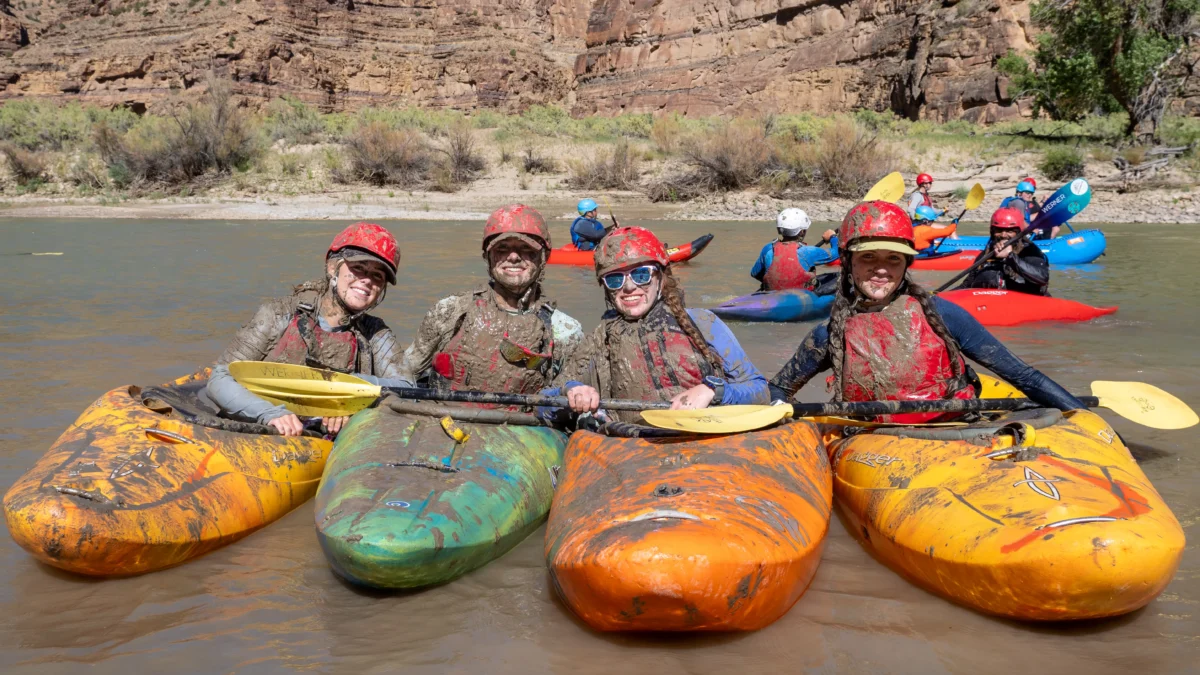
In an intensive program, teens practice leadership skills all day, every day, for extended periods. The volume of practice in a two-week expedition exceeds what most teens get in a year of ordinary life.
Expert Guidance
Professional educators know how to design experiences that promote growth, how to debrief for maximum learning, and how to provide feedback that sticks. This expertise amplifies the benefit of every experience.
Peer Community
When teens are surrounded by others who are also committed to growth, the social dynamics support development rather than undermining it. Peer influence becomes a tailwind rather than a headwind.
Removal from Distraction
Away from phones, social media, and the constant pulls of daily life, teens can focus fully on their development. This depth of engagement produces insights and changes that surface-level experiences cannot match.
Building Leadership Qualities in Teens: A Summary
Leadership for teenagers isn’t a luxury or an extracurricular. It’s foundational preparation for everything that follows: college, career, relationships, and life.
The teenage years offer a unique window for this development—one that closes as the brain matures and identity solidifies. The leadership skills your teen develops (or doesn’t develop) now will shape their trajectory for decades.
The good news: leadership can be taught and learned. With the right experiences, guidance, and practice, every teen can develop the capability to lead themselves and others effectively.
The question for parents is simple: How are you intentionally creating conditions for leadership growth?
Ready to help your teen develop leadership skills that last a lifetime? Explore NOLS teen expeditions that combine wilderness adventure with proven leadership curriculum, or connect with an advisor to discuss which program might be right for your family.
From the Blog
Keep Reading
Case Study: Bear Spray in the Face
The Setting You are almost done with a 3-day backpacking trip in the Wind River Mountain Range of Wyoming with…
August 5, 2026
Case Study: Non-Freezing Cold Injury on a Canoe Trip
The Setting You are leading an early-season canoe trip in the Boundary Waters Canoe Area Wilderness. It’s mid-May, and while…
April 24, 2026
Summer Travel Programs for Teens: Why Wilderness Expeditions Offer More Than a Passport Stamp
Most summer travel programs for teens promise adventure. A select few actually deliver it. There is a difference between traveling…
April 7, 2026Stay in the Field
Get expedition stories, leadership insights, and course updates delivered to your inbox. No spam, no fluff, just the good stuff from the backcountry.
Join 45,000+ subscribers. Unsubscribe anytime.