Case Study: Injury on the Grand Canyon
The Setting
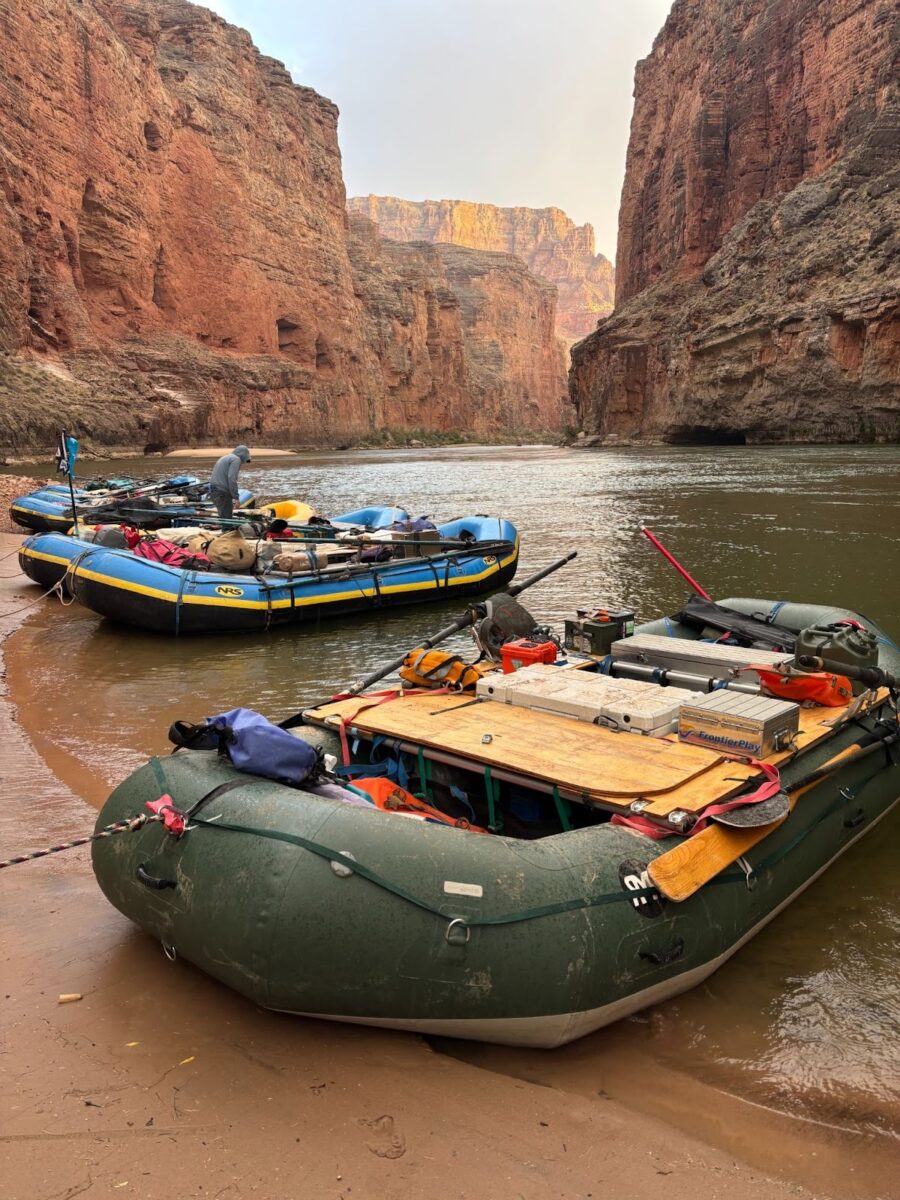
You’re on day 12 of a 21-day Grand Canyon expedition, enjoying a well deserved stretch of flat water, staring at the canyon walls and not paying attention to what’s downstream. While enjoying the last of your morning coffee, you hear someone cry out from a nearby raft. You look over and see a boat that appears to have just bounced off of a rock in the middle of the river. One of your friends is holding their hand, which appears to be bleeding. You pull over to a small beach to help your friend.
SOAP Report
Subjective
Your patient is a 37 year old female whose chief complaint is “I crushed my finger.” She tells you that when their raft slammed into the rock upstream, her hand got caught between the frame and the rock. She is currently A+Ox4.
Objective
Patient Exam: The patient is sitting upright on her raft holding her injured hand. The physical exam reveals an avulsion on the index finger of her right hand. The injury is deep enough that you can see the finger bone and is continuing to bleed. No other injuries are found and CSMs are intact in all four extremities.
Vital Signs
| Time | 1100 |
| Level of Responsiveness (LOR) | A+Ox4 |
| Heart Rate (HR) | 84, strong, regular |
| Respiratory Rate (RR) | 16, regular, easy |
| Skin Color, Temperature, Moisture (SCTM) | Mucous membranes pink, skin warm, dry |
| Blood Pressure (BP) | Strong radial pulse present |
| Pupils | PERRL |
| Temperature (T°) | Not taken |
Patient History
| Symptoms: | Pain and moderate bleeding in the right hand. |
| Allergies | The patient is allergic to both pineapple and shrimp, which she has diligently avoided on this trip. |
| Medications | The patient woke up with a headache this morning and took 400mg of ibuprofen. |
| Pertinent Medical History | None relevant to this injury. |
| Last ins/outs | Unremarkable for the patient. |
| Events: | The patient was alert and competent when the collision occurred. |
STOP READING!
What is your Assessment and Plan? Think about this before moving on.
Assessment
- Trauma to the index finger of the patient’s dominant hand.
Plan
- Stop the bleeding by using direct pressure and elevation.
- Once the bleeding has stopped, irrigate the wound thoroughly with drinking quality water and bandage it.
- Evacuate after consultation with the National Park Service (NPS).
- Over the counter medication as necessary to manage pain.
Anticipated Problems
- Possibility of infection if cleanliness is not maintained.
- Difficulty evacuating the patient due to the location.
Comments
Proper cleaning and care of the wound is crucial, even if you plan to evacuate quickly. After pulling over into a calm eddy and tying off to a safe beach, you made sure the bleeding stopped, and then irrigated the wound with one liter of drinking water. After cleaning the wound, you covered the finger with clean gauze and wrapped it with a cohesive bandage (ie, vet wrap), and instructed the patient to do everything possible to keep the wound from getting wet while waiting for evacuation.
Evacuation
The decision to evacuate from this trip was not taken lightly and was discussed thoroughly with all members of the expedition. While your group has a few members with a Wilderness First Responder certification, your decision to evacuate primarily revolved around two factors:
- A wound this deep needs higher care in a timely manner to heal properly. Not only will this prevent infection and scarring, but a healthcare provider can evaluate whether more care is needed to repair muscle, tendons, etc. (This is the case for all wounds that appear to extend into muscle tissue, tendons, ligaments, or joint spaces)
- As this wound heals, preventing infection will be extremely important. In a setting like an extended river expedition, you have to acknowledge the reality of getting wet on a regular basis, and this can complicate attempts to keep a wound clean.
While your friend is sad to be leaving such an amazing trip, they do so knowing they have made the best decision for their own health. The National Park Service affirms this decision when you talk with them via satellite phone. They send a helicopter to pick up the patient and take them to the South Rim.
Along with the primary factors leading to your decision to evacuate, two others were considered in this case:
- With an injury this severe, your patient is not likely going to be able to participate in camp activities and tasks. They cannot help gather water from the river, cooking may not be possible, and helping load and unload boats will be more difficult. Given the injury occurred in their dominant hand, all tasks requiring dexterity, from paddling to setting up a camp chair, will be more difficult. In these situations, we might say “your patient is out of fun cards.”
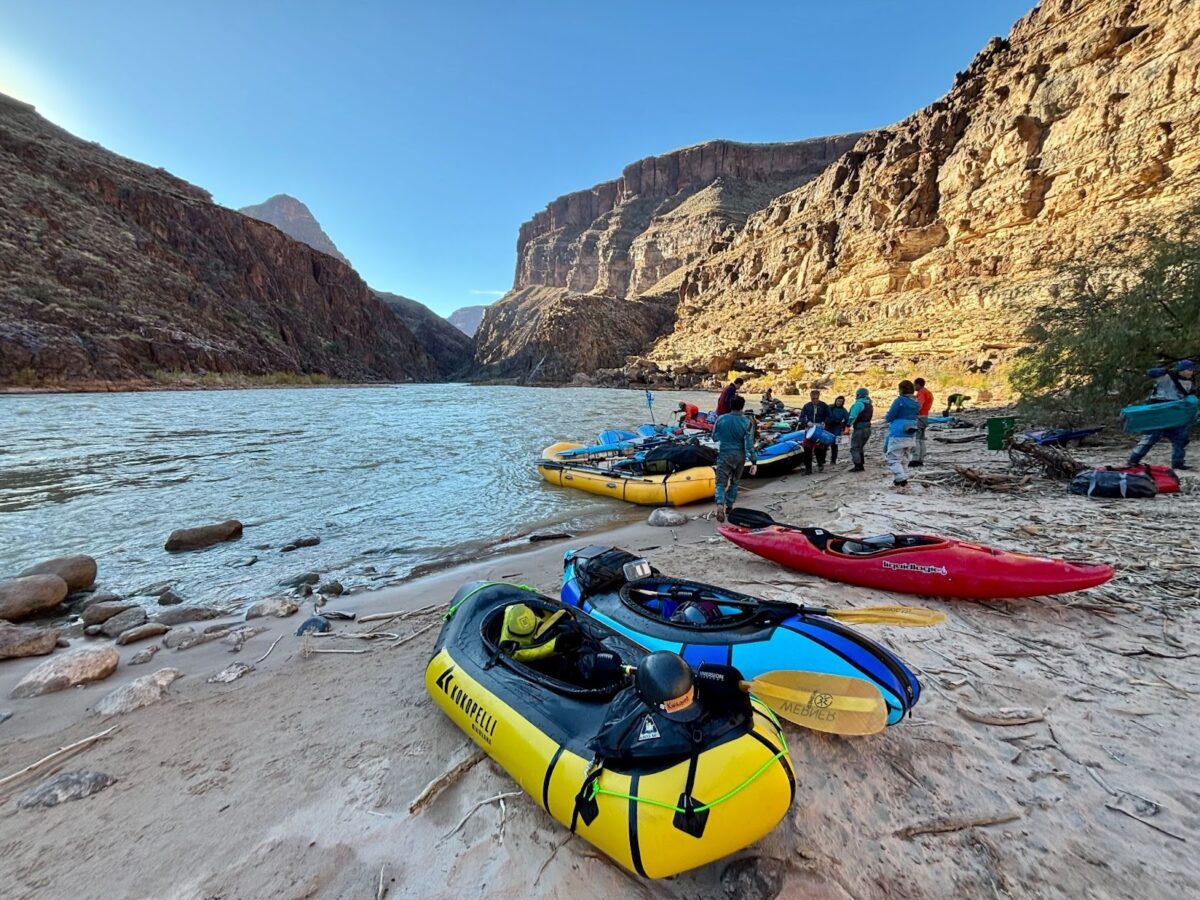
- Your current location is one where evacuation via helicopter is fairly easy. You’re in a wider stretch of the canyon with numerous large, sandy beaches. That being said, as you continue to move downstream in the coming days, the canyon becomes tighter, and a necessary rapid evacuation in the event infection sets in may be more difficult, if not impossible.
End of the Tale
While you were sad to watch your friend fly away in a helicopter, you were happy when the next day, you received a text saying all was well in Flagstaff! Doctors stitched the wound and there will be no lasting tissue damage or loss of motor function. The prompt higher-level care your friend received was crucial to this outcome.
Author’s note: This case study was based on a real incident that my trip witnessed on the Grand Canyon in the fall of 2024. Grand Canyon crews can contain a wide range of medical experience. Some crews go with paramedics, nurses, and even doctors. Others go with only a handful of individuals with basic first aid training. It would be easy to debate whether or not evacuation would be necessary for this injury on a crew with a high level of medical training, but it is important to remember that our job as Wilderness First Responders is to take care of patients as we help get them to higher care.
Going on a multi-week trip soon or leading others in the backcountry? Consider a Wilderness First Responder.
Topics: NOLS, Wilderness Medicine