

Mountaineering on Washington’s Mount Baker – Alumni
Seattle, WA
Jul 18, 2026 - Jul 25, 2026
About This Session
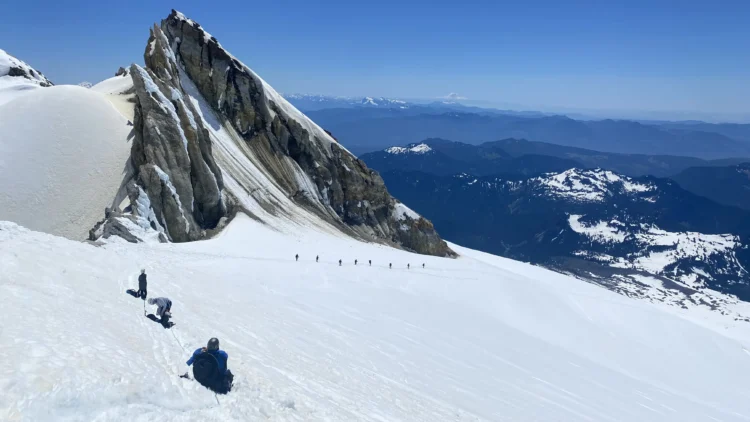
Nestled in the heart of Washington’s North Cascades, Mount Baker is one of the most heavily glaciated peaks in the lower 48, second only to Mount Rainier. Standing at an elevation of 10,778 feet, its massive icefields and crevassed glaciers create stunning, ever-changing scenery and offer a rare chance to experience true alpine terrain.
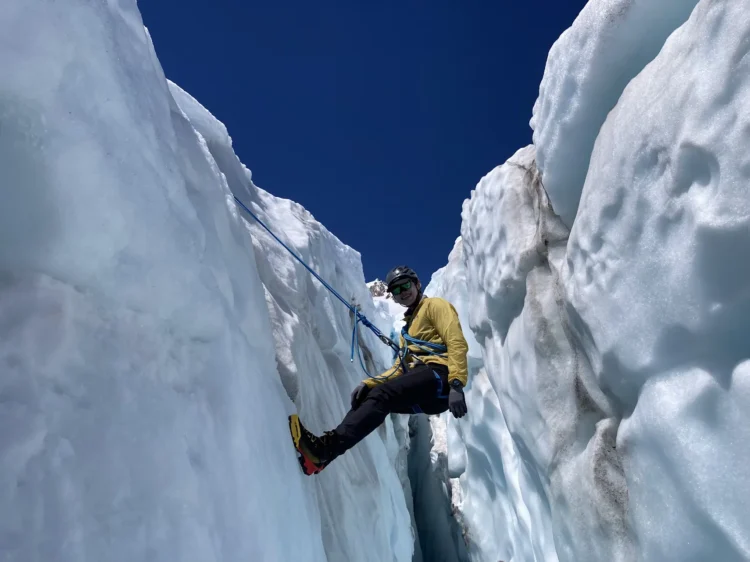
Photo by: Alison Haddad
Over six unforgettable days, you’ll travel and climb through breathtaking alpine scenery, tackling steep slopes with full mountaineering gear as you build the strength and technical skills needed to move safely in this rugged terrain. Backpacks will weigh 50-60 pounds and you can expect to work up to eight hours per day with up to 3,000 feet of elevation gain.
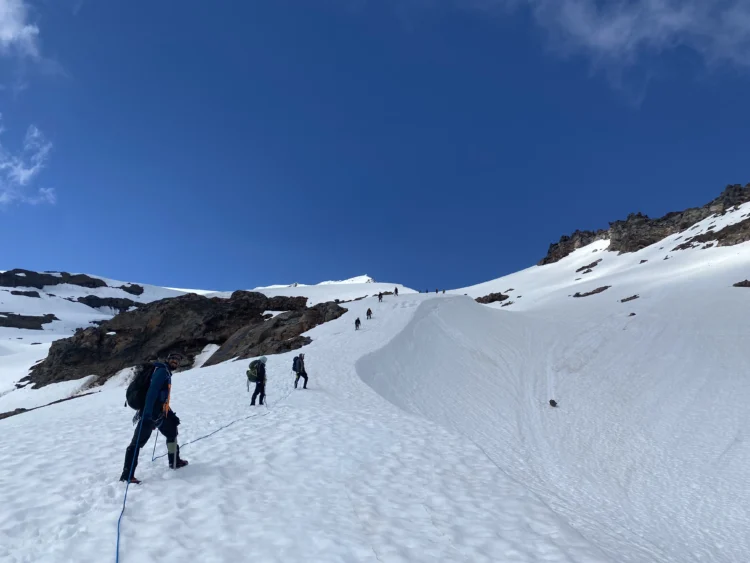
Photo by: Willy Oppenheim
Your journey begins and ends in a city known for its deep roots in mountaineering culture: Seattle, Washington. From there, we’ll head north and settle into a scenic campground near Mount Baker to begin our progression up the mountain. In the days ahead, we’ll ascend in stages, learning essential mountaineering skills as we prepare for a potential summit attempt.
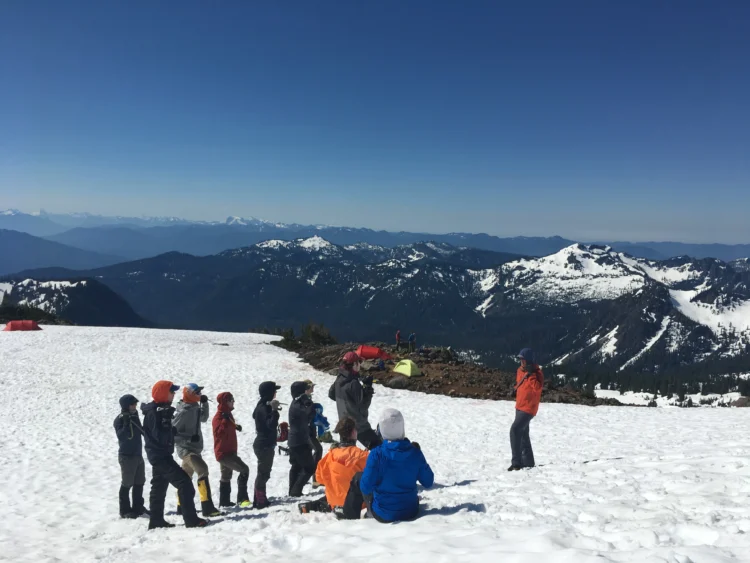
Photo by: Willy Oppenheim
We begin with the fundamentals, making this course accessible even for first-time mountaineers. Starting with core camping and backcountry living skills, we’ll gradually move into the subalpine environment before establishing a high camp perched on the glacier itself. As the days progress, you’ll work closely as a team to gain confidence and efficiency in glacier travel.
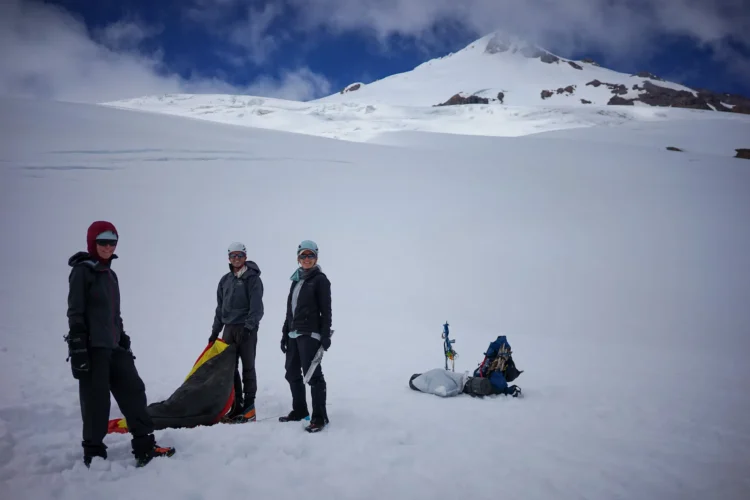
Photo by: Charles Fratt
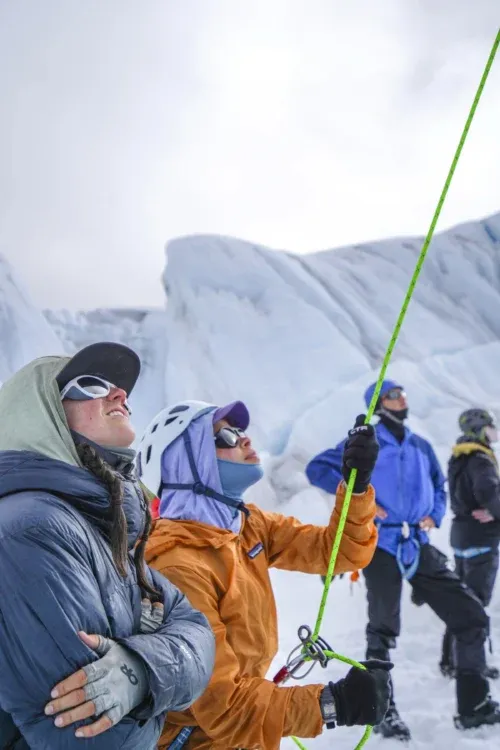
Skills like moving on rope teams, using crampons and ice axes, building snow anchors, navigating steep terrain, and performing crevasse rescue will become part of your regular toolkit. By the time we’re ready for our summit push on Mount Baker, you’ll have a strong foundation for this climb and future mountaineering adventures.
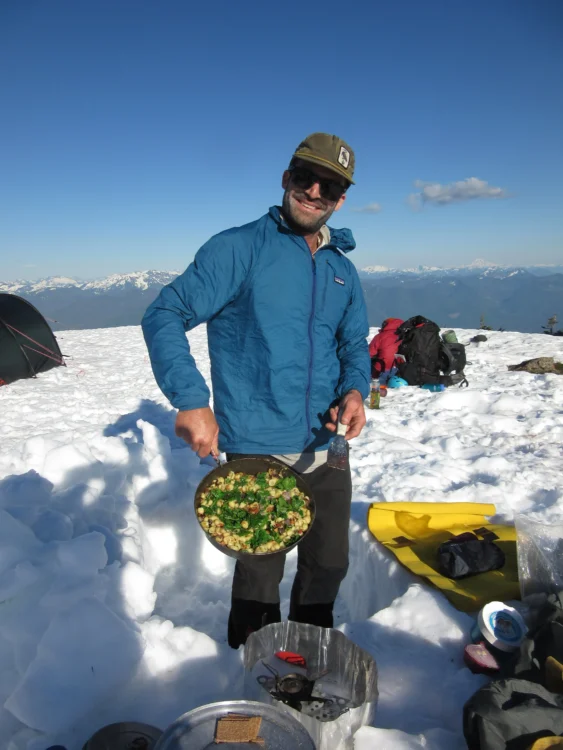
Photo by: Willy Oppenheim
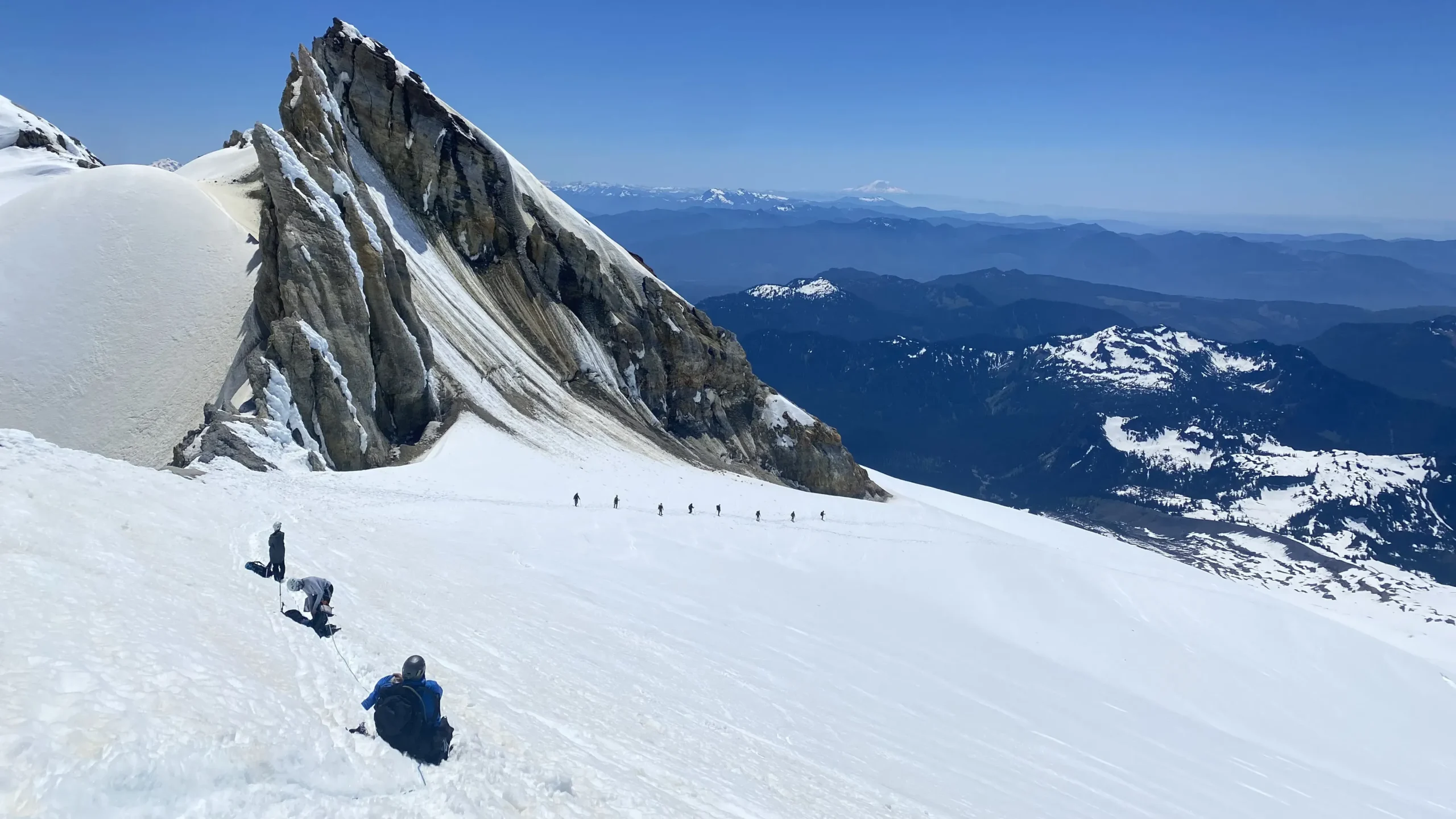
On the summit day, we’ll aim to leave camp by sunrise. Traveling on rope teams, we will ascend snow-covered glaciers, cross crevasses, and eventually gaze down into the spectacular Sherman Crater, where the sight and smell of active sulfur vents will remind us that Mount Baker is indeed an active volcano! From there, we’ll climb the ‘Roman Wall’ — the steepest part of the mountain, with an average slope angle of 40 degrees. Atop the Roman Wall, we’ll cross the summit plateau and take a nice rest on the peak before reversing our route back to camp. All in all, this day could involve 8+ hours of walking and over 3000 feet of elevation gain.
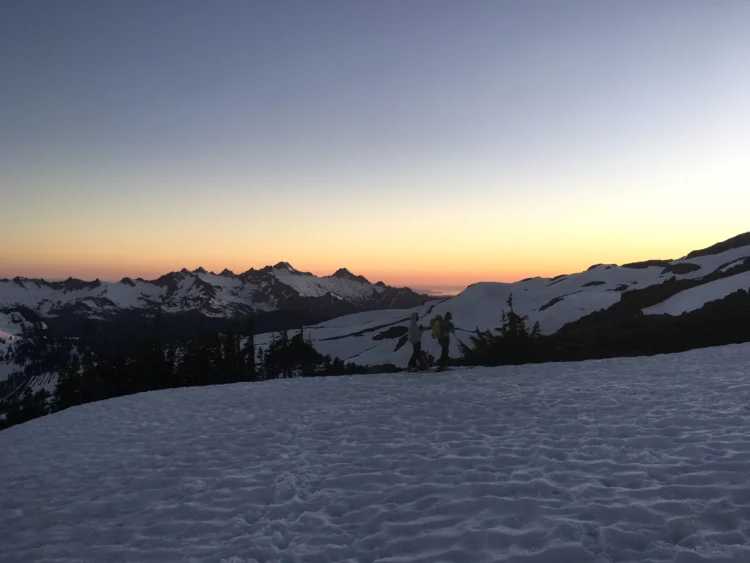
Photo by: Willy Oppenheim
During the course, you’ll travel off-trail and mostly above the treeline, navigating steep slopes of rock, snow, ice, and rugged vegetation. You’ll cross glaciers, weave around crevasses and icefalls, and move over loose, shifting boulders. Much of this travel takes place on steep terrain that demands careful, deliberate footwork. Carrying a heavy pack in these conditions can be demanding if you’re not accustomed to it.
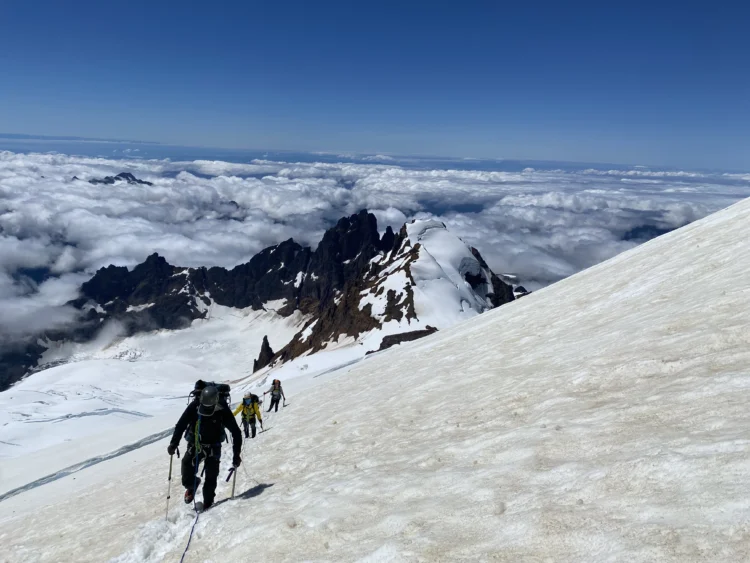
Photo by: Willy Oppenheim
Because of the remoteness of this trip, we place strong emphasis on recognizing and managing mountain hazards such as changing weather, falling rock, moving water, and steep exposure. By learning to take responsibility for your own safety and supporting your teammates, you’ll help ensure that your time on this wild, beautiful mountain is both safe and rewarding.
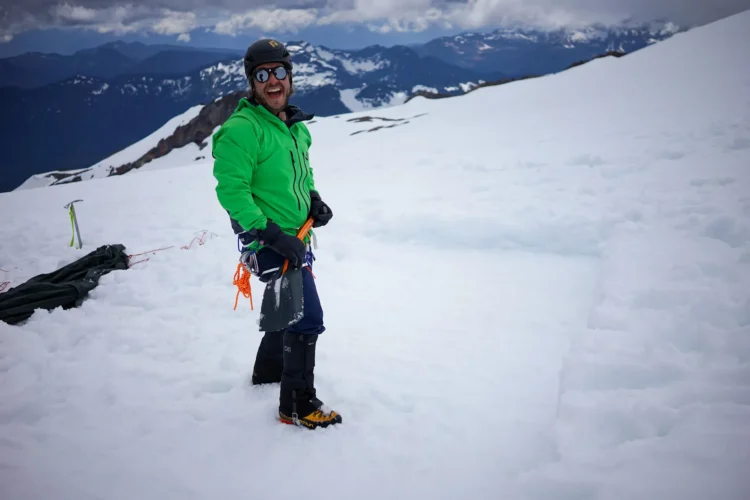
Photo by: Charles Fratt
NOLS supplies all the essential group equipment—tents, cooking gear, ropes, and other technical tools like climbing hardware and shovels. You’ll be responsible for bringing your own personal items, including clothing, a sleeping bag, backpack, boots, harness, ice axe, and crampons. If you don’t already own everything you need, most of these items can be rented or purchased in Seattle.
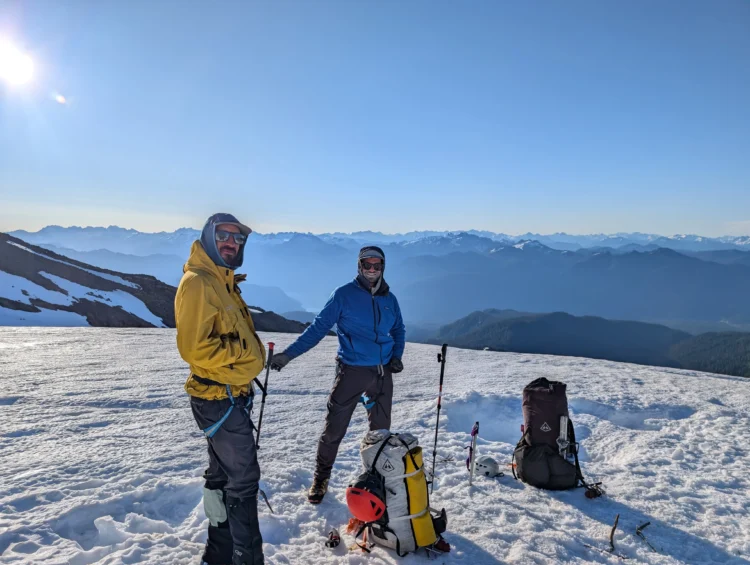
Photo by: Willy Oppenheim
Mountain weather is unpredictable, and conditions on Mount Baker can shift quickly. It is common for conditions to change from freezing temperatures to warm, sunny “t-shirt” weather in midsummer. While mountaineering in the Pacific Northwest is challenging, it provides an excellent foundation for climbing in a variety of environments.
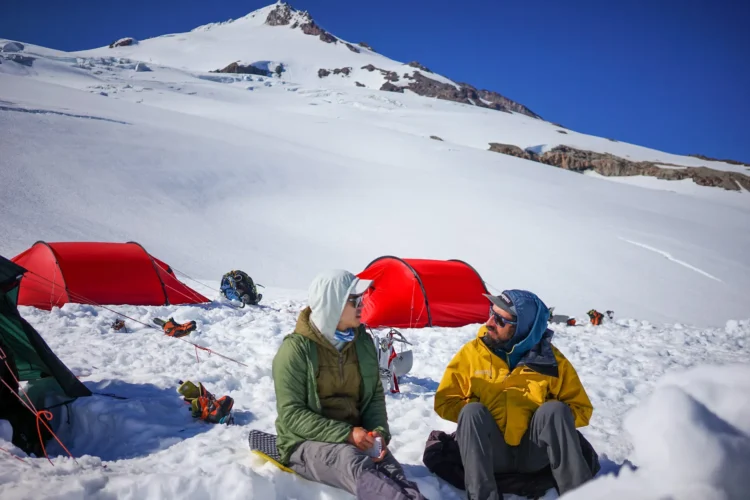
Photo by: Charles Fratt
Get ready to put your NOLS skills to work in one of the Pacific Northwest’s most spectacular playgrounds. From glaciated slopes to panoramic ridgelines, this expedition combines skill-building with some of Washington’s most awe-inspiring scenery.


Overall Difficulty*

*Glacier travel, full packs, and steep terrain make this trip a challenge.
Questions?
Questions about this course?
Talk to an admissions expert who can help with logistics, financial aid, or choosing the right course for your goals.